
Use this article to better understand your symptoms and options. An in-person podiatry evaluation is the best way to determine what is causing a specific foot or ankle problem.
When your heel hurts, one of the first things you may notice is that the pain is not simply “in the heel.” You may be able to point to one very specific spot: the inner underside, the center of the heel pad, the back near the Achilles tendon, or somewhere that feels deep inside.
That location can provide useful clues, but it rarely tells the whole story. Two conditions can hurt in nearly the same place, and the same condition may feel different from one person to another. The timing of the pain, what makes it worse, and whether there was an injury are equally important.
Here is how podiatrists think about different heel pain locations—and why an examination may be needed before deciding what to do about them.
Heel pain location is a starting point, not a diagnosis
The heel contains more than one structure that can become irritated. Bone, connective tissue, tendons, cushioning tissue, bursae, and nerves are all found in a relatively small area. Pain can also travel from another part of the foot, ankle, or leg.
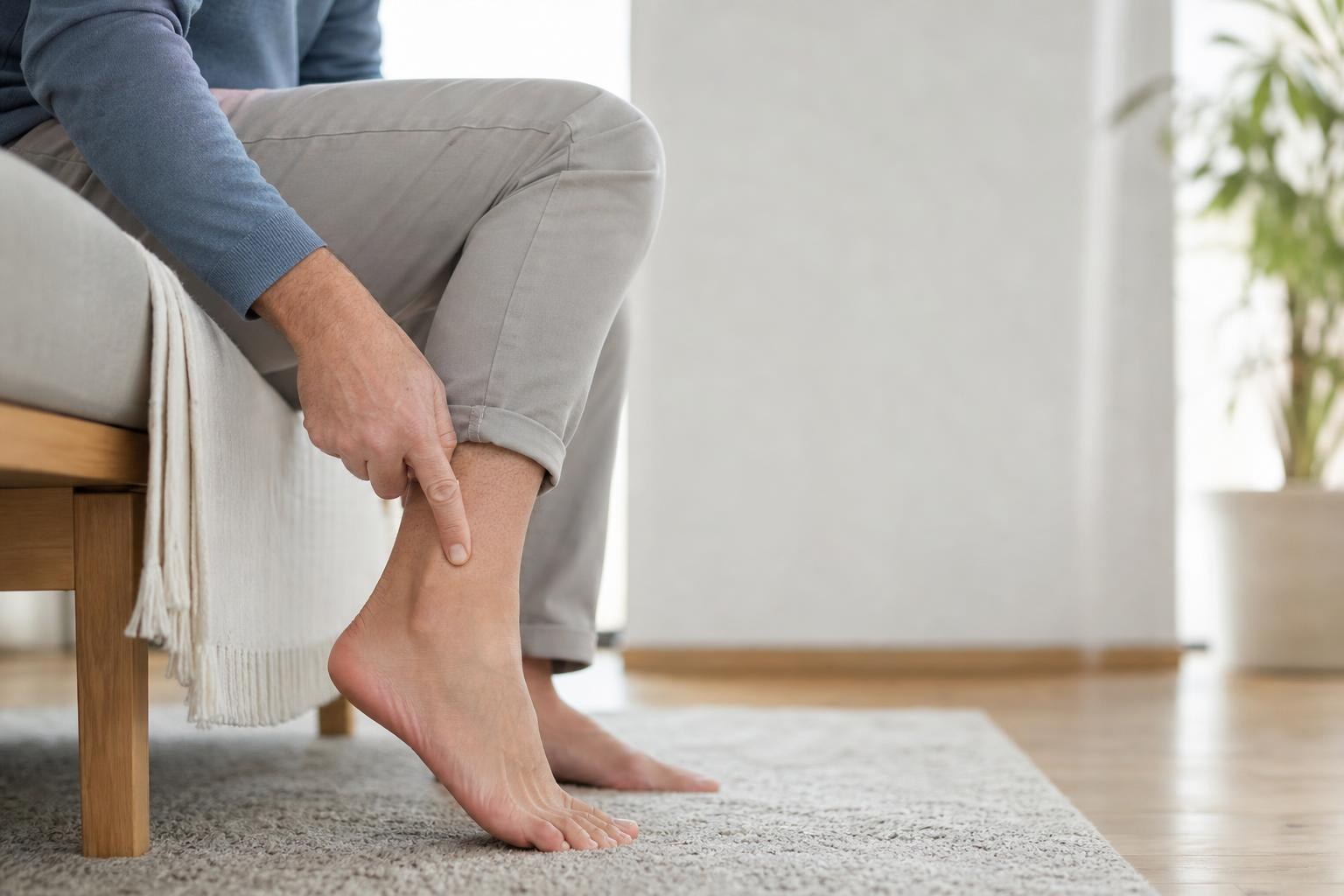
Before an appointment, try to identify the most tender area with one finger rather than describing the entire heel. Also notice whether the pain is sharp, aching, bruised, burning, or tingling. These details can help an evaluation move beyond the general label of “heel pain.”
Pain under the inner part of the heel
Pain near the inner underside of the heel is commonly associated with irritation where the plantar fascia attaches to the heel bone. The plantar fascia is a strong band of tissue that helps support the arch.
This type of discomfort may be especially noticeable with the first steps after getting out of bed or standing after a period of rest. It can ease as the foot warms up, only to return after prolonged standing or activity. That pattern can suggest plantar fascia involvement, but it is not proof by itself.
Heel pain in this area may also be influenced by tight calf muscles, a recent increase in walking or exercise, worn footwear, or changes in foot mechanics. Pressing on the attachment point may reproduce the tenderness.
A bruised feeling in the center of the heel
If the middle of the heel feels sore or bruised when it strikes the floor, the heel’s natural cushioning pad may be involved. This tissue absorbs force during standing, walking, and running.
Heel pad irritation often feels different from the pulling or first-step discomfort associated with the plantar fascia. Pain may be more centered beneath the heel and may worsen when walking barefoot or standing on hard surfaces. Some people describe it as though they are stepping directly on a stone.
A true bruise after landing hard on the heel can feel similar. Continuing high-impact activity without understanding the cause may prolong the problem, particularly if the pain changes the way you walk.
Pain at the back of the heel
Pain behind the heel often directs attention toward the Achilles tendon, especially where it attaches to the heel bone. This area may become tender after an increase in running, court sports, hill walking, or other activity that repeatedly loads the tendon.
Achilles-related discomfort may come with morning stiffness or pain during push-off. In some cases, the back of the heel becomes irritated by stiff shoe counters or footwear that rubs against a prominent area. A small fluid-filled bursa near the tendon can also become inflamed and sensitive to pressure.
These problems can overlap. Changing shoes may help pain caused mainly by rubbing, but it may not address an irritated tendon. Conversely, stretching aggressively without knowing which tissue is involved can sometimes make insertional Achilles pain worse.
A sudden pop, rapid swelling, weakness, or inability to push off normally deserves prompt medical assessment because it may indicate a significant tendon injury. Dr. Brandwein’s sports medicine and trauma care includes evaluation of foot and ankle injuries.
Pain along the sides or deep inside the heel
Pain on either side of the heel may come from soft-tissue irritation, a nerve, or an injury that is not easy to identify by touch alone. A stress injury of the heel bone can cause deep pain that worsens with weight-bearing. Squeezing the sides of the heel may be uncomfortable, although this finding should not be used to diagnose yourself.
Stress injuries can occur after a sharp increase in activity, repeated impact, or a change in training surface. Unlike some forms of plantar heel pain, the discomfort may become progressively more noticeable during activity and may eventually persist at rest.
Burning, tingling, electric sensations, or pain that travels into the arch can point toward nerve irritation. Nerve-related pain does not always stay in one precise location, and it may be accompanied by numbness or unusual sensitivity. An evaluation can help determine whether symptoms originate in the foot or may be traveling from farther up the leg.
The pattern of pain can be as important as the spot
When comparing possible causes, pay attention to what happened before the pain began and how it behaves throughout the day. Useful details include:
- Whether the pain started suddenly or developed gradually
- Whether first steps, prolonged standing, or impact activity are worse
- Any recent change in exercise, work demands, shoes, or walking surface
- Whether there is swelling, warmth, bruising, numbness, or weakness
- Whether the pain improves with rest or continues when you are not bearing weight
Bring the shoes you wear most often to your appointment if possible. Wear patterns, cushioning, fit, and heel-counter stiffness may provide additional context. A podiatrist may also watch how you stand and walk, assess ankle motion, and examine the arch and surrounding tendons rather than focusing only on the painful spot.
What can you safely do while monitoring heel pain?
For mild pain without a major injury, it may be reasonable to reduce impact activity temporarily and avoid repeatedly “testing” the heel with movements that provoke symptoms. Supportive shoes are generally preferable to walking barefoot on hard floors. A covered cold pack used for short periods may help with soreness after activity.
Avoid assuming that every painful heel needs the same stretch, insert, or shoe. Treatment that helps plantar fascia irritation may not be appropriate for a stress injury, nerve problem, or painful Achilles attachment. If an insert creates more pressure or changes your gait, stop using it until the fit and underlying issue can be reviewed.
More broadly, comprehensive foot and ankle care can address the mechanics, footwear factors, and medical concerns that may contribute to persistent heel symptoms.
When should heel pain be examined?
Schedule an evaluation if heel pain is persistent, keeps returning, limits normal walking, or is causing you to shift weight to the other foot. Earlier assessment also makes sense if symptoms began after a fall or hard landing, or if pain is steadily worsening despite reduced activity.
Seek prompt medical attention for an inability to bear weight, significant swelling or bruising, a visible change in foot position, a sudden pop near the Achilles tendon, or a foot that becomes unusually cold, pale, or numb. Redness and warmth accompanied by fever or rapidly spreading skin changes also warrant timely medical care.
People with diabetes, reduced sensation, poor circulation, or a history of foot wounds should be especially cautious about unexplained heel pain, skin breakdown, or redness. What feels like a minor pressure point may need closer attention when protective sensation or healing is impaired.
A clearer answer begins with a focused evaluation
Heel pain treatment works best when it matches the tissue and activity involved. An examination may include checking the exact area of tenderness, ankle flexibility, tendon strength, sensation, circulation, footwear, and walking mechanics. Imaging is not required for every painful heel, but it may be considered when the history and examination suggest a bone injury or another problem that cannot be confirmed clinically.
Dr. Daniel Brandwein is a board-certified podiatrist who has provided podiatric care since 1991. If heel pain is interfering with your work, exercise, or daily walking, you can request an appointment at the Pompano Beach office or call (954) 984-7500. Same-day appointments may be available.
Ready to Get Your Foot or Ankle Concern Checked?
If foot pain, a wound, nail problem, injury, or another concern is affecting your comfort or mobility, Dr. Daniel Brandwein can evaluate what is going on and discuss appropriate next steps.
Dr. Daniel Brandwein DPM, PA, FACFAS
159 S Pompano Parkway, Pompano Beach, FL 33069
(954) 984-7500
This article is for general educational information and is not a substitute for an individualized medical evaluation or treatment plan.
Get your foot or ankle concern properly evaluated.
Dr. Daniel Brandwein provides podiatry care in Pompano Beach for foot and ankle pain, diabetic foot concerns, nail problems, wounds, injuries, and other common podiatric conditions.