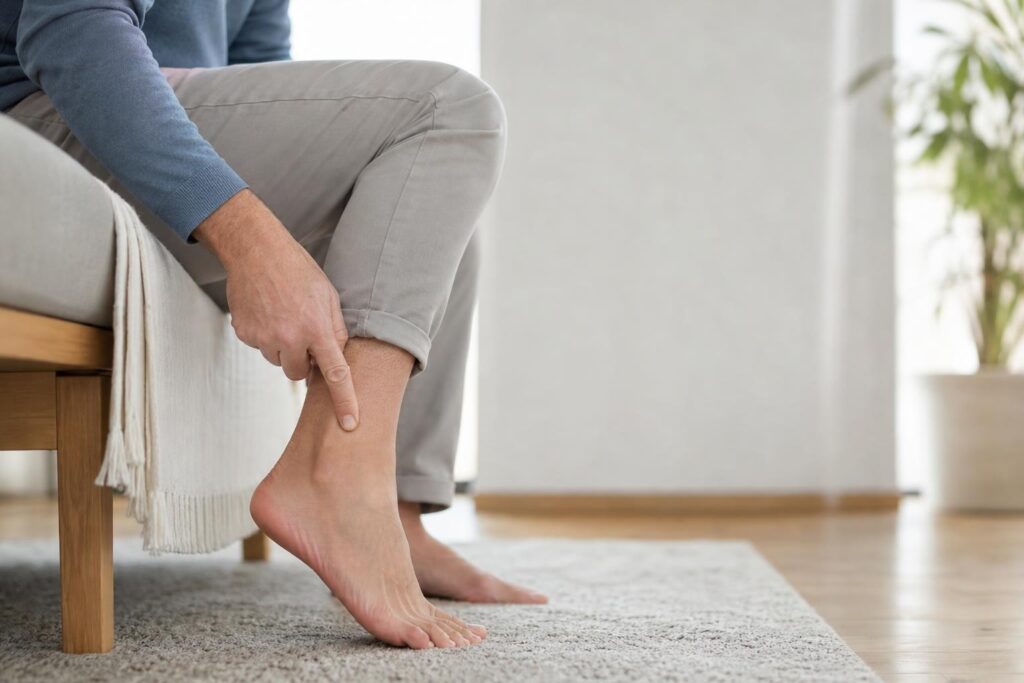

Use this article to better understand your symptoms and options. An in-person podiatry evaluation is the best way to determine what is causing a specific foot or ankle problem.
You stay off your foot for a few days, switch shoes, or take a break from exercise. The pain improves, so you assume the problem has passed. Then you return to your usual walk, work shift, or workout—and the same discomfort comes back.
That cycle can be frustrating, especially when the pain is not severe enough to feel like an emergency. But temporary relief is not always the same as recovery. If foot or ankle pain repeatedly returns with activity, something may still be placing excess stress on a tissue, joint, tendon, nerve, or area of bone.
Understanding the pattern can help you decide whether a little more home care is reasonable or whether it is time for a podiatric evaluation.
Why pain may improve with rest and return with movement
Rest reduces the amount of force traveling through the feet and ankles. It may also calm irritation and swelling. Once activity resumes, however, the same pressure, repetitive motion, footwear issue, or movement pattern may return.
This does not necessarily mean you have a serious injury. It does mean that the reason for the pain may not have been fully addressed.
For example, a sore area may settle down during a quiet weekend but become painful again after several hours of standing. Heel or arch discomfort may fade when running stops, only to return when mileage increases. Pain near the ball of the foot may disappear in roomy shoes but come back in a tighter pair.
These changes are useful information. They help show which activities, surfaces, shoes, or movements may be contributing to the problem.
Common reasons recurring foot pain should be evaluated
Many conditions can cause pain that returns with activity, and different problems can feel surprisingly similar. An evaluation may consider several possibilities rather than assuming that every case is caused by overuse.
The irritated tissue has not fully recovered
Muscles, ligaments, tendons, and other soft tissues need time to recover after they have been strained or overloaded. Pain may decrease before the tissue is ready for normal activity. Resuming the same routine too quickly can restart the irritation.
This can occur after an obvious ankle sprain, but it can also happen after a less memorable change—such as walking farther than usual, starting a new exercise program, working longer shifts, or spending more time on hard surfaces.
The foot is still being exposed to the same pressure
A recurring corn, callus, or tender spot may reflect repeated pressure rather than a one-time skin problem. Filing or padding the area may offer short-term comfort, but symptoms can return if shoe fit, toe position, gait, or weight distribution continues to load the same location.
Bunions and hammertoes can also create pressure points that become more noticeable with prolonged walking or certain footwear. Conservative care may help, but it works best when it is matched to the source of the pressure.
Your shoes may not support the activity
A shoe can feel comfortable for a few minutes and still create problems over several hours. Worn cushioning, a narrow toe box, poor heel stability, or a mismatch between the shoe and the activity can contribute to recurring symptoms.
Shoes are not always the entire explanation, however. Replacing them repeatedly without understanding where the pain comes from may delay appropriate treatment.
A joint, tendon, or bone may be under repeated stress
Pain that predictably increases with walking, running, stairs, or prolonged standing can sometimes involve a joint, tendon, or area of bone. Depending on the location and circumstances, possibilities may include tendon irritation, arthritis, lingering instability after an injury, or a stress-related bone injury.
Because these concerns can overlap, location alone may not provide a reliable answer. A physical examination—and sometimes imaging—can help clarify which structure is involved. Dr. Brandwein’s sports medicine and trauma care includes evaluation of activity-related foot and ankle concerns.
Nerve symptoms may be part of the picture
Burning, tingling, numbness, electric sensations, or pain that travels may suggest nerve irritation rather than a simple muscle ache. Symptoms can originate in the foot or ankle, but nerves may also be affected elsewhere along their path.
Numbness deserves particular attention because it can make pressure, blisters, or small injuries harder to detect. This is especially important for people with diabetes, who may benefit from dedicated diabetic foot care and a personalized monitoring schedule.
What details can help explain the pattern?
Before an appointment, notice what happens immediately before, during, and after the pain. You do not need to diagnose yourself. A few practical observations can make the discussion more productive:
- Where is the pain most concentrated, and does it spread?
- Does it begin with the first few steps, after a certain amount of activity, or later that day?
- Which shoes, surfaces, or movements make it better or worse?
- Is there swelling, warmth, redness, bruising, weakness, or a change in how you walk?
- Does the foot feel stiff, unstable, numb, or unusually sensitive?
- Did the problem begin after an injury or a change in activity?
It may help to keep a brief note on your phone for several days. Record the activity, pain location, approximate duration, and anything that relieved it. If swelling or skin changes vary throughout the day, a photograph may also help document what you are seeing.
Is it reasonable to try home care first?
For mild discomfort after an unusually active day, temporarily reducing the aggravating activity may be reasonable. Supportive, properly fitting shoes and avoiding movements that clearly trigger pain can also help. If you can safely do so based on your health history, gentle measures such as elevation or a wrapped cold pack may ease short-term soreness or swelling.
Avoid repeatedly “testing” the foot with the same painful activity every day. Also avoid walking through sharp or worsening pain, aggressively stretching an injured area, or using leftover braces or inserts that were selected for a different problem.
Home care becomes less appropriate when symptoms keep returning, interfere with normal walking, or require you to repeatedly change your routine. The goal is not only to quiet the pain but to understand why the foot cannot comfortably tolerate the activity.
How recurring pain can change the way you move
People naturally protect a painful area. You may shorten your stride, shift weight to the outside of the foot, avoid bending a toe, or place more weight on the opposite leg. These adjustments can feel helpful at first, but they may create new discomfort in the other foot, ankle, knee, hip, or back.
That is one reason not to let recurring pain quietly become your “normal.” Even moderate symptoms can affect balance, confidence, exercise habits, and everyday mobility over time.
A podiatric evaluation can assess the painful area while also looking at joint motion, strength, shoe wear, alignment, and the way you stand or walk. Treatment depends on the cause and may involve activity modification, footwear changes, padding, targeted support, orthotics, rehabilitation guidance, medication recommendations, immobilization, or other care. Not every recurring problem requires surgery.
When should you seek care sooner?
Arrange prompt medical attention if you cannot comfortably bear weight, pain or swelling is rapidly worsening, the foot looks misshapen, or symptoms followed a significant injury. Redness that spreads, unusual warmth, drainage, fever, or a new open sore also warrants timely evaluation.
People with diabetes, poor circulation, reduced sensation, or a history of foot wounds should be especially cautious about blisters, cuts, pressure spots, and skin color changes. Do not rely on pain alone to judge severity when sensation is reduced. Information about the practice’s approach to slow-healing concerns is available on the wound care page.
A recurring pattern is worth understanding
Foot pain that disappears during rest but returns with activity is giving you useful information. It may reflect incomplete recovery, ongoing pressure, unsuitable footwear, altered mechanics, or a problem that needs a more specific treatment plan. An evaluation can help determine the likely source and whether it is safe to continue your current activities.
This article is for general educational purposes and is not a substitute for individualized medical advice, diagnosis, or treatment.
If recurring foot or ankle pain is limiting your routine, Dr. Daniel Brandwein offers comprehensive foot and ankle care in Pompano Beach. Call (954) 984-7500 to ask about an appointment at 159 S Pompano Parkway.
Ready to Get Your Foot or Ankle Concern Checked?
If foot pain, a wound, nail problem, injury, or another concern is affecting your comfort or mobility, Dr. Daniel Brandwein can evaluate what is going on and discuss appropriate next steps.
Dr. Daniel Brandwein DPM, PA, FACFAS
159 S Pompano Parkway, Pompano Beach, FL 33069
(954) 984-7500
This article is for general educational information and is not a substitute for an individualized medical evaluation or treatment plan.
Get your foot or ankle concern properly evaluated.
Dr. Daniel Brandwein provides podiatry care in Pompano Beach for foot and ankle pain, diabetic foot concerns, nail problems, wounds, injuries, and other common podiatric conditions.