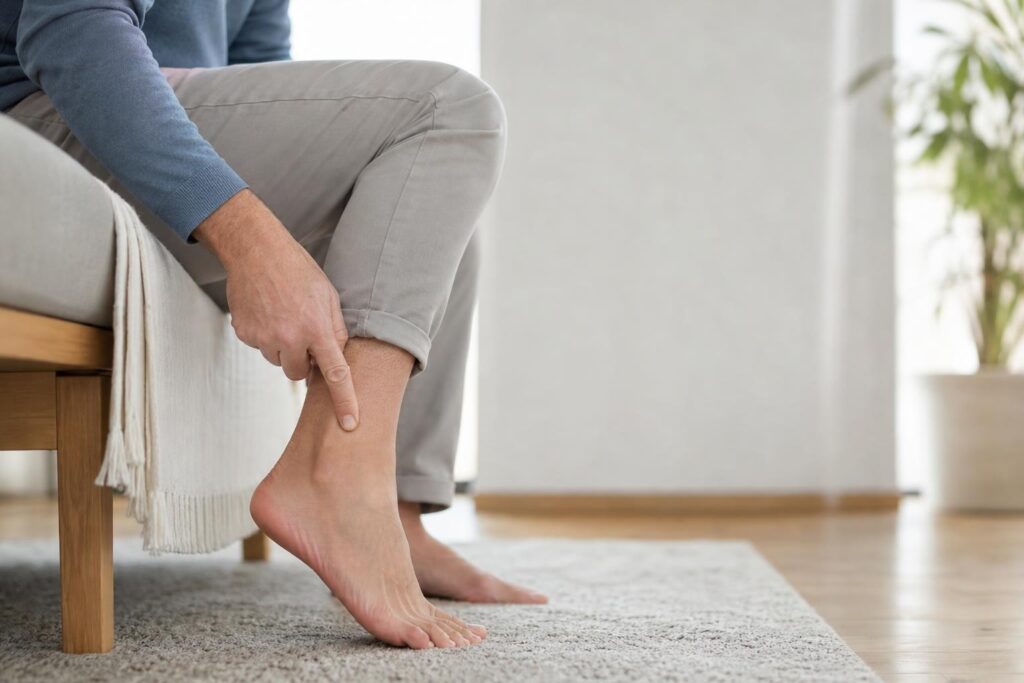

Use this article to better understand your symptoms and options. An in-person podiatry evaluation is the best way to determine what is causing a specific foot or ankle problem.
A shoe that rubs may be uncomfortable enough for most people to take it off. Bathwater that is too hot usually causes an immediate reaction. A small stone inside a sandal is hard to ignore.
But if diabetes has reduced sensation in your feet, these everyday warnings may be faint or absent. You might continue walking on a blister, leave your feet near a heat source too long, or overlook an object in your shoe. By the time you see the problem, the skin may already be damaged.
This does not mean every person with diabetic neuropathy will develop a serious foot problem. It does mean that protecting your feet cannot depend on pain alone. Understanding where hidden injuries come from can help you make safer choices throughout the day.
Why diabetic neuropathy changes how you protect your feet
Peripheral neuropathy can affect the nerves that carry information between your feet and brain. Symptoms vary. Some people notice numbness, while others experience tingling, burning, sensitivity, or brief electric-like sensations. Sensation may also be reduced unevenly, so one area can feel relatively normal while another does not.
Loss of protective sensation is especially important. Pain normally tells you to shift your weight, change shoes, move away from heat, or look for an injury. When that alarm system is less reliable, pressure and friction can continue unnoticed.
Diabetes may also be associated with circulation problems or changes in skin quality. These issues can make an injury harder to heal. A podiatric evaluation can help determine whether neuropathy, circulation, foot structure, or a combination of factors is affecting your individual risk.
The everyday hazards that may not feel dangerous
Walking barefoot, even indoors
A clean-looking floor can still hold crumbs, splinters, pet-related debris, or small sharp objects. Outside, pavement, pool decks, and sand can become hot enough to injure skin. Reduced sensation may keep you from recognizing the temperature or feeling a cut when it occurs.
Wear supportive shoes or protective footwear rather than relying only on socks. Slippers should fit securely and provide a protective sole. Loose backless styles may slide, create friction, or increase the chance of tripping.
Heat used for warmth or comfort
Heating pads, hot water bottles, space heaters, fireplaces, and heated blankets can cause burns when a foot remains exposed longer than intended. Hot bathwater is another common concern.
Avoid placing direct heat against your feet. Test bath or shower water with an elbow, forearm, or thermometer rather than with a numb foot. If your feet often feel cold, socks are generally a safer option than a concentrated heat source. Persistent coldness or a noticeable temperature difference between the feet deserves medical attention because it may not be caused by neuropathy alone.
Shoes that create pressure or friction
A shoe does not need to cause pain to cause damage. A narrow toe box, prominent seam, folded sock, worn lining, or foreign object can repeatedly rub one area. Foot deformities such as bunions or hammertoes may concentrate pressure even when the shoe appears to be the correct size.
Before putting on your shoes, feel inside them with your hand. Look for pebbles, rough seams, torn lining, or wrinkled insoles. Choose shoes with enough room for your toes and wear clean, well-fitting socks. New shoes should be introduced for limited periods, with your skin checked after each wear.
Redness that remains after the shoe comes off can indicate excessive pressure. A podiatrist can assess shoe fit, foot mechanics, callus patterns, and whether an accommodative insert or another type of orthotic may be appropriate.
Calluses, nails, and do-it-yourself treatment
A callus is more than a cosmetic concern for someone with diabetic neuropathy. It can indicate repeated pressure, and tissue beneath a thick callus may become irritated or break down. Cutting a callus with a razor, blade, or other sharp tool can create a wound that may not be felt immediately.
Over-the-counter corn and callus removers may contain acids that can damage surrounding skin. Ingrown nails can also be made worse by digging into the nail border or cutting deeply into the corners. Professional nail and callus care may be safer when sensation, vision, circulation, flexibility, or balance makes self-care difficult.
A practical routine for protecting your feet
Protection works best when it becomes part of your normal day rather than something you do only when a foot hurts. Useful habits include:
- Inspect the tops, soles, heels, and spaces between your toes every day. Use a mirror or ask for help if needed.
- Wash your feet with comfortably warm water, then dry carefully, especially between the toes.
- Apply moisturizer to dry skin, but avoid leaving lotion between the toes where excess moisture can collect.
- Put on clean socks and inspect the inside of each shoe before wearing it.
- Avoid walking barefoot, including in the house, at the pool, or on the beach.
- Do not cut corns or calluses or use medicated removers unless a clinician has told you they are appropriate.
- Check your feet again after wearing new shoes or spending more time walking than usual.
These precautions are important even when your feet look healthy. They are intended to catch minor changes before continued pressure, moisture, or friction makes them harder to manage.
What changes should prompt a call to a podiatrist?
Do not wait for significant pain before seeking care. Contact a podiatrist promptly if you notice a blister, cut, crack, drainage, bleeding, increasing swelling, warmth, or redness. A new darkened area, blood under a callus, or a spot that does not begin improving also deserves evaluation.
Changes in foot shape, balance, or walking pattern can affect where pressure falls. So can a callus that repeatedly returns in the same place. Through diabetic foot care, a podiatrist can assess sensation, skin condition, circulation, nails, footwear, and pressure points. The goal is not simply to treat what is visible today, but also to identify factors that may lead to future injury.
If skin has already opened, timely wound care is important. Foot wounds should not be soaked or repeatedly treated with harsh antiseptics unless you have received specific medical instructions. Cover the area with a clean dressing, reduce pressure on it, and seek professional guidance.
Seek urgent medical attention for rapidly spreading redness, significant swelling, pus, foul odor, fever, chills, black or discolored tissue, or a foot that suddenly becomes unusually pale, blue, or cold. These changes can require prompt treatment even if the foot does not hurt.
Regular foot care should reflect your personal risk
Not everyone with diabetes needs the same follow-up schedule. The appropriate timing may depend on your sensation, circulation, history of wounds, nail and skin condition, foot shape, and ability to examine and care for your feet safely.
Dr. Daniel Brandwein is a board-certified podiatrist who has provided podiatric care since 1991. If you have numbness, recurring pressure spots, a suspicious skin change, or questions about protecting your feet, an evaluation can help clarify your next steps.
To schedule a visit at 159 S Pompano Parkway in Pompano Beach, call (954) 984-7500 or contact the office online. Same-day appointments may be available. This article is educational and is not a substitute for individualized medical advice.
Ready to Get Your Foot or Ankle Concern Checked?
If foot pain, a wound, nail problem, injury, or another concern is affecting your comfort or mobility, Dr. Daniel Brandwein can evaluate what is going on and discuss appropriate next steps.
Dr. Daniel Brandwein DPM, PA, FACFAS
159 S Pompano Parkway, Pompano Beach, FL 33069
(954) 984-7500
This article is for general educational information and is not a substitute for an individualized medical evaluation or treatment plan.
Get your foot or ankle concern properly evaluated.
Dr. Daniel Brandwein provides podiatry care in Pompano Beach for foot and ankle pain, diabetic foot concerns, nail problems, wounds, injuries, and other common podiatric conditions.