
Use this article to better understand your symptoms and options. An in-person podiatry evaluation is the best way to determine what is causing a specific foot or ankle problem.
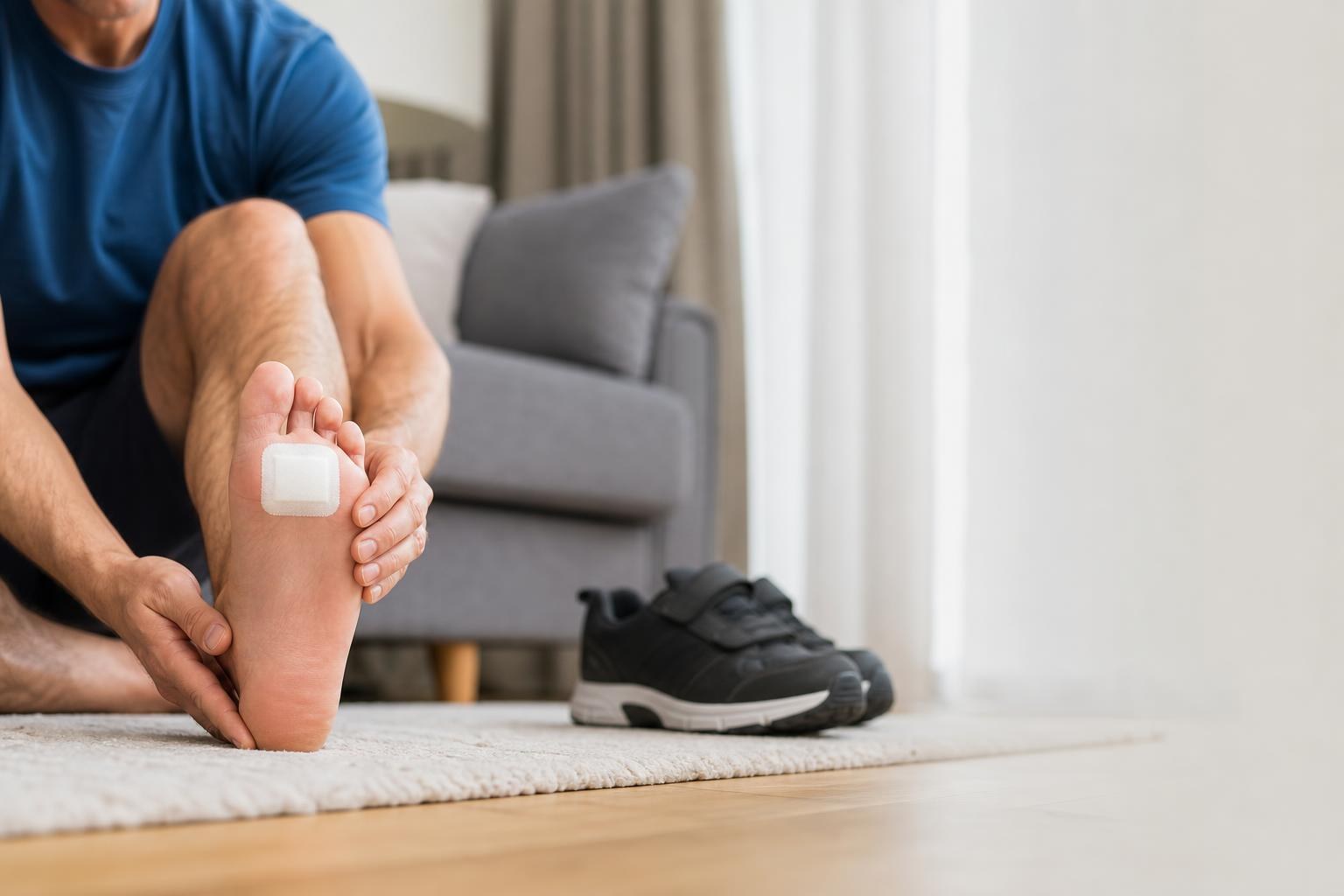
A wound on the foot can look minor when you are sitting down. Then you stand, walk to the kitchen, put on a shoe, and go through the rest of your day. By evening, the area may be sore again, the dressing may show new drainage, or a spot that seemed to be closing may look irritated.
This does not necessarily mean you did something wrong. Feet are difficult places for wounds to heal because they carry body weight and repeatedly move against shoes and the ground. Even normal daily activity can expose injured tissue to pressure, rubbing, and shifting forces.
Reducing those forces can be an important part of healing. It is also important to recognize when a slow-healing foot wound needs more than home care.
Why each step can affect a foot wound
When you walk, pressure does not stay evenly distributed across the foot. Certain areas—particularly the heel, ball of the foot, sides of the toes, and prominent joints—may absorb more force than others.
Pressure is only part of the issue. Skin and deeper tissue may also shift slightly with each step. This is called shear. A shoe that rubs the wound or a sock that bunches near it can add friction. These repeated forces may irritate delicate new tissue, disrupt the wound edges, or cause the area to break down again.
Location matters as well. A wound beneath the foot may be loaded whenever you stand. A wound on a toe may rub against the adjacent toe or the inside of a shoe. An injury near the ankle may be repeatedly stretched as the joint moves.
The amount of walking that is safe cannot be determined by wound size alone. A small wound in a high-pressure location may need more protection than a larger but superficial injury in an area that does not bear weight.
Pressure may not be the only reason healing has slowed
Continuing to walk on an injured area can interfere with recovery, but a wound that is slow to improve deserves a broader look. Healing can also be affected by poor circulation, swelling, infection, repeated moisture exposure, retained debris, or irritation from footwear.
Diabetes deserves particular attention. Reduced sensation may make it difficult to feel rubbing, heat, or worsening tissue damage. Someone may continue walking because the wound does not hurt, even though it is under significant pressure. Diabetes may also be associated with circulation or immune-system changes that complicate healing.
Foot structure can contribute, too. Bunions, hammertoes, prominent bones, limited joint motion, and areas of thick callus can concentrate pressure around a wound. Unless that pressure pattern is addressed, changing the dressing alone may not be enough.
Clues that daily activity is aggravating the area
A wound should be judged by its overall direction, not by how it looks at one moment. Signs that walking, shoes, or pressure may be interfering include:
- Bleeding or increased drainage after standing or walking
- Wound edges that separate after appearing to come together
- Redness or tenderness that is worse at the end of the day
- A thick callused rim developing around the opening
- A recurring blister over the same pressure point
- A dressing that repeatedly shifts, bunches, or wears through
- A spot that improves during rest but becomes irritated after returning to regular activity
These changes do not identify the cause by themselves. An evaluation can help determine whether pressure, infection, circulation, wound depth, or another issue is delaying progress.
Should you stop walking completely?
Not necessarily—and it is best not to make a major change in weight-bearing without appropriate guidance. The right approach depends on the wound’s location and depth, your balance, circulation, sensation, general health, and the reason the wound developed.
A podiatrist may recommend a specific method of offloading, which means redirecting weight or reducing pressure on the injured area. Depending on the circumstances, that might involve footwear changes, padding placed away from the wound, a removable device, or another protective strategy.
Improvised padding can sometimes create a new pressure point. Likewise, cutting a hole in a shoe or stacking adhesive pads around an open wound may shift force in an unhelpful way. A device also needs to fit correctly; something intended to protect the wound can cause rubbing elsewhere if it is loose, tight, or used incorrectly.
Until you receive individualized instructions, avoid barefoot walking, minimize unnecessary activity that repeatedly irritates the area, and use only footwear that does not rub the wound. If a clinician has already prescribed an offloading device, use it as directed rather than only when discomfort is present.
When a slow-healing foot wound should be checked
There is no single number of days that defines a slow-healing wound for every person. The type of injury, its depth, its location, and your health all influence the expected timeline. What matters is whether the wound is showing steady improvement and whether new warning signs are developing.
Arrange a prompt evaluation if the area is not clearly improving, repeatedly opens, becomes more painful, produces increasing drainage, or cannot be protected from pressure. A puncture wound, wound caused by a foreign object, deep opening, or injury containing dirt or debris also merits professional guidance.
People with diabetes, neuropathy, reduced circulation, a history of foot ulcers, or a weakened immune system should generally seek care sooner rather than waiting for pain. If sensation is reduced, the absence of pain is not reliable reassurance. Dr. Brandwein’s diabetic foot care services include assessment of foot changes that may otherwise be easy to overlook.
Seek urgent medical attention for rapidly spreading redness, significant warmth or swelling, pus-like drainage, a strong unpleasant odor, red streaking, fever, chills, dark or black tissue, or a sudden change in the color or temperature of the foot. Emergency care may be appropriate when symptoms are severe, infection appears to be spreading quickly, bleeding will not stop, or you feel acutely ill.
What to do while waiting for an appointment
Keep the area protected with a clean dressing appropriate for the wound and follow any instructions already provided by your clinician. Do not soak the foot unless specifically advised. Hydrogen peroxide, alcohol, and harsh antiseptics can irritate tissue, so avoid repeatedly applying them to an open wound without medical direction.
Do not trim callused skin, open a blister, or probe the wound yourself. Note changes in drainage, odor, redness, swelling, and discomfort. A dated photograph may help you track changes, although it should not replace an examination.
If a dressing becomes wet, dirty, or displaced, replace it using clean hands and supplies. Contact a medical professional if you are unsure how to cover the area or if removing the dressing causes bleeding or reveals a deeper wound than expected.
How podiatric wound care addresses more than the opening
Effective foot wound care looks beyond the surface. A podiatric evaluation may include checking the wound’s location and depth, surrounding skin, sensation, circulation, swelling, drainage, footwear, and the way pressure passes through the foot.
Care depends on what the examination shows. It may involve appropriate wound cleansing, removal of unhealthy tissue when indicated, dressing recommendations, pressure reduction, management of nearby callus, or coordination with other medical professionals. Signs of infection or circulation problems may require additional testing or treatment.
The goal is not simply to cover the wound. It is to identify what is keeping the area irritated and create conditions that give the tissue a better opportunity to heal.
Have a foot wound evaluated before another week of walking on it
A foot wound does not need to be large or intensely painful to deserve attention. If it remains open, repeatedly bleeds after activity, or looks worse despite your efforts to protect it, waiting may allow the underlying problem to continue.
Dr. Daniel Brandwein is a board-certified podiatrist who has provided podiatric care in Pompano Beach since 1991. To arrange an evaluation, contact the office at 159 S Pompano Parkway or call (954) 984-7500. Same-day appointments may be available, walk-ins are welcome, and most insurance is accepted.
Ready to Get Your Foot or Ankle Concern Checked?
If foot pain, a wound, nail problem, injury, or another concern is affecting your comfort or mobility, Dr. Daniel Brandwein can evaluate what is going on and discuss appropriate next steps.
Dr. Daniel Brandwein DPM, PA, FACFAS
159 S Pompano Parkway, Pompano Beach, FL 33069
(954) 984-7500
This article is for general educational information and is not a substitute for an individualized medical evaluation or treatment plan.
Get your foot or ankle concern properly evaluated.
Dr. Daniel Brandwein provides podiatry care in Pompano Beach for foot and ankle pain, diabetic foot concerns, nail problems, wounds, injuries, and other common podiatric conditions.