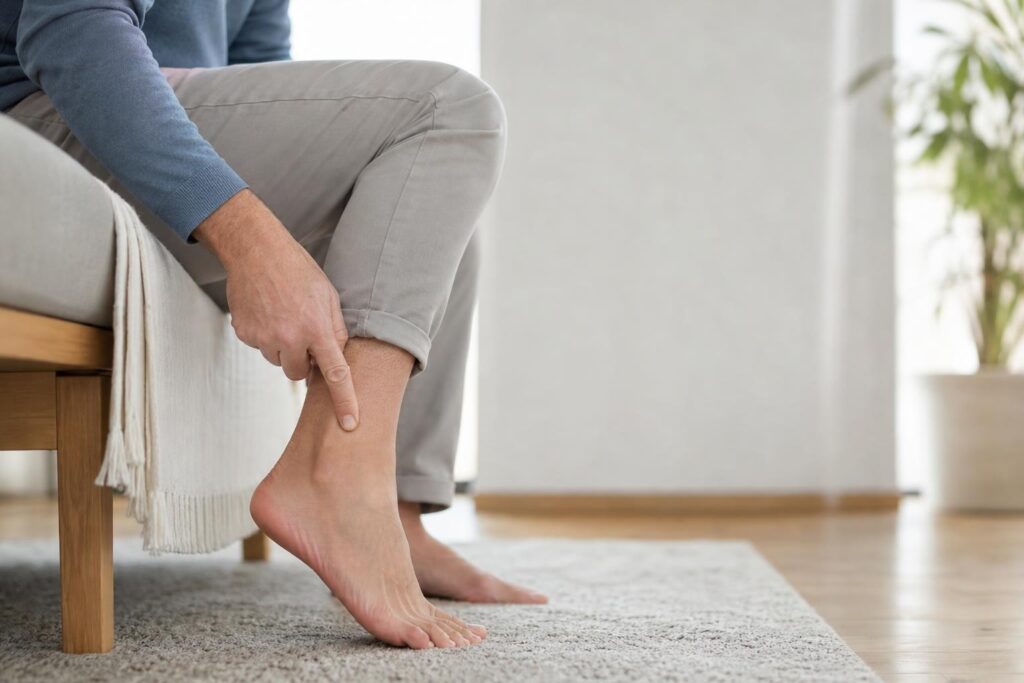

Use this article to better understand your symptoms and options. An in-person podiatry evaluation is the best way to determine what is causing a specific foot or ankle problem.
Maybe your foot feels better after a quiet weekend, only to hurt again when you return to work. Perhaps you have started choosing certain shoes, avoiding longer walks, or shifting your weight to keep pressure off one sore area. Because you can still get through the day, it may be tempting to accept the discomfort as part of aging, exercise, or being on your feet.
But recurring foot pain is not something you automatically have to live around. Pain that repeatedly changes your choices or movement deserves attention, even if it is not severe every day. A podiatry evaluation can help clarify what is being irritated, why the problem keeps returning, and whether a practical change in footwear, support, activity, or treatment could help.
Pain does not have to be constant to matter
Many foot and ankle problems fluctuate. Rest may reduce stress on an irritated structure, while walking, exercise, work, or a particular pair of shoes brings the symptoms back. Swelling may fade overnight and return later in the day. A sore toe may feel fine when barefoot but become painful inside a closed shoe.
That temporary improvement can create the impression that the issue has healed. In reality, the underlying source of pressure or strain may still be present. A tendon may continue to be overloaded. A joint may be irritated by the way the foot moves. A corn or callus may keep building over an area of concentrated pressure. An old injury may not have regained enough strength or stability for current activity demands.
This does not mean every ache reflects a serious condition. It does mean that the pattern—including what triggers the pain and how often it returns—can be clinically useful.
Your everyday workarounds may be important clues
People are often more limited by foot pain than they realize. Adaptations happen gradually, and they can start to feel normal. You might park closer to an entrance, stop taking the stairs, cut a walk short, or avoid standing in the kitchen. You may limp for the first few steps in the morning or wear one pair of shoes almost exclusively because everything else hurts.
These workarounds can reduce discomfort in the moment, but they may also shift stress to another part of the body. Favoring one foot can affect the opposite foot, ankle, knee, hip, or back. Curling the toes to grip an unstable shoe may add pressure to the toes and forefoot. Continuing to train with a changed stride can overload an area that was not originally painful.
A useful question is not only, “How much does it hurt?” Ask, “What am I doing differently because of it?” If recurring pain is changing your gait, footwear, exercise, work responsibilities, or independence, it is reasonable to have it evaluated.
What the pattern of recurring pain may reveal
The timing and location of symptoms can help a podiatrist narrow down possible causes, although they cannot confirm a diagnosis by themselves.
Pain during the first steps of the day
Heel or arch pain that is pronounced after getting out of bed, then loosens with movement, can occur when soft tissues are irritated. The same discomfort may return after prolonged sitting. Because several conditions can produce similar symptoms, an examination is helpful when the pattern persists.
Pain that builds with standing or walking
Symptoms that become more noticeable as the day continues may relate to repetitive pressure, footwear, joint irritation, tendon strain, or the mechanics of the foot. The location matters: pain under the forefoot raises different questions than discomfort along the outside of the ankle or behind the heel.
Pain that returns with exercise
If discomfort reliably appears at a certain mileage, pace, or type of movement, the issue may involve training load, support, flexibility, strength, or an incompletely recovered injury. Through sports medicine and trauma care, a podiatrist can assess both the painful area and the activity demands that trigger it.
Pain centered over a bump, toe, or thickened skin
Bunions, hammertoes, corns, and calluses may hurt only in specific shoes or after prolonged activity. Even when padding provides temporary comfort, repeated symptoms can indicate ongoing friction or pressure. Treatment decisions often depend on the structure involved, whether it remains flexible, and how much it interferes with daily life.
When is it time to schedule a podiatry visit?
There is no single number of days that applies to every person or every condition. Minor soreness after an unusual increase in activity may improve with rest and sensible self-care. An appointment becomes more appropriate when the pain is persistent, recurrent, or increasingly disruptive.
Consider scheduling an evaluation if:
- The pain keeps returning after it initially improves.
- You are limping or changing how you place weight on the foot.
- Symptoms repeatedly limit walking, exercise, work, or sleep.
- A painful area is becoming more frequent, intense, or swollen.
- You cannot comfortably wear your usual shoes.
- Pain began after an injury and the foot or ankle does not seem to be recovering.
- You notice numbness, burning, weakness, or a loss of balance along with the pain.
- Home measures have not produced steady improvement.
Comprehensive foot and ankle care is not limited to severe problems or surgery. Many visits focus on identifying pressure, improving support, addressing inflammation, modifying activity, and preventing a manageable concern from becoming more limiting.
Some symptoms should be assessed promptly
Seek prompt medical attention if you cannot bear weight after an injury, the foot appears deformed, or pain is accompanied by rapidly increasing swelling or extensive bruising. A foot that suddenly becomes cold, pale, blue, or unusually numb also warrants urgent assessment. Severe pain with redness, warmth, fever, drainage, or spreading discoloration may indicate an infection or another problem requiring timely care.
People with diabetes, reduced circulation, or decreased sensation should use a lower threshold for calling a medical professional. A blister, cut, red area, or painful pressure point may need attention even when it looks small. Dedicated diabetic foot care can help identify concerns that may otherwise be difficult to feel or monitor.
What happens during an evaluation?
A podiatry visit usually starts with details that are easy to overlook: when the pain began, where it is most noticeable, what makes it better or worse, and whether an injury or activity change occurred beforehand. It helps to explain how the problem affects your routine rather than describing only the pain score.
The examination may include the skin, nails, joints, muscles, tendons, circulation, sensation, foot alignment, and walking pattern as appropriate. Your shoes can also provide useful information about fit and wear. Depending on the findings, imaging or other testing may be considered, but it is not necessary for every type of foot pain.
Treatment depends on the suspected source and your health, activity level, and goals. Options may include footwear changes, temporary activity modification, padding, stretching or strengthening, medication guidance, bracing, orthotics, wound or nail care, or other office-based treatment. An evaluation can also help determine when a referral or more advanced care is appropriate.
What can you do while waiting for an appointment?
Avoid repeatedly testing an activity that predictably causes pain. Choose supportive, well-fitting shoes and reduce movements that aggravate the area without becoming completely inactive unless a clinician has advised rest. If swelling follows activity, elevating the foot may be reasonable. Ice is not suitable for every person, particularly when sensation or circulation is reduced, so ask for guidance if you are unsure.
Do not cut corns or calluses, dig around a painful nail, or apply strong medicated products to irritated skin without knowing whether they are safe for you. This is especially important for people with diabetes, neuropathy, poor circulation, or a history of slow healing.
Keeping a short symptom record can make the visit more productive. Note the exact location, time of day, shoes worn, activities that trigger symptoms, swelling or skin changes, and anything that provides relief.
Recurring pain deserves a clearer answer
You do not need to wait until foot pain is constant or unbearable before asking for help. If you have gradually reorganized your days around a painful foot or ankle, an evaluation may reveal options you have not considered.
Dr. Daniel Brandwein is a board-certified podiatrist who has provided podiatric care in Pompano Beach since 1991. To discuss recurring foot pain or another foot and ankle concern, contact the practice or call (954) 984-7500. Same-day appointments may be available. This article is educational and is not a substitute for individualized medical advice.
Ready to Get Your Foot or Ankle Concern Checked?
If foot pain, a wound, nail problem, injury, or another concern is affecting your comfort or mobility, Dr. Daniel Brandwein can evaluate what is going on and discuss appropriate next steps.
Dr. Daniel Brandwein DPM, PA, FACFAS
159 S Pompano Parkway, Pompano Beach, FL 33069
(954) 984-7500
This article is for general educational information and is not a substitute for an individualized medical evaluation or treatment plan.
Get your foot or ankle concern properly evaluated.
Dr. Daniel Brandwein provides podiatry care in Pompano Beach for foot and ankle pain, diabetic foot concerns, nail problems, wounds, injuries, and other common podiatric conditions.