Use this article to better understand your symptoms and options. An in-person podiatry evaluation is the best way to determine what is causing a specific foot or ankle problem.
You smooth down a thick patch of skin, switch shoes for a few days, and expect the problem to disappear. Instead, the spot returns—sometimes thicker, more tender, or painful enough to change the way you walk.
Recurring corns and calluses are often signs that a specific part of the foot is handling repeated pressure or friction. Removing the hard skin may provide temporary relief, but it does not necessarily address why that pressure keeps occurring. The location of the buildup can offer important clues about shoe fit, toe position, foot structure, and walking mechanics.
Corn or callus: what is the difference?
Both corns and calluses develop when the skin responds to ongoing rubbing or pressure by becoming thicker. They are related, but they do not always look or feel the same.
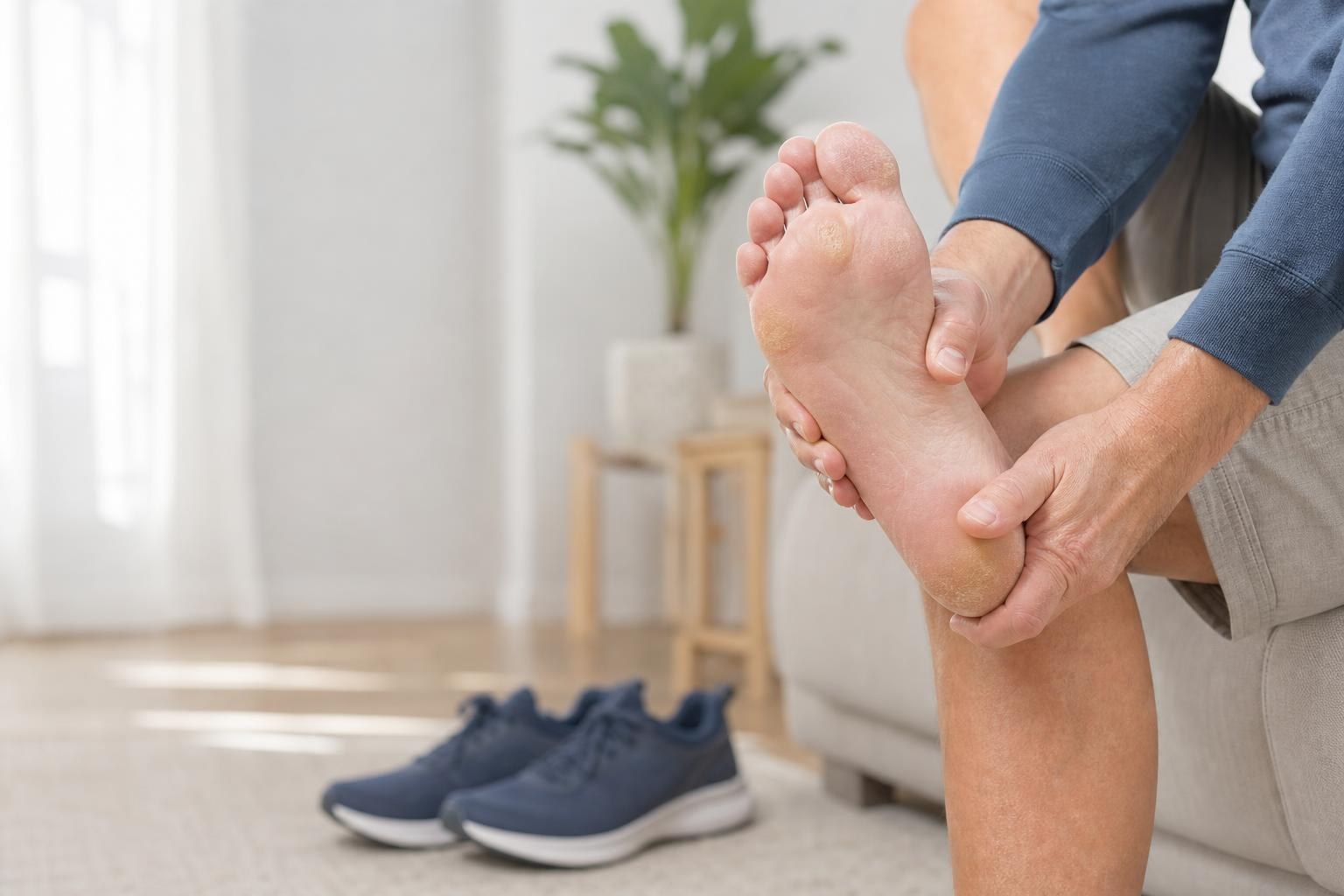
A callus is usually a broader, flatter area of thickened skin. It commonly appears beneath the heel, under the ball of the foot, or along an area that bears weight. A callus may feel rough or dry and can become uncomfortable as it grows thicker.
A corn is generally smaller and more concentrated. Hard corns often form on the tops or sides of toes, while softer corns may develop between toes where the skin stays moist. A corn may have a dense central core that creates a focused, “pebble in the shoe” type of pain when pressed.
Not every hard or painful spot is a corn. Plantar warts, foreign bodies, and other skin conditions can sometimes look similar. An evaluation can help determine what the lesion is before treatment begins.
What the location may tell you about pressure
The skin usually thickens where the foot repeatedly meets resistance. Looking at exactly where a corn or callus forms—and which shoes make it worse—can help identify the source.
- Under the ball of the foot: A callus here may reflect concentrated loading beneath one or more metatarsal bones. Foot structure, limited joint motion, shoe cushioning, and walking mechanics can all influence this pressure.
- On the top or outside of a toe: This pattern often points to rubbing against the shoe. A narrow toe box, low upper, prominent joint, or bent toe position may contribute.
- Between two toes: Pressure from neighboring toes can produce a soft corn. Moisture between the toes may keep the skin pale and tender.
- Along the side of the big or little toe: Repeated contact with the shoe may be involved, particularly when the forefoot is crowded or a bony area is more prominent.
- Around the heel: Thick skin can develop from weight-bearing pressure and friction. Dryness may make the area more likely to split or crack.
The pattern does not provide a diagnosis by itself. Two people can develop calluses in the same area for different reasons. A podiatric examination can assess the skin, joint movement, foot shape, shoes, and weight-bearing pattern together.
Why the same spot keeps returning
Skin buildup often returns after filing or trimming because the underlying force has not changed. The shoe may still rub in the same place, or the foot may continue to load one area more heavily than another.
Common contributing factors include footwear that is too tight, too loose, shallow in the toe area, or worn down unevenly. Toe contractures, bunions, prominent bones, changes in the foot’s natural cushioning, and certain walking patterns may also shift pressure onto a smaller surface area.
Activity matters as well. Long periods of standing, an increase in walking, or a change in exercise can make a previously minor pressure point more noticeable. Even a comfortable-looking shoe may cause trouble if its seams or shape line up directly with a tender spot.
If discomfort is affecting your stride, it is worth addressing. Limping or rolling away from the painful area may transfer stress to another part of the foot, ankle, knee, or hip.
What you can safely do at home
Start by reducing the irritation rather than aggressively removing the skin. Choose shoes with enough width and depth for your toes, a stable sole, and cushioning appropriate for your activities. Check the inside of the shoe for firm seams, worn lining, folded insoles, or small objects.
After bathing, a person without diabetes, poor circulation, reduced sensation, or fragile skin may gently use a pumice stone on uncomplicated thick skin. Stop if the area becomes sore, pink, or irritated. Moisturizer can help dry callused skin remain more flexible, but it should not be applied between the toes, where added moisture may cause skin problems.
Do not cut a corn or callus with a blade, nail tool, or scissors. Digging into the area can cause bleeding, infection, or an open wound. Over-the-counter corn removers commonly contain acid and can injure healthy surrounding skin if used incorrectly.
If you have diabetes, neuropathy, circulation concerns, or a history of foot wounds, avoid medicated corn-removal products and do not attempt to trim the area yourself. Instead, use the practice’s diabetic foot care resources and arrange an evaluation for individualized guidance.
When a corn or callus needs a podiatry visit
A small, painless callus may improve when the source of friction is corrected. Professional assessment becomes more important when the area repeatedly returns, causes pain, changes your walking pattern, or is difficult to identify.
You should also arrange an evaluation if you notice bleeding beneath the thick skin, a deep crack, drainage, an open area, or dark discoloration that is new or unexplained. Increasing redness, warmth, swelling, foul odor, pus, red streaking, fever, or rapidly worsening pain may indicate infection or another complication and warrants prompt medical attention. Severe or rapidly progressing symptoms may require urgent or emergency care.
People with reduced foot sensation may not feel how much pressure is present. A callus can sometimes conceal irritated or damaged skin beneath it, making regular visual checks especially important. If an opening develops or a spot is not healing as expected, learn more about professional wound care and seek timely assessment.
How a podiatrist may address the cause
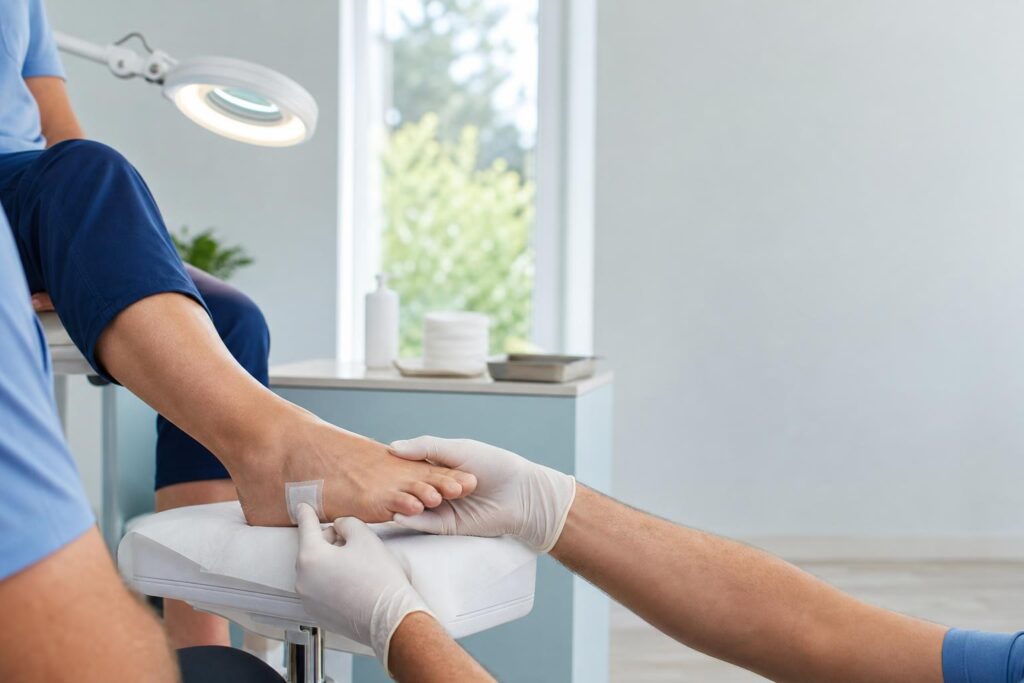
A podiatry visit is not limited to shaving down thick skin. The goal is to understand why the lesion formed and how to reduce the forces acting on that area.
The examination may include checking skin integrity, circulation, sensation, toe alignment, joint motion, foot structure, and the location of tenderness. Bringing the shoes you wear most often can be useful because their fit and wear pattern may reveal where rubbing or uneven loading occurs.
Depending on the findings, care may include safely reducing thickened skin, protecting the area with appropriate padding, recommending footwear changes, or considering an orthotic or another method of redistributing pressure. If a structural issue is contributing, the podiatrist can explain conservative options and when further treatment might be considered. More information is available through the practice’s comprehensive foot and ankle care page.
Pay attention to the message, not just the rough skin
A corn or callus is often the visible result of an ongoing pressure pattern. Its location, the shoes that aggravate it, and how quickly it returns can all help clarify what your foot is experiencing.
If a painful or recurring spot is interfering with walking—or if you have diabetes, reduced sensation, circulation concerns, or signs of skin breakdown—Dr. Daniel Brandwein can evaluate the area and discuss appropriate next steps. To schedule a visit at 159 S Pompano Parkway in Pompano Beach, call (954) 984-7500 or use the practice’s contact page. Same-day appointments may be available, and walk-ins are welcome.
Ready to Get Your Foot or Ankle Concern Checked?
If foot pain, a wound, nail problem, injury, or another concern is affecting your comfort or mobility, Dr. Daniel Brandwein can evaluate what is going on and discuss appropriate next steps.
Dr. Daniel Brandwein DPM, PA, FACFAS
159 S Pompano Parkway, Pompano Beach, FL 33069
(954) 984-7500
This article is for general educational information and is not a substitute for an individualized medical evaluation or treatment plan.
Get your foot or ankle concern properly evaluated.
Dr. Daniel Brandwein provides podiatry care in Pompano Beach for foot and ankle pain, diabetic foot concerns, nail problems, wounds, injuries, and other common podiatric conditions.