Use this article to better understand your symptoms and options. An in-person podiatry evaluation is the best way to determine what is causing a specific foot or ankle problem.
When your arch starts aching during an ordinary walk, it is natural to look at the painful spot for an explanation. But the discomfort may be influenced by what the entire foot is doing from the moment your heel contacts the ground until your toes push off.
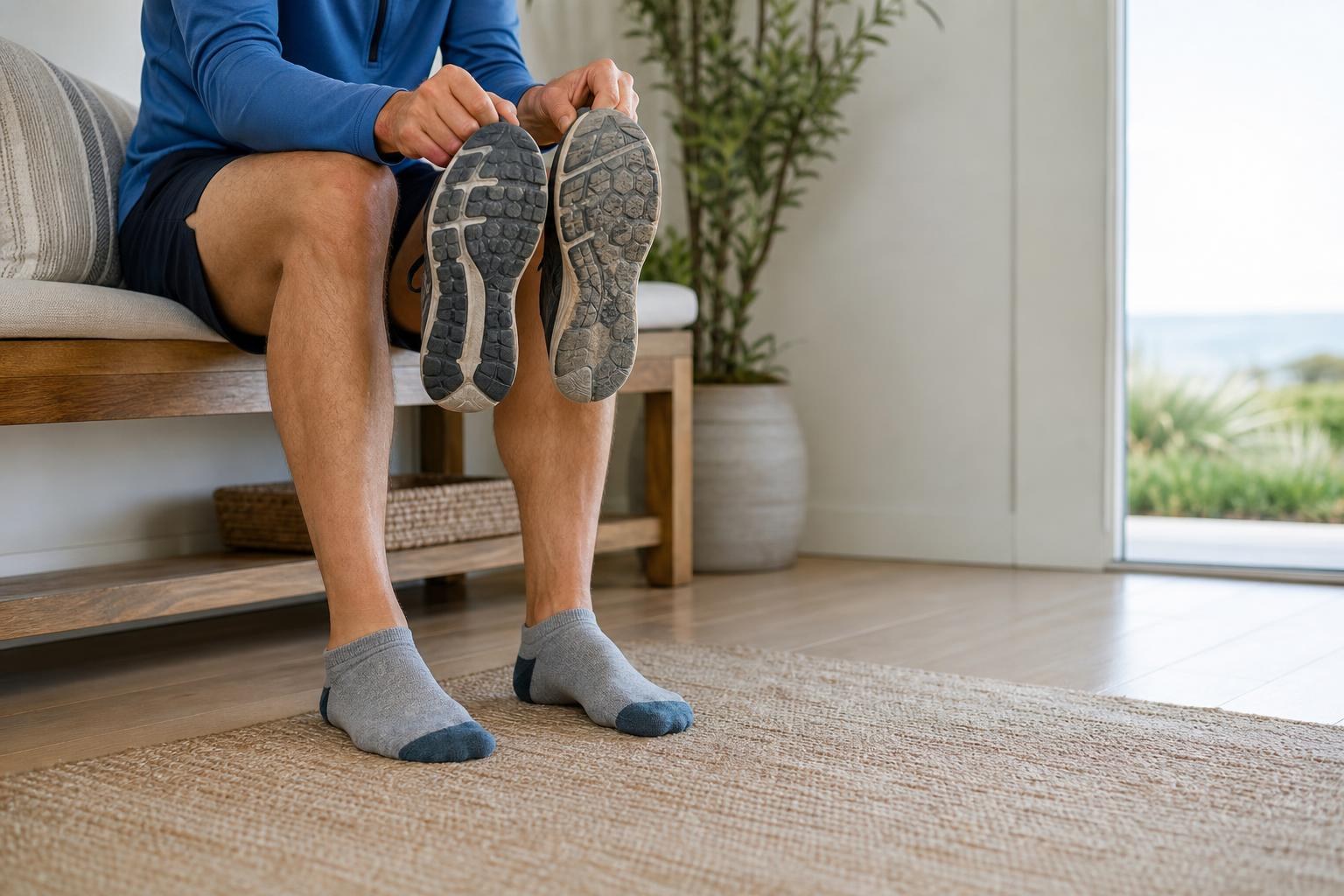
Your shoes may preserve part of that story. A sole that wears down much faster along one edge, a compressed midsole, or one shoe that looks more distorted than the other can reflect how you repeatedly load your feet. These clues can be helpful, especially when arch pain appears after walking or standing, but they are not a diagnosis by themselves.
Why walking mechanics matter to the arch
The arch is not a rigid structure. It changes shape slightly as your foot accepts weight, adapts to the ground, and prepares to propel you forward. Bones, joints, muscles, tendons, ligaments, and the plantar fascia all help manage those forces.
Some inward motion of the foot is normal and useful. It helps absorb impact. The foot then needs to become stable enough for an efficient push-off. If the timing, direction, or amount of motion is not working well for you, certain tissues may have to work harder with every step.
That does not mean everyone’s feet should move identically. Arch height also does not tell the whole story. A person with a low-looking arch may walk comfortably, while someone with a visibly higher arch may have trouble distributing pressure. What matters is how the foot functions while it is bearing weight and moving.
What can uneven shoe wear tell you?
Most walking shoes develop some wear at the outer heel because many people contact the ground there first. A small amount of symmetrical wear is not automatically a concern. The more useful observations are substantial differences between the right and left shoe, rapid breakdown, or wear that appears alongside recurring pain.
Look at shoes you have worn regularly rather than a nearly new pair. Possible clues include:
- One heel wearing down faster: This may reflect a difference in stride, foot position, leg movement, or how you shift weight away from discomfort.
- The midsole leaning inward or outward: Compression can suggest that one side of the shoe is repeatedly handling more force, although the shoe’s age and construction also matter.
- Heavy wear beneath the forefoot: This may provide information about where you push off and whether certain areas are accepting more pressure.
- A stretched or distorted upper: Changes around the inside of the shoe can occur when the foot moves against the upper, but fit and shoe width can contribute as well.
- Different wear between two pairs: A work shoe, running shoe, and casual shoe may affect your mechanics differently. Comparing them can reveal whether symptoms are associated with a particular design or activity.
Shoe wear cannot confirm that you overpronate, have plantar fasciitis, need orthotics, or have one leg shorter than the other. Walking surfaces, occupation, old injuries, shoe quality, and how long you have owned the shoes can all change the pattern.
Arch pain can change the way you walk
Biomechanics do not only contribute to pain; pain can also alter biomechanics. When the arch hurts, you may shorten your stride, spend less time on that foot, turn the foot outward, or push off from a different area without realizing it.
This protective response can be useful briefly, but an ongoing compensation pattern may shift stress elsewhere. The ball of the foot, heel, outside of the foot, ankle, or opposite limb may begin doing more work. Some people first notice the change as new shoe wear, fatigue on one side, or discomfort that spreads beyond the original location.
This is one reason “walking through it” does not always settle arch pain. If each step continues to load an irritated structure—or if compensation creates a second source of stress—resting only at the end of the day may not address what keeps provoking the symptoms.
Why arch pain may get worse as the day continues
Arch pain that builds after several hours can suggest that the foot is having difficulty tolerating repeated load. Muscles may fatigue, footwear may lose support as the midsole compresses, and irritated tissue may become increasingly sensitive with continued standing or walking.
Several factors may contribute, including a sudden increase in activity, prolonged standing, worn-out shoes, limited ankle flexibility, weakness, a previous injury, or a change in walking pattern. Heel pain, tendon irritation, arthritis, nerve-related symptoms, and stress injuries can also be felt near the arch. An evaluation can help determine which possibility fits the location and pattern of your symptoms.
Pay attention to timing. Pain with the first few steps after rest can behave differently from pain that appears only after a long walk. Burning or tingling is different from a pulling sensation, and pinpoint tenderness may call for a different assessment than broad fatigue through the arch.
A practical home check before your appointment
You do not need to perform your own gait analysis. A few simple observations can give your podiatrist useful context without encouraging you to diagnose the problem yourself.
- Compare the soles and midsoles of your most frequently worn shoes.
- Note whether the pain affects one arch or both.
- Track when discomfort begins: first steps, after a certain distance, late in the workday, or after removing your shoes.
- Notice whether changing shoes changes the symptoms.
- Record recent changes in exercise, work demands, walking surfaces, or footwear.
- Bring an older pair of shoes to your evaluation if the wear pattern is noticeable.
Avoid deliberately changing your stride based only on a shoe-wear chart. Forcing your feet to point straight ahead or shifting weight to a different edge can create additional stress. Likewise, a firm insert is not automatically the right answer for every painful arch.
What you can do while monitoring mild arch pain
If the discomfort is mild and there was no significant injury, consider temporarily reducing the activity that brings it on. Wear stable, properly fitting shoes that are not visibly collapsed or excessively worn. Avoid making several major changes—new shoes, new inserts, and a new exercise routine—at the same time, because that can make it difficult to identify what helps or aggravates the problem.
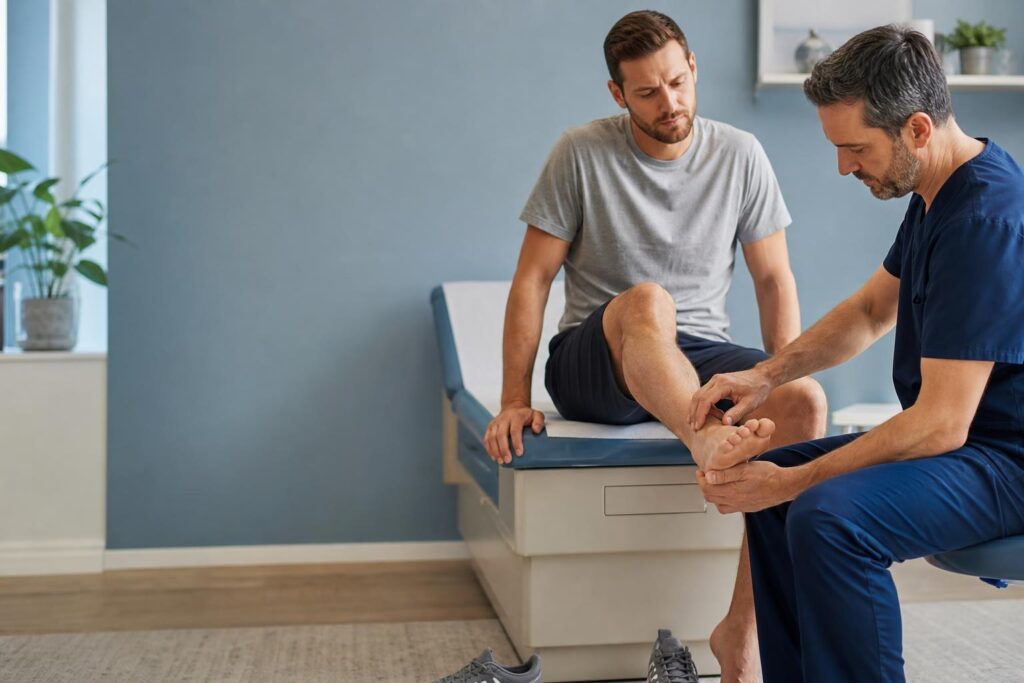
Persistent pain deserves more than repeated shoe replacement. A podiatric examination can assess the painful area, joint motion, strength, foot alignment, footwear, and how you stand or walk. Imaging may be considered when the history and examination suggest a bone, joint, or soft-tissue problem that needs a closer look.
Treatment depends on the cause and may involve activity modification, footwear guidance, stretching or strengthening recommendations, temporary support, or orthotics when appropriate. Dr. Brandwein provides comprehensive foot and ankle care for arch, heel, and related walking concerns. If symptoms began with a sports injury or traumatic event, the practice also offers sports medicine and trauma care.
When should arch pain be evaluated?
Schedule an evaluation if the pain keeps returning, limits normal walking, is worsening, or has not improved after a reasonable period of reduced activity and supportive footwear. You should also be evaluated if you develop persistent swelling, weakness, numbness, burning, a new lump, or pain concentrated over one small area.
Seek prompt medical attention after a significant injury if you cannot bear weight, the foot appears deformed, or swelling and bruising are severe. Redness, warmth, an open area, drainage, fever, or rapidly increasing pain also warrants timely care. People with diabetes, reduced sensation, poor circulation, or a history of foot wounds should be especially cautious about new pain, skin changes, or pressure areas and may benefit from dedicated diabetic foot care.
Bring the whole walking pattern into focus
The bottom of a worn shoe can offer a clue, but it cannot explain by itself why your arch hurts. The most useful assessment combines your symptoms, activity demands, footwear, physical examination, and the way your foot functions under load.
If arch pain is changing how comfortably you walk, Dr. Daniel Brandwein can evaluate the pattern and discuss reasonable next steps. The practice has served the Pompano Beach community since 1991 at 159 S Pompano Parkway. To request an appointment, call (954) 984-7500 or contact the office online. Same-day appointments may be available, walk-ins are welcome, and most insurance is accepted.
Ready to Get Your Foot or Ankle Concern Checked?
If foot pain, a wound, nail problem, injury, or another concern is affecting your comfort or mobility, Dr. Daniel Brandwein can evaluate what is going on and discuss appropriate next steps.
Dr. Daniel Brandwein DPM, PA, FACFAS
159 S Pompano Parkway, Pompano Beach, FL 33069
(954) 984-7500
This article is for general educational information and is not a substitute for an individualized medical evaluation or treatment plan.
Get your foot or ankle concern properly evaluated.
Dr. Daniel Brandwein provides podiatry care in Pompano Beach for foot and ankle pain, diabetic foot concerns, nail problems, wounds, injuries, and other common podiatric conditions.