Use this article to better understand your symptoms and options. An in-person podiatry evaluation is the best way to determine what is causing a specific foot or ankle problem.
You buy a pair of insoles hoping they will settle your heel, arch, or ankle pain. For a few days, they feel promising. Then the discomfort returns—or a new pressure point develops somewhere else.
That experience does not necessarily mean all inserts are useless. It may mean the device is too firm, too soft, poorly matched to your footwear, or unable to address the way your foot is loading. It is also possible that the pain needs a clearer diagnosis before any type of support can be chosen intelligently.
The practical question is not whether custom orthotics are universally better than store-bought insoles. It is which level of support fits your symptoms, foot structure, activities, and treatment goals.
What an orthotic is designed to do
An orthotic is a device worn inside a shoe to influence how pressure and force move through the foot. Depending on its design, it may cushion a sensitive area, support part of the foot, improve stability, redistribute pressure, or change how the foot functions during a step.
Some devices are primarily accommodative. Their job is to protect or offload an area that does not tolerate pressure well. Others are designed to influence motion and improve mechanical control. Many combine elements of both.
Orthotics may be considered as part of care for certain types of heel or arch pain, recurring overuse symptoms, pressure-related discomfort, instability, or symptoms associated with foot structure and walking mechanics. They may also be used in conjunction with stretching, footwear changes, activity modification, physical therapy, medication, or other treatment.
They are not a universal cure. An orthotic cannot repair every injury, permanently reshape an adult foot, or make unsuitable shoes appropriate for prolonged activity. If pain is coming from a fracture, significant tendon injury, nerve problem, wound, infection, or another condition requiring specific care, an insert alone may delay the right treatment.
When a store-bought insole may be a reasonable first step
Over-the-counter insoles can be useful. They are available in different profiles, cushioning levels, and degrees of support, and they cost less than custom devices. For mild, recent discomfort, they may be a reasonable trial when there has been no significant injury and no concerning change in the foot.
A prefabricated insert may be enough if your needs are relatively straightforward, your feet are similar from side to side, and the device fits your shoe without crowding your toes or lifting your heel. Some people also use them to replace the thin removable liners supplied with athletic or work shoes.
More cushioning is not always better, however. A very soft insert can compress quickly or make the foot feel less stable. A high, rigid arch placed in a foot that does not tolerate it can create soreness. If an insole causes numbness, rubbing, blisters, increased pain, or pressure along the arch, stop using it rather than trying to force an adjustment.
When custom orthotics may be worth considering
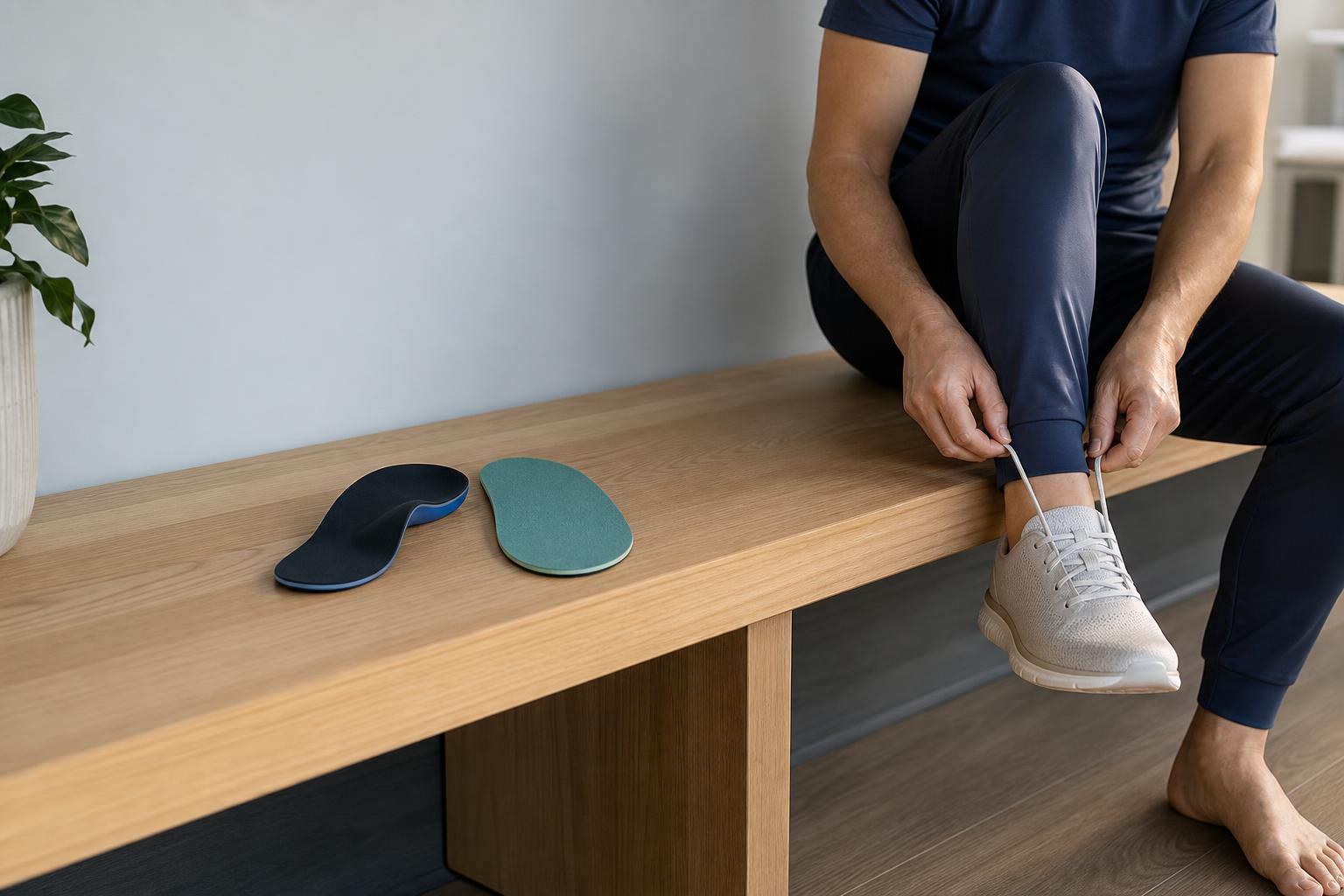
Custom orthotics are prescribed after an evaluation and made for the individual foot. Their value is not simply that they match the outline of your sole. The prescription can account for where support or cushioning is needed, the type of material appropriate for the goal, and how the device should interact with your footwear and activity.
Custom support may be useful when:
- Symptoms persist or repeatedly return. Pain that improves briefly with rest or generic inserts but returns during normal activity may require a closer look at both the diagnosis and the forces contributing to it.
- The two feet have different needs. A meaningful difference in structure, motion, pressure, or symptoms may be difficult to address with an identical pair of mass-produced inserts.
- You have a specific pressure-sensitive area. A customized device may be designed to redistribute force around a painful prominence, corn, callus, or another vulnerable location.
- Your work or sport places repeated demands on your feet. Long hours of standing, frequent walking, running, court sports, or activity on hard surfaces can expose mechanical problems that are less noticeable at rest.
- Standard inserts do not fit or feel right. Unusual shoe-fit needs, a prominent arch, a very flexible foot, or difficulty tolerating generic support can make customization more relevant.
- You have a medical reason to be cautious about pressure. People with diabetes, reduced sensation, circulation concerns, or a history of foot wounds should not experiment casually with devices that could create unnoticed rubbing.
These clues do not automatically mean you need custom orthotics. They indicate that an examination may be more useful than continuing to purchase different inserts without understanding the underlying problem.
The examination matters more than the footprint alone
A wet footprint, kiosk scan, or shoe-wear pattern can provide limited information, but it does not establish why your foot hurts. Two people with similarly shaped arches may move differently, experience pressure in different places, and need different treatment.
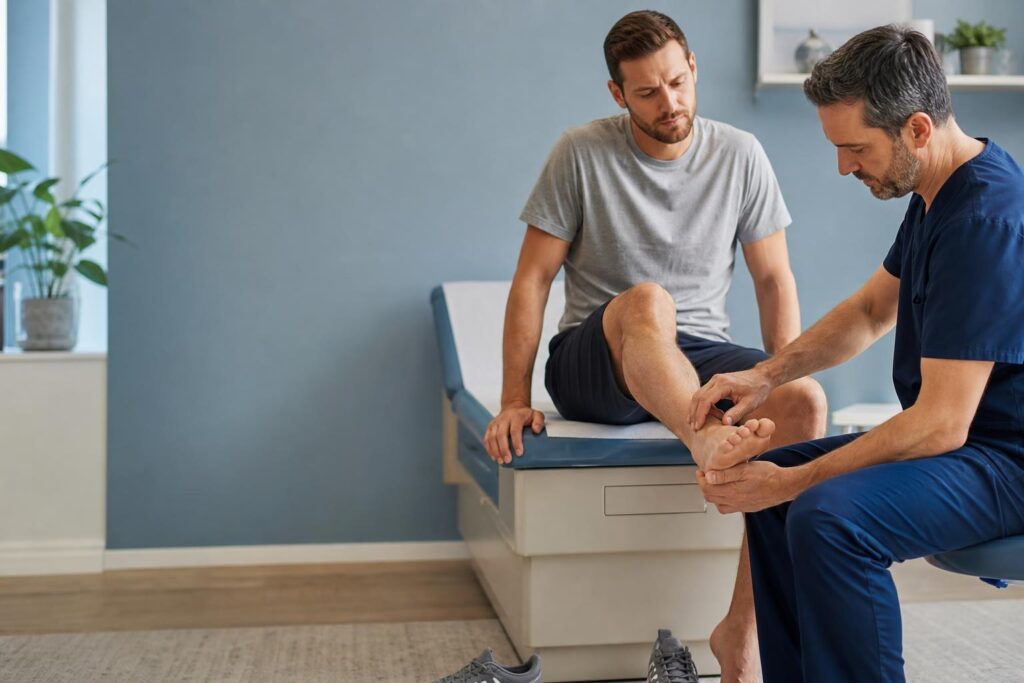
During a podiatric evaluation, the clinician may ask when symptoms occur, which activities aggravate them, and what footwear you use most often. The examination may assess joint motion, strength, tenderness, alignment, skin condition, and how the feet respond while standing and walking. Your current shoes and inserts can also reveal fit problems or pressure patterns.
Imaging is not necessary for every orthotic evaluation. It may be recommended when the history and examination suggest an injury or condition that needs a closer look. The larger goal is to determine whether support is appropriate at all—and, if so, what the device should accomplish.
Dr. Daniel Brandwein provides comprehensive foot and ankle care for heel pain, arch discomfort, structural concerns, and other conditions that may affect walking.
Custom does not mean one device for every shoe
Even a well-designed orthotic has to fit the footwear around it. A device intended for a roomy walking shoe may not fit a narrow dress shoe or shallow slip-on. If it crowds the toes, causes heel slippage, or changes the shoe fit substantially, it may create a different problem.
Bring the shoes you wear for work, exercise, and daily activities to your appointment. In some cases, the most practical plan is to choose the device around the shoe used most frequently. In others, footwear changes may be more important than an orthotic.
A gradual break-in period is often recommended. Mild awareness of new support can occur at first, but worsening pain, skin irritation, numbness, or blistering is not something to ignore. The device may need to be reassessed or adjusted.
Special caution for diabetes and reduced sensation
If you have diabetes or decreased feeling in your feet, an insert can create pressure without producing enough pain to warn you. Check your skin after wearing a new device, including the heel, sides of the foot, toes, and arch. Persistent redness, a blister, drainage, or broken skin warrants prompt attention.
Guidance through professional diabetic foot care can help determine whether an insert, accommodative device, prescription footwear, or another approach is appropriate. Do not place an orthotic over an open wound unless it has been specifically incorporated into your treatment plan. A wound that is deep, infected-looking, draining, or accompanied by spreading redness, fever, or rapidly increasing swelling needs prompt medical care.
Support should be tied to a clear goal
Before buying another insert, ask what you want it to change. Is the goal to reduce heel pressure during work? Improve comfort while walking? Limit irritation around a prominent joint? Return to running without the same recurring pain?
A clear goal makes it easier to judge whether the device is helping. It also prevents the orthotic from becoming a substitute for addressing training errors, worn-out shoes, limited flexibility, weakness, or an injury that needs treatment. Active adults with recurring symptoms can learn more about the practice’s approach to sports medicine and foot or ankle trauma.
If foot pain continues despite reasonable footwear and an over-the-counter insert, or if support makes the problem worse, consider having the foot evaluated before trying another product. Dr. Brandwein has provided podiatric care since 1991 and can assess whether custom orthotics, a different conservative option, or further evaluation makes sense for your situation.
To request an appointment at 159 S Pompano Parkway in Pompano Beach, call (954) 984-7500 or contact the office online. Same-day appointments may be available, walk-ins are welcome, and most insurance is accepted.
Ready to Get Your Foot or Ankle Concern Checked?
If foot pain, a wound, nail problem, injury, or another concern is affecting your comfort or mobility, Dr. Daniel Brandwein can evaluate what is going on and discuss appropriate next steps.
Dr. Daniel Brandwein DPM, PA, FACFAS
159 S Pompano Parkway, Pompano Beach, FL 33069
(954) 984-7500
This article is for general educational information and is not a substitute for an individualized medical evaluation or treatment plan.
Get your foot or ankle concern properly evaluated.
Dr. Daniel Brandwein provides podiatry care in Pompano Beach for foot and ankle pain, diabetic foot concerns, nail problems, wounds, injuries, and other common podiatric conditions.