
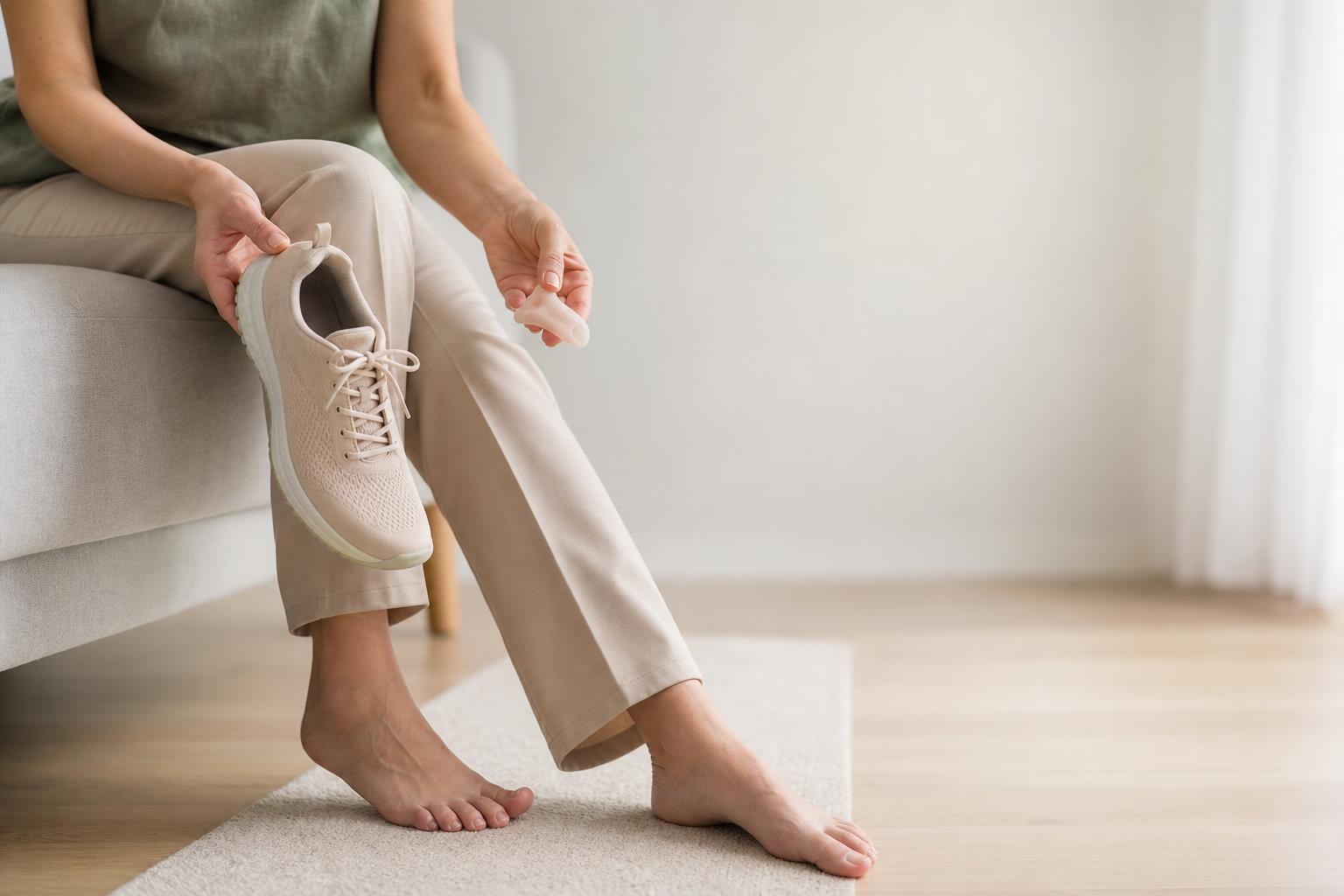
Use this article to better understand your symptoms and options. An in-person podiatry evaluation is the best way to determine what is causing a specific foot or ankle problem.
You switched to wider shoes. You added a pad over the sore spot. Maybe you even started avoiding certain walks because the joint beside your big toe becomes irritated afterward. But how can you tell whether those changes are actually managing the bunion—or merely helping you tolerate it for now?
That distinction matters. Conservative bunion care can be very useful when it reduces pressure, controls irritation, and helps you remain active. It generally does not make the underlying bony prominence disappear or permanently return the big toe to a straight position. A practical goal is to determine whether your symptoms and function are staying manageable without creating new problems elsewhere in the foot.
What conservative bunion treatment is designed to do
A bunion develops at the joint where the big toe meets the foot. As the alignment of the joint changes, the inside of the forefoot may become prominent and the big toe may angle toward the smaller toes. The prominence can rub against a shoe, while altered joint mechanics may contribute to aching, stiffness, or pain during push-off.
Non-surgical treatment focuses on the effects of this alignment rather than permanently correcting the structure. Depending on the individual foot, conservative care may help:
- Reduce rubbing and direct pressure over the prominence
- Calm irritation around the big-toe joint
- Improve comfort during walking, work, or exercise
- Address foot mechanics that may be adding stress to the area
- Protect nearby toes and skin from crowding or friction
This approach may be enough for someone whose symptoms are occasional, predictable, and responsive to reasonable changes. It may also be appropriate for a person who prefers to postpone surgery or is not currently a surgical candidate. The right plan depends on more than how the bunion looks.
Signs that your current approach may be helping
Pain does not have to vanish completely for conservative care to be worthwhile. More useful questions are whether the problem is becoming less disruptive and whether improvement lasts beyond the first few minutes after removing a shoe.
Your symptoms are less frequent or easier to predict
If discomfort now occurs only after a long day rather than during routine walking, that may represent meaningful improvement. It is also helpful when you can identify and modify a consistent trigger, such as a narrow toe box or a particular activity.
The skin is no longer being repeatedly irritated
Less redness, rubbing, blistering, or callus buildup over the prominence suggests that pressure is being managed more effectively. Skin protection is especially important for people with diabetes, reduced sensation, or circulation concerns, because a small area of friction may not be felt normally.
You can stay active without compensating
A useful treatment should make movement more comfortable without causing you to limp, roll toward the outside of the foot, shorten your stride, or overload the other leg. If you can walk more naturally and complete normal activities with less discomfort afterward, the plan may be serving its purpose.
Your shoe choices remain realistic
There is a difference between choosing well-fitting shoes and needing to eliminate nearly every shoe you own. Conservative care is more sustainable when you can find footwear that accommodates the forefoot while still meeting the demands of your work and daily life.
Which non-surgical options may be considered?
The most appropriate measures depend on where the pressure occurs, how the joint moves, and whether other foot mechanics are contributing. An evaluation can help distinguish a bunion from arthritis, a painful callus, a nerve-related problem, or another source of forefoot pain.
Footwear adjustments often begin with adequate width and depth in the toe box. A shoe should not press the big toe inward or place a seam directly over the prominence. Width is important, but so is overall fit: a shoe that is simply too large may allow sliding and create different areas of friction.
Padding or protective sleeves may cushion the prominence, provided they do not make the shoe tighter. Pads placed incorrectly can shift pressure rather than relieve it, so thicker is not always better.
Activity and symptom management may include temporarily reducing activities that repeatedly aggravate the joint, using cold therapy with a protective cloth barrier, or discussing appropriate medication with a healthcare professional. Medication may reduce discomfort, but it does not address shoe pressure or joint alignment.
Custom or appropriate over-the-counter orthotics may be considered when foot mechanics are adding stress during standing and walking. Orthotics do not remove a bunion, but they may improve how pressure is distributed in selected cases. Dr. Brandwein can assess whether an insert is likely to address the mechanics of your particular foot rather than simply taking up more room in the shoe.
Toe spacers, splints, or taping may provide temporary comfort or positioning for some people. They should not cause numbness, skin irritation, or increased crowding. These devices generally should not be expected to permanently straighten an established structural bunion.
When conservative care may no longer be enough
A bunion does not need to look severe to deserve attention. Likewise, a prominent bunion does not automatically require surgery. The more important issue is what it is doing to your comfort, skin, joint movement, and daily function.
Consider scheduling an evaluation if:
- Pain persists despite wearing appropriately fitted shoes
- You are regularly limiting walking, exercise, work, or social activities
- The big-toe joint is becoming increasingly stiff or painful during push-off
- The big toe is crowding, crossing, or placing pressure on the second toe
- Corns, calluses, blisters, or open skin keep developing
- You are changing how you walk to avoid the painful area
- A spacer, pad, or insert is creating new pressure or numbness
- The symptoms or toe position appear to be changing over time
These signs do not necessarily mean surgery is the next step. They mean it may be time to confirm the source of the symptoms, review the fit of your footwear or devices, and discuss whether a different treatment strategy is reasonable. The practice’s comprehensive foot and ankle care includes evaluation of bunions and related forefoot concerns.
Do not assume every red, painful big-toe joint is “just the bunion”
Gradual irritation from shoe pressure is different from a joint that becomes suddenly very painful, hot, swollen, or intensely red. Those symptoms may have another cause and warrant prompt medical attention. Seek timely care for drainage, an open sore, rapidly spreading redness, fever, or an inability to bear weight.
People with diabetes, neuropathy, poor circulation, or a history of foot wounds should be particularly cautious about treating irritated skin on their own. Avoid cutting a callus or using medicated corn removers over the bunion without professional guidance. If diabetes affects your feet, learn more about the practice’s diabetic foot care.
A simple way to reassess your progress
Instead of judging treatment by appearance alone, track function for a few weeks. Note which shoes you wore, how long you were active, where the pain occurred, and whether redness or tenderness remained after the shoe came off. Pay attention to whether you are walking normally or unconsciously shifting weight away from the big toe.
This information can make a podiatry visit more productive. It helps show whether the problem is mainly direct shoe pressure, joint motion, activity load, or a combination of factors. If imaging is appropriate, it may provide additional information about alignment and the joint, but treatment decisions are not based on an X-ray alone.
Get a plan that fits your foot and your routine
Conservative bunion care is working when it protects the skin, improves comfort, and lets you move through daily life without steadily increasing restrictions. If your current approach is no longer accomplishing those goals, reassessment can clarify what to adjust and what options may come next.
Dr. Daniel Brandwein, DPM, PA, FACFAS, is a board-certified podiatrist who has provided podiatric care in Pompano Beach since 1991. To arrange a bunion evaluation, call (954) 984-7500 or contact the office at 159 S Pompano Parkway, Pompano Beach, FL 33069. Same-day appointments may be available, walk-ins are welcome, and most insurance is accepted.
Ready to Get Your Foot or Ankle Concern Checked?
If foot pain, a wound, nail problem, injury, or another concern is affecting your comfort or mobility, Dr. Daniel Brandwein can evaluate what is going on and discuss appropriate next steps.
Dr. Daniel Brandwein DPM, PA, FACFAS
159 S Pompano Parkway, Pompano Beach, FL 33069
(954) 984-7500
This article is for general educational information and is not a substitute for an individualized medical evaluation or treatment plan.
Get your foot or ankle concern properly evaluated.
Dr. Daniel Brandwein provides podiatry care in Pompano Beach for foot and ankle pain, diabetic foot concerns, nail problems, wounds, injuries, and other common podiatric conditions.