
Use this article to better understand your symptoms and options. An in-person podiatry evaluation is the best way to determine what is causing a specific foot or ankle problem.
It can be frustrating to watch a foot wound finally close, only to see the skin split, drain, or break down again. You may wonder whether you returned to normal activity too quickly, chose the wrong shoes, or missed a sign that the area had not fully healed.
A reopened wound does not necessarily mean you did something wrong. The surface may have looked better while the tissue was still vulnerable, or an underlying problem may continue to place stress on the area. Because the feet absorb pressure with nearly every step, even a small weak spot can be difficult to protect without understanding what is causing it.
Why a wound may look healed before it is ready
When a wound closes, new skin forms over the opening. That is an important milestone, but it does not always mean the tissue has regained normal strength. Newly repaired skin can be thin and easier to damage through rubbing, pressure, moisture, or repeated loading.
This is especially relevant on the heel, ball of the foot, toes, and other weight-bearing or shoe-contact areas. A person may resume regular walking because the site looks closed and no longer hurts. If the tissue is not ready for that level of stress, however, the surface can break down again.
Pain is not always a dependable guide. Diabetes, nerve damage, and some other conditions can reduce sensation in the feet. A wound may be worsening even when it does not hurt.
Common reasons a foot wound keeps reopening
An evaluation can help determine whether the problem is mainly mechanical, related to the wound environment, or connected to a broader health concern. In many cases, more than one factor is involved.
Repeated pressure on the same spot
Pressure is a frequent reason for recurrent skin breakdown. A wound beneath the foot may continue to receive substantial force during standing and walking. A wound on a toe or the side of the foot may be irritated by a shoe seam, narrow toe box, or nearby toe.
A thick callus around the area can also matter. Callused skin may increase focal pressure and can sometimes conceal what is happening underneath. Simply covering the site may not solve the problem if each step continues to stress it.
Friction and shearing
Friction occurs when skin repeatedly rubs against a shoe, sock, brace, or another toe. Shearing happens when the skin stays relatively still while deeper tissue shifts. Both forces can disrupt fragile tissue, particularly when footwear slips at the heel or the foot moves inside the shoe.
Too much or too little moisture
A wound needs an appropriately managed environment. Skin that remains excessively wet can become soft and prone to breakdown, while an uncovered area that becomes overly dry may crack. Drainage that soaks through a dressing also needs attention rather than repeated covering without an assessment.
The right dressing depends on the wound’s location, depth, drainage, surrounding skin, and other clinical findings. A product that worked for a minor scrape elsewhere on the body may not be suitable for a slow-healing foot wound.
Reduced circulation
Healthy tissue depends on an adequate blood supply. Circulation problems can slow repair and make newly closed skin less resilient. Changes such as a foot that feels unusually cool, discoloration, or pain in the foot or leg with activity should be discussed with a medical professional. Sudden severe circulation-related symptoms require urgent attention.
Infection or ongoing inflammation
Bacteria can interfere with healing, and infection is not always dramatic at first. Increasing warmth, redness, swelling, drainage, odor, or tenderness may be significant. In someone with reduced sensation, visible changes may appear before pain does.
Health factors that affect healing
Diabetes, swelling, reduced sensation, vascular disease, nutritional concerns, smoking, and certain medications can influence wound healing. This does not mean a recurrent wound has one particular cause. It means the site should be assessed in the context of the person’s overall health rather than treated as an isolated skin problem.
People living with diabetes can learn more about the practice’s approach to diabetic foot care, including preventive monitoring and management of foot concerns.
When should a reopened foot wound be evaluated?
A wound that repeatedly opens, fails to make steady progress, or develops new drainage deserves professional evaluation. It is wise to seek care sooner if you have diabetes, poor circulation, reduced feeling in your feet, a history of ulcers, or a weakened immune system. Waiting for pain may delay care when sensation is limited.
Contact a medical professional promptly if you notice:
- Redness, warmth, or swelling that is increasing or spreading
- Pus, worsening drainage, an unpleasant odor, or bleeding that recurs
- Dark, pale, blue, or otherwise concerning changes in the skin
- A wound that appears deeper, wider, or more exposed
- Fever, chills, unusual weakness, or feeling generally unwell
- New numbness or a foot that feels unusually cold
- Red streaking extending away from the wound
Seek urgent or emergency medical attention for rapidly spreading redness, significant tissue discoloration, severe or rapidly worsening pain, uncontrolled bleeding, sudden loss of feeling, or signs of systemic illness. If you are uncertain about the seriousness of a change, it is safer to call a medical professional for guidance.
What to do while arranging care
Until the area can be evaluated, protect it from further contamination and pressure. Avoid walking barefoot, including inside the home. Use a clean dressing as directed by a medical professional, and keep track of changes in drainage, odor, color, swelling, and wound size.
Do not cut away callused or loose skin yourself. Avoid putting peroxide, alcohol, harsh antiseptics, or unprescribed topical products into the wound, as these can irritate tissue. Soaking the foot may also soften the surrounding skin and increase the risk of breakdown.
Reducing pressure is often important, but the safest method depends on the wound and your stability while walking. Improvised padding can shift pressure to another area or create a new rubbing point. A podiatric evaluation can help determine whether footwear changes, padding, an offloading device, activity modification, or another approach is appropriate.
What a podiatric wound evaluation can clarify
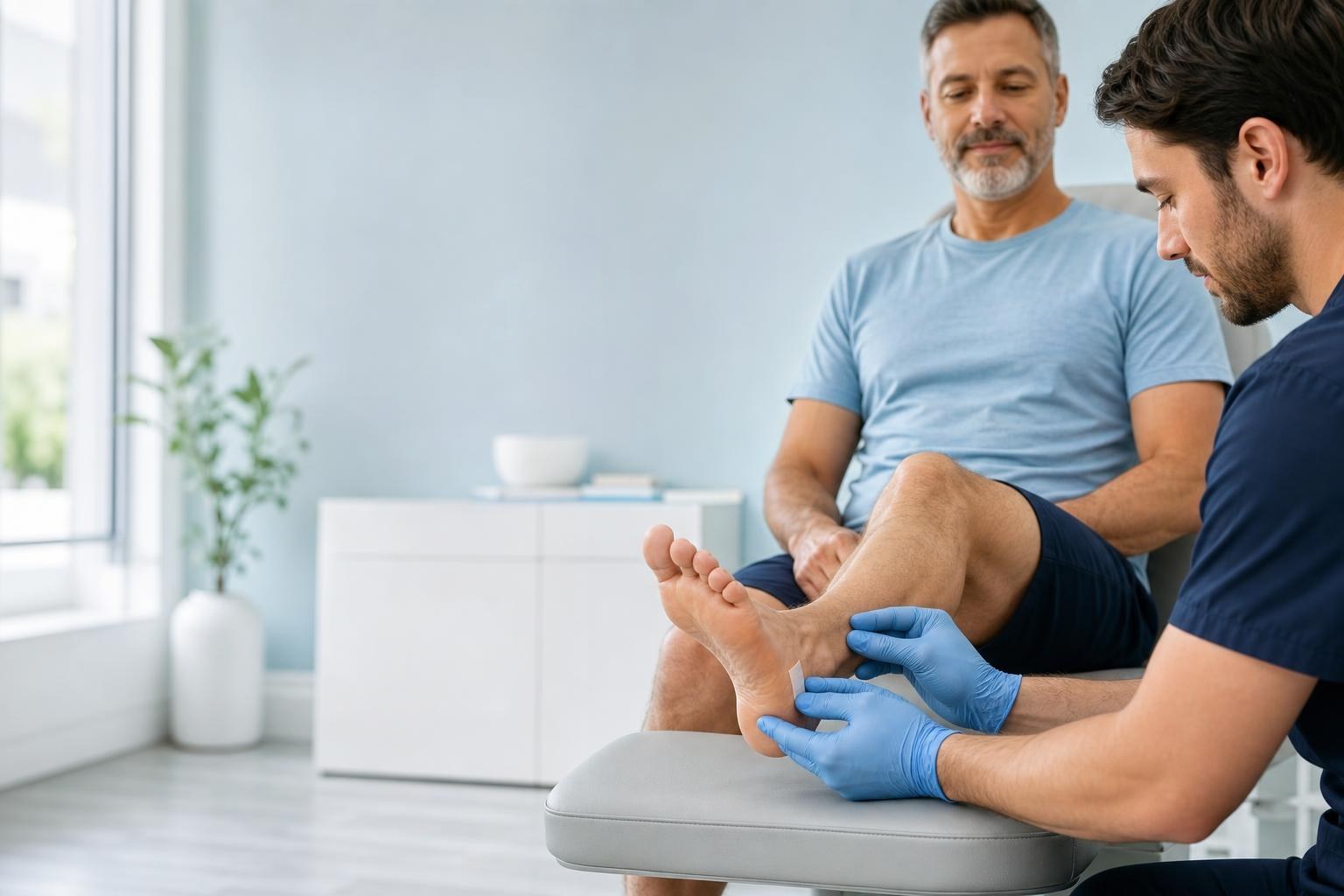
Foot wound care involves more than checking whether the skin is open or closed. A podiatrist may examine the wound’s location, depth, drainage, edges, surrounding callus, temperature, and signs of pressure or infection. Sensation, pulses, footwear, walking demands, and relevant medical history may also provide useful clues.
Depending on the findings, care may include cleaning the area, addressing unhealthy or callused tissue when appropriate, selecting a suitable dressing, reducing pressure, and coordinating additional testing or medical care if circulation or infection is a concern. The goal is not only to close the opening but also to address factors that could cause it to return.
Photographs taken at consistent intervals can be useful for tracking visible changes, but they should not replace an examination. Lighting, angle, and callus can make a wound appear better or worse than it is.
Do not wait for a recurring wound to become painful
A foot wound that keeps reopening is giving you useful information: the area may still be under stress, the tissue may not be fully ready, or another factor may be interfering with durable healing. Early assessment can help identify the reason and create a more appropriate protection plan.
This article is for general educational purposes and is not a substitute for individualized medical advice, diagnosis, or treatment.
Dr. Daniel Brandwein is a board-certified podiatrist who has provided podiatric care in Pompano Beach since 1991. To have a slow-healing or recurrent foot wound evaluated, explore the practice’s wound care services or request an appointment. Same-day appointments may be available, and walk-ins are welcome. You may also call (954) 984-7500.
Ready to Get Your Foot or Ankle Concern Checked?
If foot pain, a wound, nail problem, injury, or another concern is affecting your comfort or mobility, Dr. Daniel Brandwein can evaluate what is going on and discuss appropriate next steps.
Dr. Daniel Brandwein DPM, PA, FACFAS
159 S Pompano Parkway, Pompano Beach, FL 33069
(954) 984-7500
This article is for general educational information and is not a substitute for an individualized medical evaluation or treatment plan.
Get your foot or ankle concern properly evaluated.
Dr. Daniel Brandwein provides podiatry care in Pompano Beach for foot and ankle pain, diabetic foot concerns, nail problems, wounds, injuries, and other common podiatric conditions.