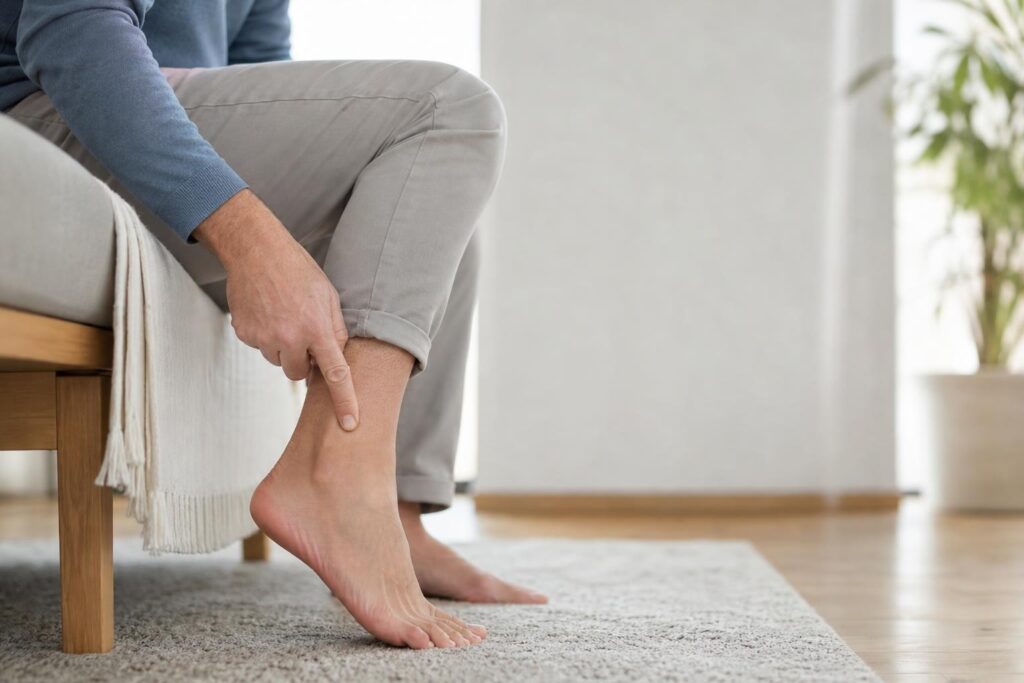
Use this article to better understand your symptoms and options. An in-person podiatry evaluation is the best way to determine what is causing a specific foot or ankle problem.
You have tried more supportive shoes, replaced the worn-out insoles, and perhaps added a cushioned insert from the pharmacy. Yet your heel, arch, ankle, or forefoot still hurts—or the relief disappears as soon as you spend more time on your feet.
At that point, it is reasonable to wonder whether custom orthotics would help. The answer depends on more than where it hurts. Your foot structure, walking pattern, activities, footwear, health history, and the actual source of your symptoms all matter.
Custom support can be valuable, but it is not automatically the best choice for every painful foot. A podiatry evaluation can clarify whether you need an orthotic, what the device should accomplish, and whether another treatment should come first.
What is an orthotic supposed to do?
A foot orthotic is a device worn inside a shoe to change how pressure is distributed beneath the foot. Depending on its design, it may cushion a sensitive area, support part of the foot, limit certain motions, improve stability, or help the foot function more comfortably during walking and activity.
That is different from simply placing something soft under the foot. Cushioning can feel good, but more padding is not always the solution. A thick insert may crowd the toes, lift the heel out of the shoe, or fail to address the mechanical stress contributing to pain.
Orthotics also have practical limits. They generally do not make a bunion disappear, permanently straighten a rigid hammertoe, or resolve every source of heel pain. Their role is often to reduce irritating forces and help manage symptoms as part of a broader treatment plan.
Store-bought inserts versus custom orthotics
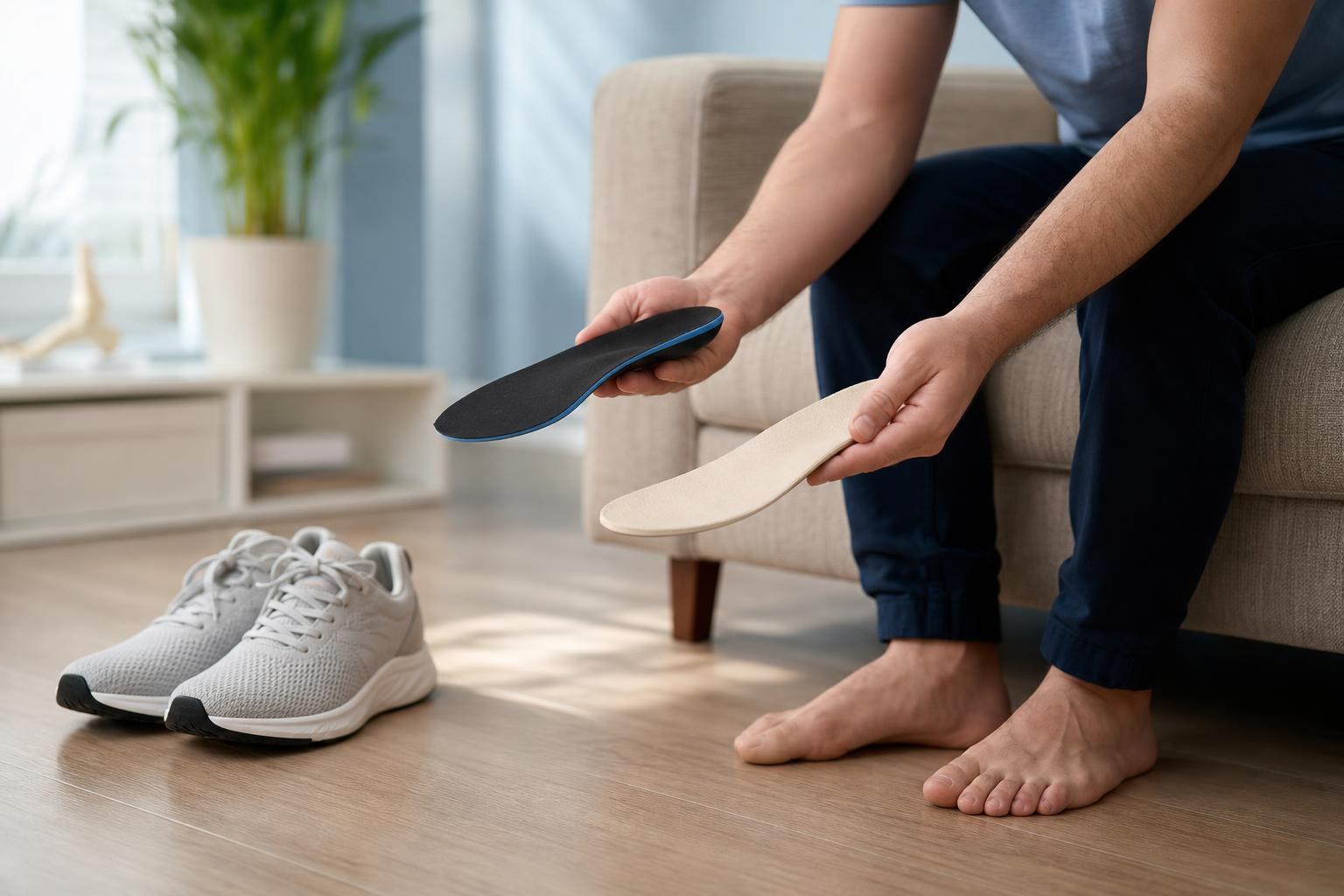
Over-the-counter inserts are made in standard shapes and sizes. Some provide cushioning, while others offer firmer arch support or heel control. A well-selected prefabricated insert may be entirely appropriate for mild symptoms, temporary support, or a person whose needs match the device reasonably well.
Custom orthotics are prescribed for an individual after an examination. Their shape, materials, firmness, and added features can be selected for a specific purpose. For example, one device may be designed to redistribute pressure away from a tender area, while another may focus on motion control or accommodating a structural prominence.
Custom does not simply mean harder, thicker, or more supportive. A useful prescription should reflect the condition being treated, the person’s foot mechanics, the shoes in which the device will be worn, and the demands of daily life.
When custom support may be worth considering
Persistent pain despite reasonable shoe changes is one reason to seek an evaluation. Custom orthotics may also be considered when a standard insert does not fit the foot well, when symptoms repeatedly return, or when pressure needs to be managed with greater precision.
Situations in which individualized support may be useful include:
- Heel or arch pain associated with repeated strain during standing or walking
- Pain beneath the ball of the foot or pressure related to certain toe and forefoot positions
- Recurring discomfort during running, court sports, or other repetitive activity
- Foot mechanics that may be contributing to ankle, lower-leg, or foot fatigue
- Arthritis or a structural difference that makes standard inserts uncomfortable
- A need to accommodate a prominent or sensitive area inside the shoe
- Uneven pressure in a person with diabetes or reduced protective sensation
These concerns do not prove that a custom device is necessary. Similar symptoms can have different causes, and an orthotic that helps one condition may irritate another. Dr. Brandwein’s comprehensive foot and ankle care includes evaluating the source of pain before recommending a particular type of support.
Why the examination comes before the prescription
Foot pain is not a diagnosis by itself. Heel pain, for example, may involve irritated soft tissue, a stress injury, arthritis, a nerve, or another problem. Pain under the forefoot can arise from pressure, joint inflammation, nerve irritation, or an injury. Covering the symptom with an insert without understanding its source can delay more appropriate care.
During an evaluation, a podiatrist may examine joint motion, tender areas, skin condition, foot shape, strength, stability, and the way you stand or walk. Your work, exercise routine, previous injuries, medical conditions, and usual shoes can also influence the recommendation.
Bring the shoes you wear most often, as well as any inserts you have already tried. Wear patterns and fit can provide useful information. If symptoms occur mainly during exercise, bringing your athletic shoes can be particularly helpful. Patients with sports-related pain can also learn more about the practice’s sports medicine and trauma services.
Diabetes and areas of high pressure require extra care
People with diabetes, neuropathy, poor circulation, or a history of foot ulceration should be cautious about choosing inserts without professional guidance. Reduced sensation can make it difficult to notice rubbing, concentrated pressure, or an early skin injury. An insert that feels acceptable—or cannot be felt clearly—may still create a problem.
In these cases, footwear and support may need to focus on accommodation and pressure reduction rather than aggressive correction. The skin should be checked regularly when introducing any new device. Dr. Brandwein provides diabetic foot care for patients who need help managing these risks.
Do not place an off-the-shelf pad directly over an open sore or attempt to cut away tissue around it. A blister, red area, drainage, darkened skin, or open wound—especially in a person with diabetes or decreased sensation—deserves prompt medical attention.
What to expect if custom orthotics are recommended
The device is designed from measurements or an impression of the feet and a prescription based on the examination. Because shoe interiors vary, the orthotic may not work equally well in every pair. Removable factory insoles and adequate depth often make fitting easier.
Many people are advised to increase wear time gradually rather than wearing new orthotics all day immediately. Mild awareness of support can occur at first, but escalating pain, numbness, blistering, or marked skin redness should not be ignored. Remove the device and contact the prescribing office for guidance.
A follow-up adjustment does not necessarily mean the orthotic has failed. Small changes may improve comfort, pressure distribution, or shoe fit. Feet, footwear, activities, and medical needs can also change over time, so an older device may eventually need to be reassessed.
Orthotics often work best as one part of the plan
Even when orthotics are appropriate, they may not be the only recommendation. Depending on what is causing the symptoms, a treatment plan could also involve activity modification, better-fitting footwear, stretching, strengthening, temporary protection, medication guidance, or treatment of an underlying injury or skin problem.
It is also important to set a realistic goal. The aim may be to walk longer with less discomfort, reduce pressure on a vulnerable spot, return to activity more gradually, or make everyday shoes more tolerable. Improvement may be progressive rather than immediate.
Questions to ask before buying another insert
- Where is the pain, and what activities consistently bring it on?
- Does the problem improve in certain shoes or worsen when barefoot?
- Is there swelling, numbness, weakness, skin irritation, or a recent injury?
- Does the insert fit securely without crowding the toes or lifting the heel?
- Am I trying to treat a recurring problem without knowing what is causing it?
If pain is severe, follows a significant injury, prevents you from bearing weight, or occurs with pronounced swelling, deformity, spreading redness, warmth, fever, or an open wound, seek prompt medical care rather than experimenting with a new insert.
Get support chosen for the problem—not just the shoe size
A store-bought insert may be enough for some feet. For others, persistent pain, unusual pressure, recurring sports symptoms, or medical risk factors make a more individualized approach worthwhile. The key is not choosing the most expensive support; it is identifying what your foot actually needs.
Dr. Daniel Brandwein is a board-certified podiatrist who has provided podiatric care since 1991. To discuss ongoing foot discomfort or whether custom orthotics may be appropriate, schedule an evaluation at 159 S Pompano Parkway in Pompano Beach or call (954) 984-7500. Same-day appointments may be available.
Ready to Get Your Foot or Ankle Concern Checked?
If foot pain, a wound, nail problem, injury, or another concern is affecting your comfort or mobility, Dr. Daniel Brandwein can evaluate what is going on and discuss appropriate next steps.
Dr. Daniel Brandwein DPM, PA, FACFAS
159 S Pompano Parkway, Pompano Beach, FL 33069
(954) 984-7500
This article is for general educational information and is not a substitute for an individualized medical evaluation or treatment plan.
Get your foot or ankle concern properly evaluated.
Dr. Daniel Brandwein provides podiatry care in Pompano Beach for foot and ankle pain, diabetic foot concerns, nail problems, wounds, injuries, and other common podiatric conditions.