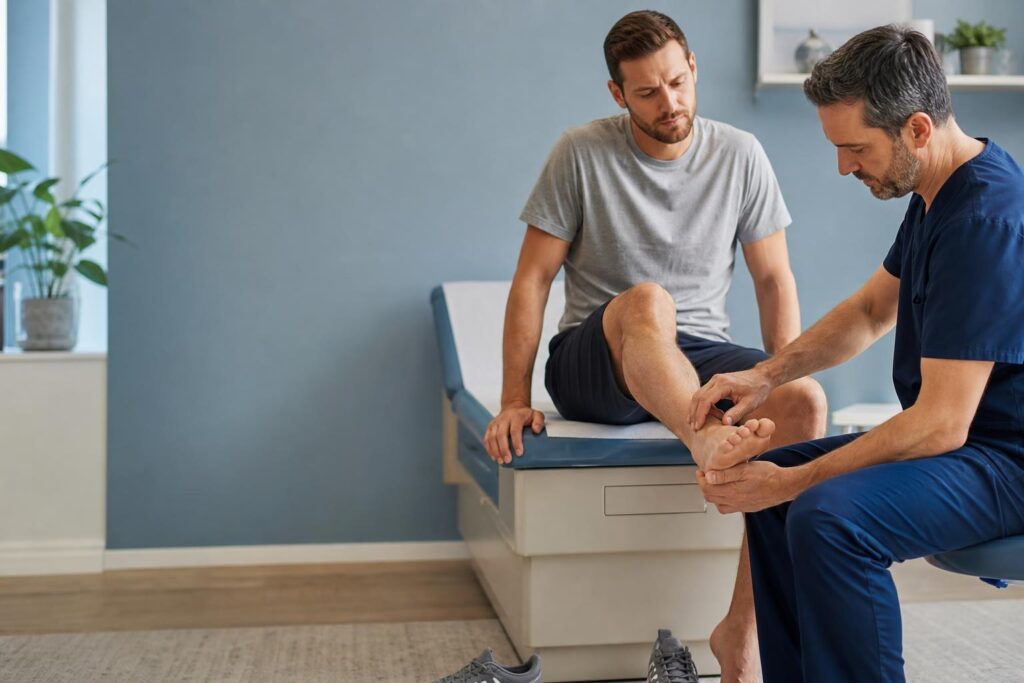
Use this article to better understand your symptoms and options. An in-person podiatry evaluation is the best way to determine what is causing a specific foot or ankle problem.
You buy a new pair of supportive shoes. You add a cushioned insert. For a few days, your feet feel better—but then the same heel, arch, ankle, or forefoot discomfort returns.
That experience does not necessarily mean inserts are useless. It may mean the support does not match what your feet need, or that the underlying problem requires more than extra cushioning. The right next step depends on where you hurt, how you move, what shoes you wear, and whether a medical condition is affecting your feet.
Custom orthotics can be useful in the right circumstances, but not everyone with foot pain needs them. Understanding the difference between custom devices and store-bought products can help you make a practical decision instead of cycling through inserts that never quite solve the problem.
What is the difference between custom orthotics and shoe inserts?
Store-bought inserts are mass-produced products designed to fit a broad range of feet. Some mainly add cushioning, while others provide a modest amount of arch support or heel stabilization. They are readily available, relatively inexpensive, and may be reasonable for mild fatigue or occasional discomfort.
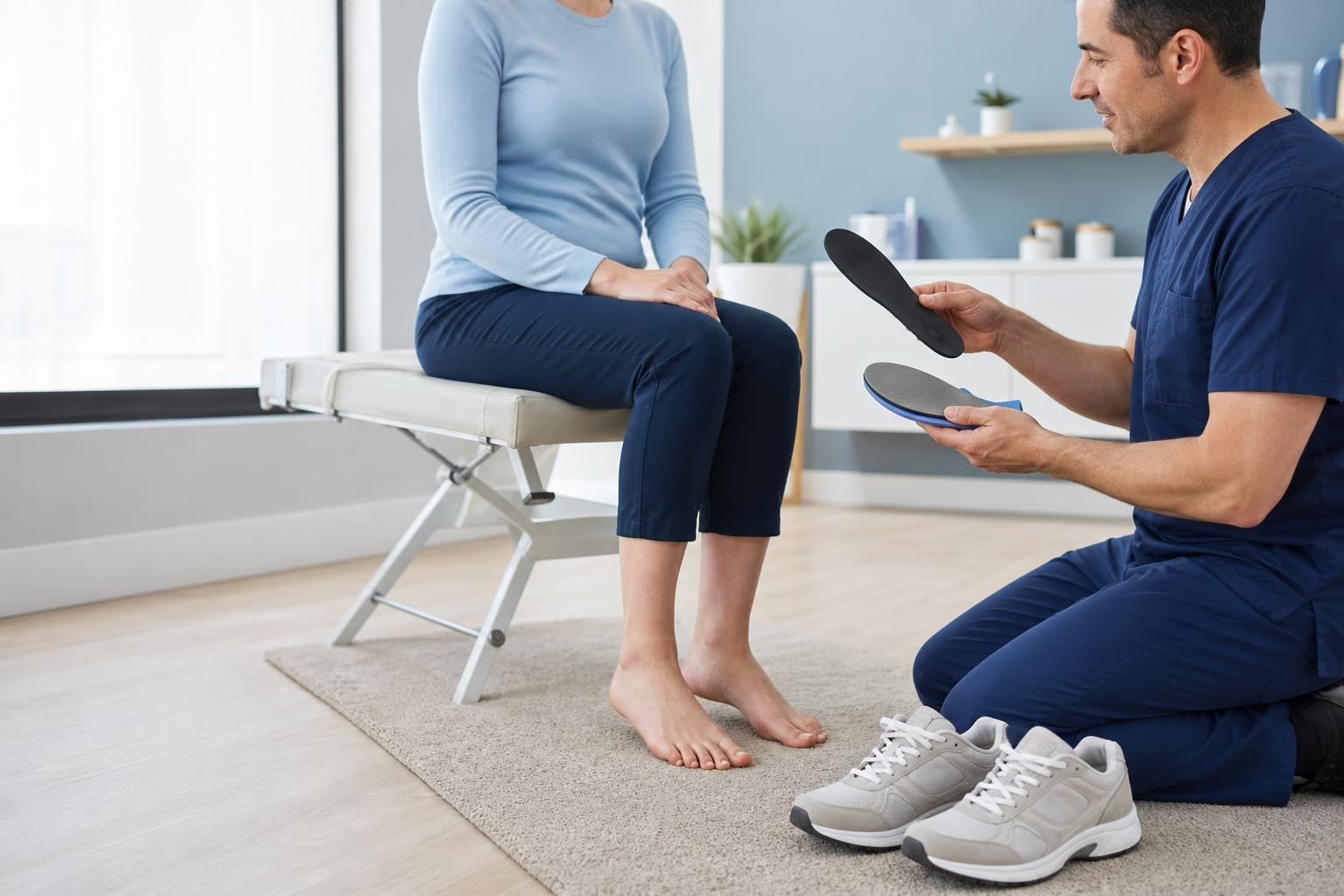
Custom orthotics are prescription devices created around an individual’s foot structure, movement patterns, symptoms, and treatment goals. Depending on the condition, they may be designed to redistribute pressure, support a particular area, influence how the foot functions inside the shoe, or accommodate a sensitive spot.
The word “custom” matters, but it does not mean that every custom device is automatically better for every person. A properly selected over-the-counter insert may be enough for someone with minor symptoms. Conversely, an expensive or heavily cushioned retail product may still be a poor match if it places pressure in the wrong area or does not address the way the foot moves.
The useful question is not simply which product costs more. It is which type of support fits the problem.
When might custom orthotics be useful?
Custom support may be considered when symptoms persist despite reasonable changes in footwear, activity, or basic over-the-counter support. Orthotics are commonly used as one part of a broader care plan rather than as a stand-alone answer to every foot problem.
A podiatry evaluation may lead to a discussion about custom orthotics when a person has:
- Recurring heel or arch pain that has not improved with appropriate shoes and basic home care
- Foot mechanics that appear to contribute to repeated strain or uneven shoe wear
- Pressure or discomfort around a bunion, hammertoe, callus, or prominent area of the foot
- Frequent foot or ankle fatigue during work, walking, or exercise
- Recurring sports-related symptoms that may be influenced by alignment or load distribution
- A meaningful difference in the way the two feet function
- A need to offload a vulnerable area under professional supervision
These signs do not confirm that custom orthotics are necessary. Similar symptoms can come from several different conditions, and an evaluation can help determine whether the source is the plantar fascia, a tendon, a joint, a nerve, footwear, training habits, or another factor.
Patients with persistent pain can learn more about the practice’s approach to comprehensive foot and ankle care.
When may an over-the-counter insert be enough?
A nonprescription insert may be a sensible starting point for mild, occasional discomfort, especially when the main concern is tired feet after prolonged standing. It may also help make a firm shoe feel more comfortable, provided the insert fits without crowding the toes or lifting the heel out of the shoe.
Look for a product that feels supportive without creating a hard pressure point. The insert should sit flat, remain stable, and leave enough room for the foot. If the shoe has a removable liner, replacing that liner is often more comfortable than stacking a new insert on top of it.
More padding is not always more helpful. An overly soft insert can compress quickly or allow the foot to move in ways that aggravate symptoms. A very rigid product can also be uncomfortable when chosen without regard to the person’s foot type or diagnosis.
If an insert increases pain, causes numbness, creates rubbing, or changes the way you walk, stop using it and seek guidance rather than trying to “break it in” through significant discomfort.
Orthotics work best when the diagnosis comes first
Foot pain is not a diagnosis by itself. Heel pain, for example, may involve the plantar fascia, heel pad, a tendon, a nerve, or another structure. Pain near the arch or inside of the ankle can also have multiple possible causes. Supporting the wrong area may fail to help and can occasionally shift stress elsewhere.
This is why choosing an orthotic based only on where it hurts can be frustrating. A podiatric assessment may include a review of when symptoms occur, the types of shoes worn, activity demands, prior injuries, areas of tenderness, joint motion, gait, and shoe wear patterns. Imaging may be considered when the examination or injury history suggests it is appropriate.
For active adults, orthotics may be only one part of the plan. Changes in training load, footwear, flexibility, strength, or recovery time may also matter. Anyone dealing with repeated activity-related pain can review information about sports medicine and trauma care.
What should you expect from custom orthotics?
Custom orthotics are intended to address a defined functional or pressure-related goal. Depending on that goal, the device may be firmer or softer, full-length or shorter, and designed for a particular category of shoe.
They do not permanently reshape an adult foot, and they cannot correct every source of pain. Their benefit often depends on using them consistently in appropriate footwear and combining them with other recommended measures. These may include stretching, activity modification, shoe changes, padding, medication when medically appropriate, or treatment of the underlying condition.
There may also be an adjustment period. A gradual wearing schedule can allow the feet and legs to adapt, but substantial or worsening pain should not be ignored. A device may need to be checked if it slips, creates a focal pressure point, does not fit the intended shoe, or causes new symptoms.
Diabetes and reduced sensation require extra care
People with diabetes, neuropathy, poor circulation, a history of ulceration, or reduced sensation should be especially cautious about selecting inserts without professional guidance. If sensation is limited, an insert can create rubbing or pressure without producing the usual warning pain.
Check the skin regularly for redness, blisters, drainage, or areas that remain irritated after the shoes are removed. Do not use an insert to cover or cushion an open wound without medical direction. New skin breakdown, discoloration, warmth, swelling, or drainage deserves prompt attention.
More information is available through the practice’s diabetic foot care services.
Do not assume every painful foot needs more arch support
Arch support has become a catch-all recommendation, but adding it indiscriminately can miss the real issue. Some people need pressure relief rather than more support. Others may need a different shoe shape, better heel stability, treatment for inflammation, or temporary protection while an injury heals.
Arrange an evaluation if pain lasts more than a short period, repeatedly returns, limits normal activity, or is getting worse. Seek prompt medical attention for an inability to bear weight, marked swelling after an injury, an obvious change in foot or ankle shape, spreading redness, drainage, fever with a foot problem, or a new wound—particularly if you have diabetes or impaired circulation.
This information is educational and cannot replace an individualized examination.
Get support selected for your feet—not just your shoe size
If you are unsure whether to try a retail insert, change shoes, or consider custom orthotics, an examination can clarify what may be contributing to the discomfort. Dr. Daniel Brandwein is a board-certified podiatrist who has provided podiatric care in Pompano Beach since 1991.
To schedule an evaluation, call (954) 984-7500 or contact the office online. The practice is located at 159 S Pompano Parkway, Pompano Beach, FL 33069. Same-day appointments may be available, walk-ins are welcome, and most insurance is accepted.
Ready to Get Your Foot or Ankle Concern Checked?
If foot pain, a wound, nail problem, injury, or another concern is affecting your comfort or mobility, Dr. Daniel Brandwein can evaluate what is going on and discuss appropriate next steps.
Dr. Daniel Brandwein DPM, PA, FACFAS
159 S Pompano Parkway, Pompano Beach, FL 33069
(954) 984-7500
This article is for general educational information and is not a substitute for an individualized medical evaluation or treatment plan.
Get your foot or ankle concern properly evaluated.
Dr. Daniel Brandwein provides podiatry care in Pompano Beach for foot and ankle pain, diabetic foot concerns, nail problems, wounds, injuries, and other common podiatric conditions.