Use this article to better understand your symptoms and options. An in-person podiatry evaluation is the best way to determine what is causing a specific foot or ankle problem.
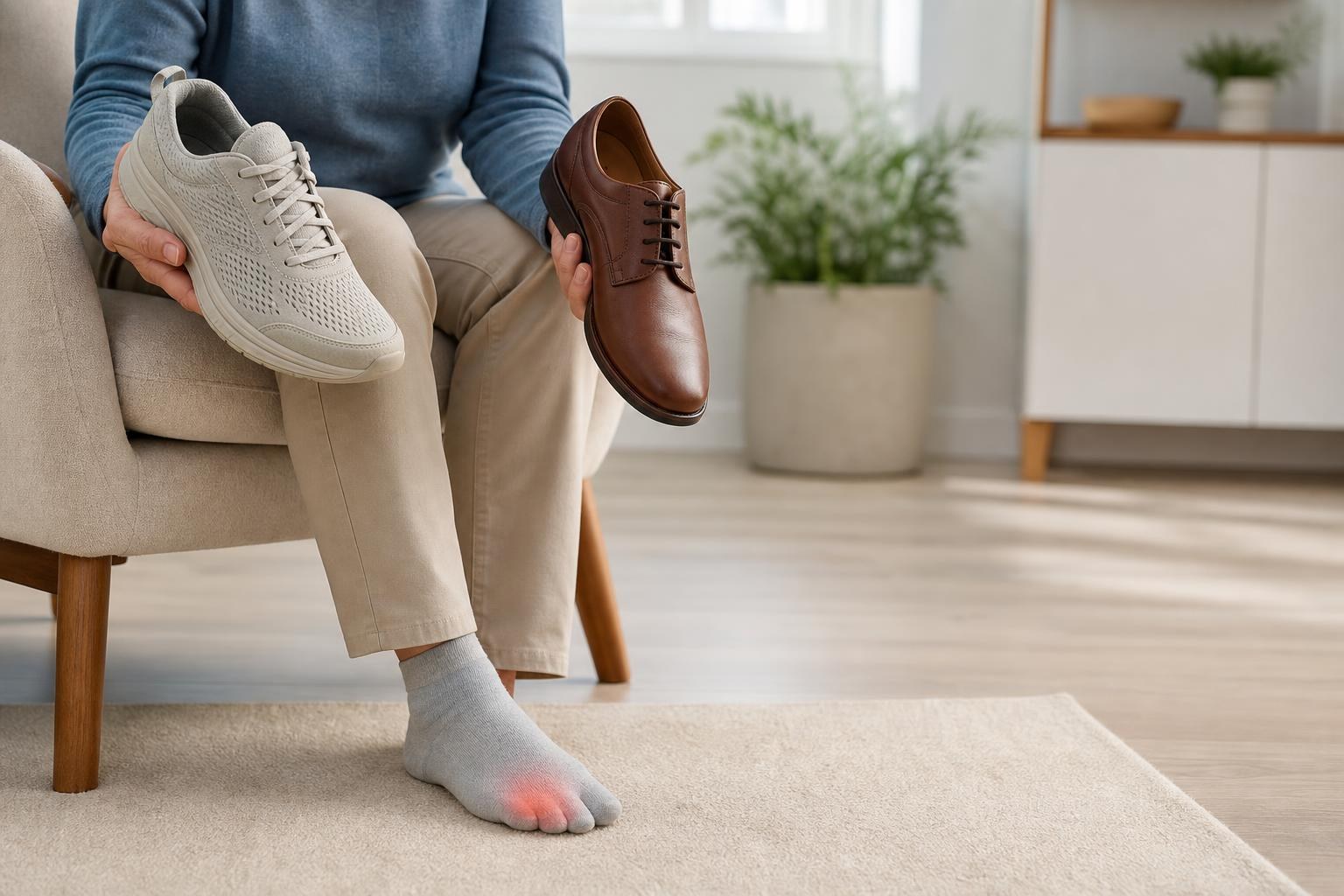
Your bunion may not bother you when you are barefoot, yet begin throbbing halfway through the day in closed shoes. Perhaps the side of your foot turns red, the joint feels irritated, or you find yourself removing a shoe under your desk for relief.
That pattern offers a useful clue: pressure, friction, and the way your foot fits inside the shoe may be contributing to the discomfort. Conservative care cannot realign the underlying bones or make a bunion disappear, but the right approach may reduce irritation and make walking more comfortable.
The challenge is knowing which changes are worth trying—and which products may create new pressure instead of helping.
Why a bunion can hurt more in some shoes
A bunion is a bony prominence at the base of the big toe. As the joint alignment changes, the big toe may angle toward the smaller toes while the inside of the joint becomes more prominent.
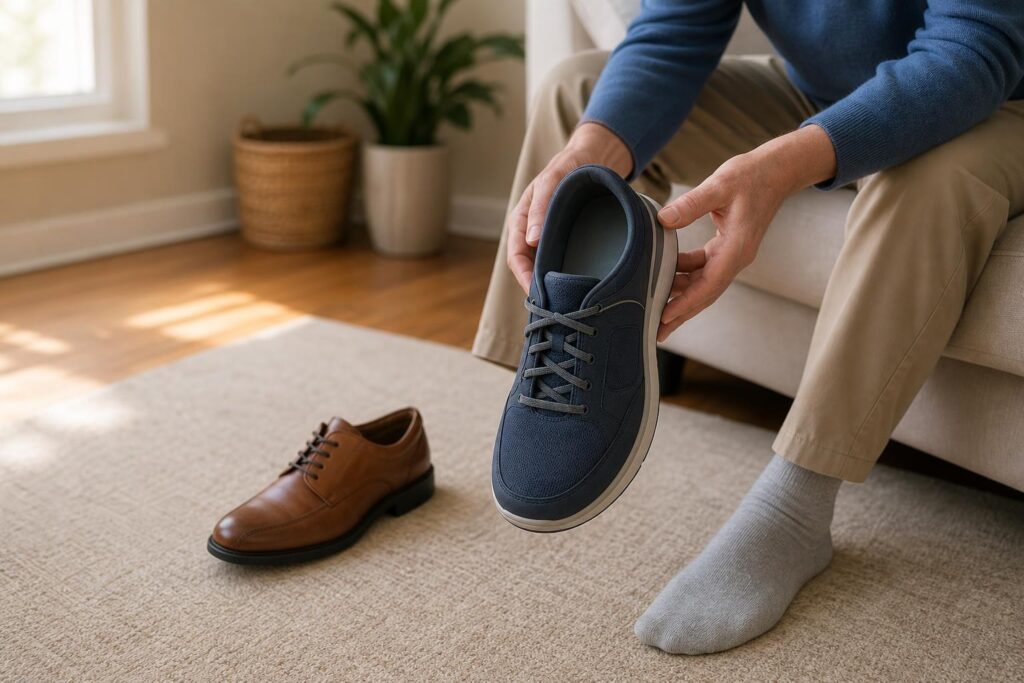
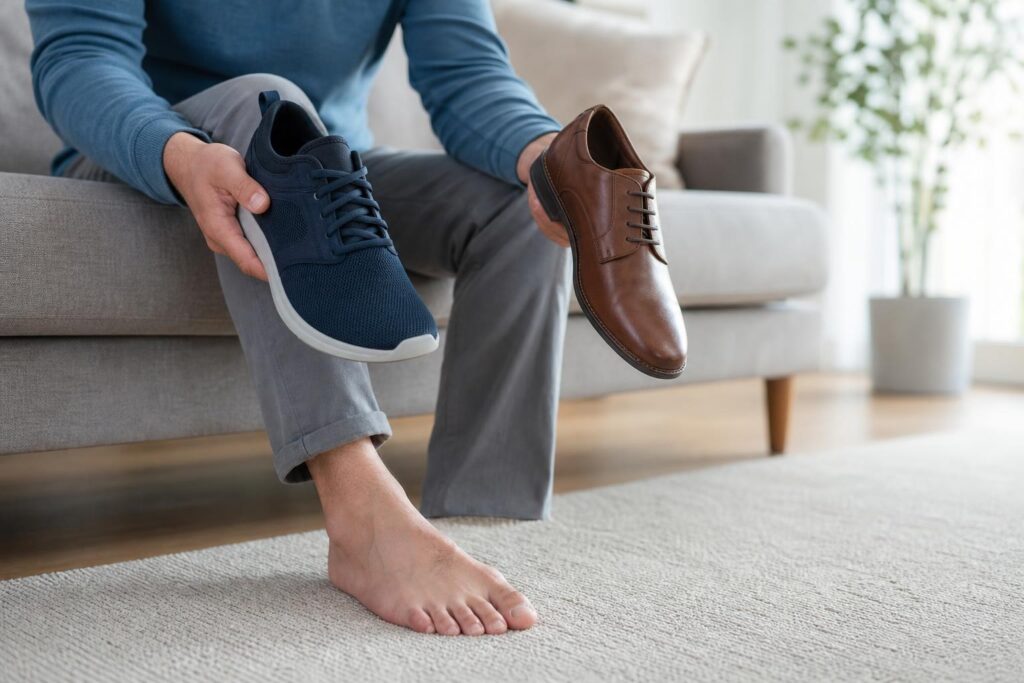
A narrow or tapered shoe can press directly against that prominence. Stiff seams, rigid materials, and high heels may add pressure or shift weight toward the front of the foot. Repeated rubbing can irritate the skin and the tissues around the joint, leading to redness, swelling, tenderness, or a burning sensation.
Shoe pressure is not the only possible source of pain. The joint itself may become irritated, and altered foot mechanics can place added stress under the forefoot or on nearby toes. That is why simply buying a larger shoe does not always solve the problem.
Start with shape, not just shoe size
People often respond to bunion pain by moving up a full shoe size. Extra length may help in some cases, but it can also allow the foot to slide forward and create more friction. The shape and width of the shoe are usually just as important as the number printed on the box.
Look for a toe box that follows the natural outline of your forefoot and gives your toes room to rest without being compressed. The upper should feel accommodating around the bunion, but the heel should remain secure enough to limit sliding.
- Choose a wide, rounded, or foot-shaped toe box rather than a sharply tapered front.
- Check for seams or overlays that cross directly over the tender area.
- Consider softer, flexible uppers that do not press firmly against the joint.
- Limit heel height if elevated shoes increase pressure at the front of your foot.
- Try on both shoes while wearing the socks or inserts you normally use.
Shop later in the day if your feet tend to swell. Walk around long enough to notice pressure rather than assuming a shoe will stretch after purchase. A shoe that already pinches the bunion is unlikely to become an ideal fit through a painful break-in period.
Can bunion pads reduce rubbing?
A thin bunion pad may cushion the prominent area and reduce direct contact with the shoe. Pads are available in felt, foam, gel, and fabric-covered designs. They are most likely to help when rubbing is a major source of discomfort and the shoe has enough room to accommodate the added material.
More padding is not necessarily better. A thick pad inside an already snug shoe can make the fit tighter and increase pressure. Check your skin after wearing a new pad, especially during the first few uses. Stop if you notice increased pain, persistent redness, blistering, or skin breakdown.
People with diabetes, poor circulation, reduced sensation, or a history of foot ulcers should be particularly cautious with over-the-counter pads and adhesive products. Small areas of pressure may go unnoticed when sensation is reduced. Individual guidance through diabetic foot care can help lower the risk of an avoidable skin injury.
What toe spacers can—and cannot—do
Toe spacers sit between the big toe and second toe. Some people find that a soft, properly sized spacer reduces rubbing between the toes or provides temporary comfort while it is being worn.
A spacer does not permanently straighten the joint or reverse the bunion. It can also crowd the shoe if there is not enough width. If your big toe is stiff, significantly angled, or overlapping another toe, forcing it into a position with a rigid device may be uncomfortable.
Begin with brief use in a roomy shoe and inspect the skin afterward. Numbness, discoloration, worsening pressure, or pain are reasons to remove the device and seek advice rather than continuing to “push through” the discomfort.
Would an orthotic help bunion pain?
An orthotic does not remove the bunion, but it may influence how pressure moves across the foot. This can be useful when foot mechanics are contributing to strain around the big-toe joint or pain elsewhere in the arch and forefoot.
Not every person with a bunion needs an orthotic. The type of support that makes sense depends on joint motion, arch function, walking pattern, shoe choice, and where the discomfort occurs. An insert that takes up too much space may even worsen pressure against the bunion if the shoe is not deep or wide enough.
A podiatric evaluation can help determine whether an over-the-counter insert, a different shoe, custom support, or another approach is appropriate. The practice’s comprehensive foot and ankle care includes evaluation of bunions and related mechanical concerns.
Calming a temporary bunion flare
If the area becomes sore after a long day, changing out of the aggravating shoe and reducing the activity that triggered the pain may help. A cold pack wrapped in a thin cloth can be applied for short periods to ease irritation. Do not place ice directly on the skin, and avoid cold therapy if you have impaired sensation or circulation unless a clinician has advised that it is safe for you.
Nonprescription pain medication may be appropriate for some adults, but it is not safe for everyone. Kidney disease, stomach ulcers, blood-thinning medication, allergies, and other health considerations can affect the choice. Ask a qualified healthcare professional if you are uncertain.
These steps may settle a flare, but recurring pain deserves attention. Repeatedly masking symptoms without addressing shoe fit, joint function, or pressure patterns may allow the same irritation to return.
Signs that home adjustments are not enough
You do not need to wait until a bunion becomes unbearable before having it examined. An evaluation may be useful when:
- Pain regularly limits walking, exercise, work, or daily activities.
- You cannot find shoes that fit without rubbing or pinching.
- The big toe is becoming stiffer or crowding the other toes.
- You develop recurring calluses, blisters, corns, or pain under the forefoot.
- Redness and swelling continue after changing shoes and reducing activity.
- You are unsure whether the bump and pain are actually caused by a bunion.
Prompt medical attention is appropriate for rapidly increasing redness, warmth, severe swelling, drainage, an open sore, fever, sudden intense pain, or an inability to bear weight. These symptoms may have causes other than routine shoe irritation. People with diabetes, reduced sensation, or circulation concerns should contact a medical professional promptly for any blister, wound, or skin breakdown.
A useful evaluation looks beyond the bump
A podiatrist may examine the position and movement of the big-toe joint, areas of tenderness, skin condition, footwear, and how your foot functions while standing or walking. Imaging may be considered when it would help clarify alignment, joint changes, or another possible source of pain.
The goal is not to assume that every bunion needs surgery. It is to understand what is driving your symptoms and select conservative measures that fit your foot, footwear, health history, and activity needs. If conservative care is no longer providing acceptable comfort or function, the evaluation can also help you understand what other options may be reasonable.
This article is intended for general education and does not replace individualized medical advice.
If bunion pressure keeps dictating which shoes you can wear or how far you can walk, Dr. Daniel Brandwein, DPM, PA, FACFAS can evaluate the joint and help you build a practical plan. The practice has served patients in Pompano Beach since 1991 and is located at 159 S Pompano Parkway. Call (954) 984-7500 or request an appointment online; same-day appointments may be available, walk-ins are welcome, and most insurance is accepted.
Ready to Get Your Foot or Ankle Concern Checked?
If foot pain, a wound, nail problem, injury, or another concern is affecting your comfort or mobility, Dr. Daniel Brandwein can evaluate what is going on and discuss appropriate next steps.
Dr. Daniel Brandwein DPM, PA, FACFAS
159 S Pompano Parkway, Pompano Beach, FL 33069
(954) 984-7500
This article is for general educational information and is not a substitute for an individualized medical evaluation or treatment plan.
Get your foot or ankle concern properly evaluated.
Dr. Daniel Brandwein provides podiatry care in Pompano Beach for foot and ankle pain, diabetic foot concerns, nail problems, wounds, injuries, and other common podiatric conditions.