Use this article to better understand your symptoms and options. An in-person podiatry evaluation is the best way to determine what is causing a specific foot or ankle problem.
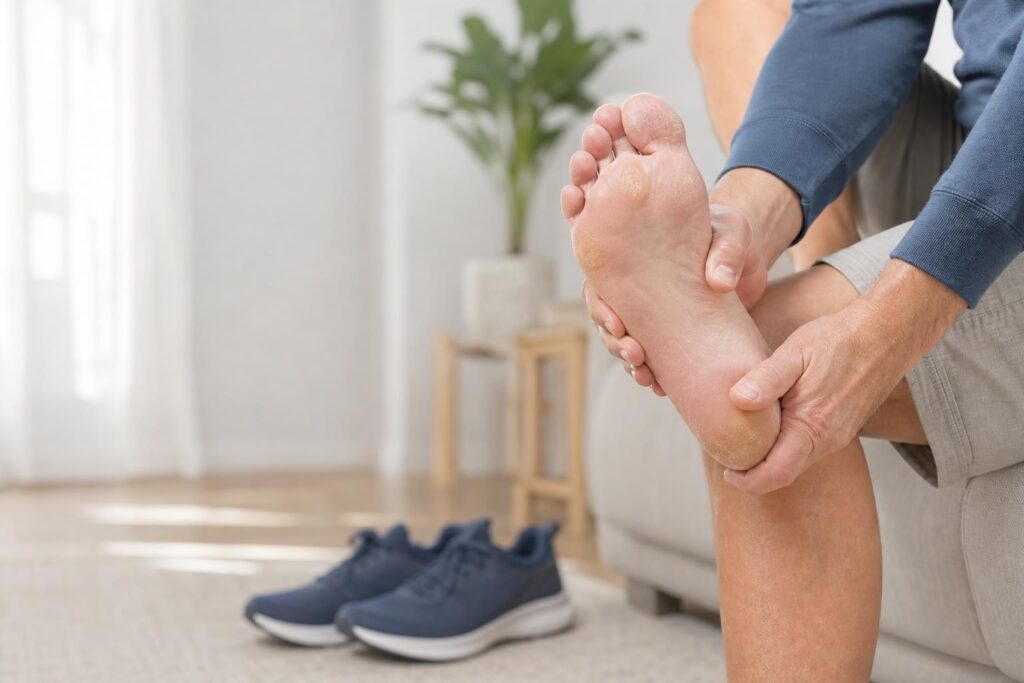
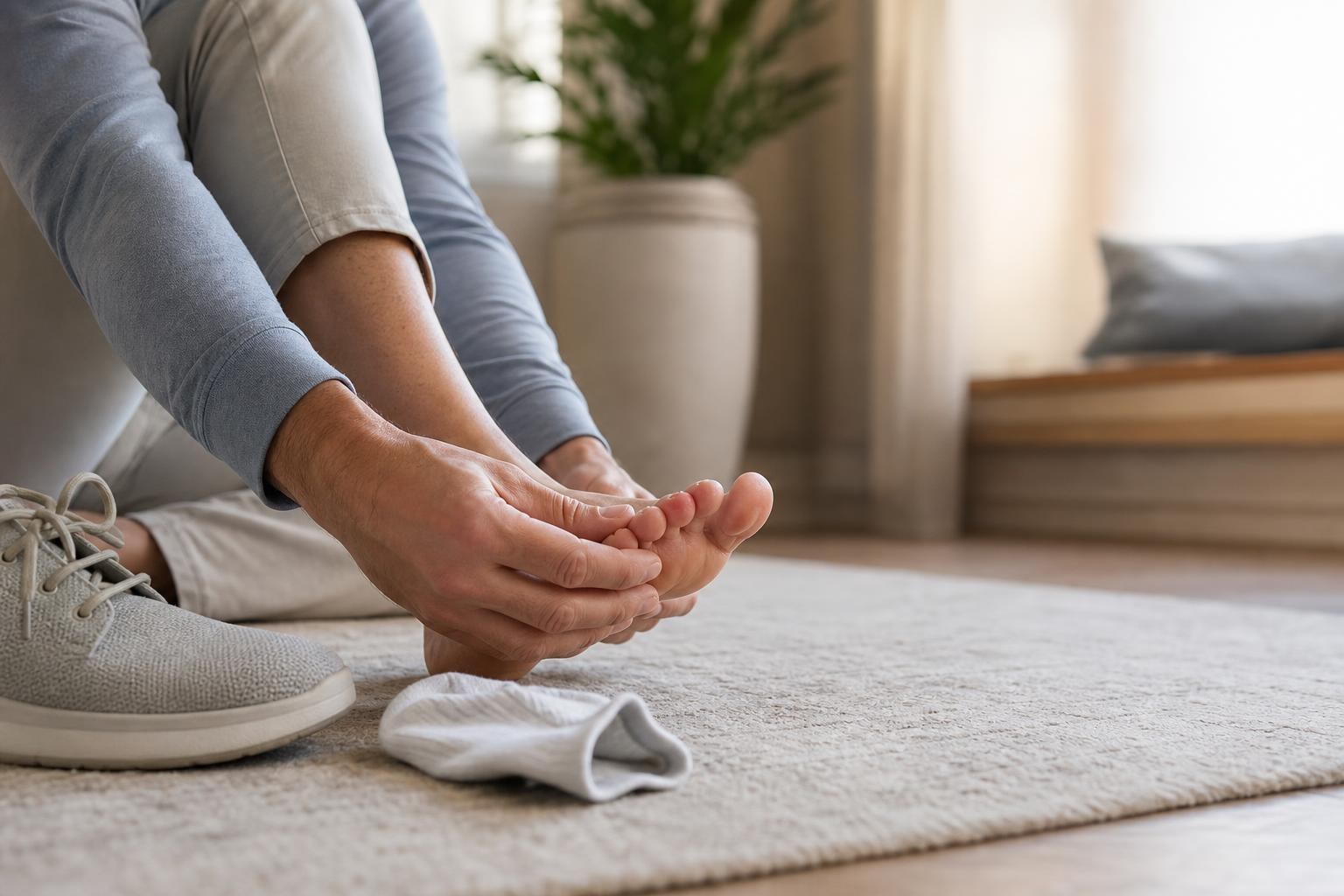
You take off your shoes and notice the same red spot again: a tender area on top of a bent toe, perhaps with a hard circle of skin that never seems to go away. It may settle down when you wear sandals, only to return as soon as you put on closed shoes.
That pattern often means the toe and shoe are repeatedly meeting at the same pressure point. The irritation may begin as mild redness or sensitivity, but ongoing rubbing can contribute to a painful corn, blister, or skin breakdown. Simply switching shoes may help, but persistent pressure deserves attention—especially if the toe is becoming stiffer or the skin is no longer recovering between wears.
Why does a hammertoe rub against the shoe?
A hammertoe bends at one or more of the smaller toe joints instead of resting flat. This raised position can bring the top of the joint closer to the inside of the shoe. Each step may then create a combination of direct pressure and sliding friction.
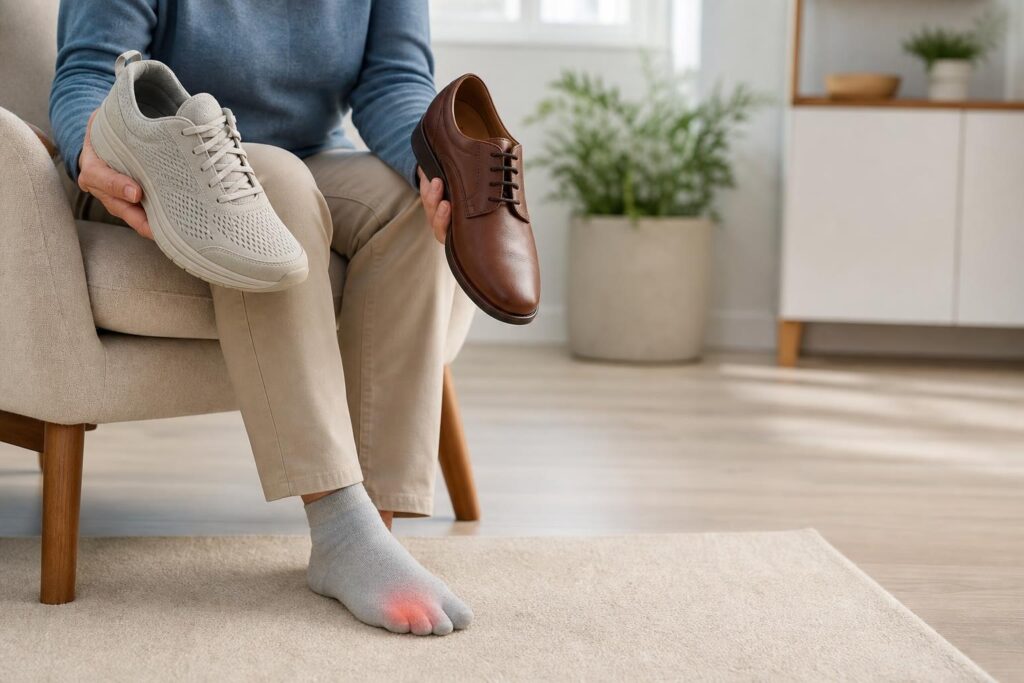
The problem is not always that a shoe is technically “too small.” A shoe can be long enough while still lacking sufficient depth in the toe box. Tapered footwear may also crowd the toes from the sides, while certain seams or stiff materials can press directly against the prominent joint.
Pressure can occur somewhere else, too. The tip of a curled toe may press into the insole, or the toe may push against a neighboring toe. In some cases, altered weight distribution creates a tender callus under the ball of the foot. These locations matter because they can help identify how the toe is functioning inside the shoe.
What redness, corns, and calluses are telling you
Redness that follows the outline of a shoe contact point is an early clue that the skin is under stress. If the color fades shortly after the shoe is removed and the skin remains intact, changing the source of pressure may be enough to calm the area. Redness that lasts, becomes painful, or returns with every wear suggests that the irritation is ongoing.
A corn is a concentrated area of thickened skin, often with a firm central core. It develops as the skin tries to protect itself from repeated pressure. A callus is generally broader and more diffuse. Although both are protective responses, the thickened tissue can itself become painful—particularly when it is compressed between a prominent joint and a firm shoe.
Watch for changes that indicate the skin is no longer tolerating the pressure well:
- A blister, crack, drainage, or open area
- Redness that spreads or does not improve after removing the shoe
- Increasing warmth, swelling, or tenderness
- Darkening or unusual discoloration of the skin
- A corn that quickly returns after being trimmed
- Pain that changes how you walk
These findings do not all mean the same thing, but they are reasons to stop relying on shoe changes alone. An evaluation can help determine whether there is a skin problem, a deeper pressure injury, an infection, or a mechanical issue that needs more targeted care.
Can a hammertoe pad solve the problem?
Cushions, sleeves, and toe pads can reduce friction for some people, but the correct product and placement matter. A thick pad may take up valuable room inside the shoe and create more pressure rather than less. A device that shifts the toe can also transfer force to another toe or to the ball of the foot.
Padding is best viewed as a pressure-management tool, not a way to permanently straighten the toe. Softer, more flexible hammertoes may respond differently than toes that have become rigid. A podiatrist can assess whether a pad, toe crest, separator, or other accommodation fits the location and cause of the irritation.
Avoid cutting a corn with a razor or other sharp tool. Over-the-counter medicated corn removers commonly contain acid, which can damage healthy surrounding skin if used incorrectly. This is particularly concerning for people with diabetes, reduced sensation, poor circulation, or a history of foot wounds. Those patients should seek guidance before using medicated pads or treating a corn at home.
How to reduce shoe pressure without squeezing the foot elsewhere
Start by looking at the shoe from the perspective of the affected toe. Is the joint rubbing against a seam? Does the top of the shoe press down when you walk? Are the toes being pushed together? Remove the insole and stand on it, if it is removable; toes extending beyond or spilling over its outline can be a sign that the shoe’s shape is not matching the foot well.
A roomier toe box should provide both width and depth. Soft or stretchable upper materials may be more forgiving over a prominent joint. The heel should remain secure enough that the foot does not slide forward, because repeated forward movement can drive the toes into the front of the shoe.
Even a better-fitting shoe cannot always eliminate symptoms if the toe position is fixed or if there is a substantial corn. Rotate away from any pair that reproduces redness or pain, and check the skin after wearing unfamiliar footwear. If you use a cushion, make sure it does not bunch, roll, or leave a new pressure mark.
Why reduced sensation changes the situation
Pain usually tells you when a shoe is causing too much pressure. But some people—particularly those with diabetes or nerve changes—may not feel rubbing, blistering, or an early wound. The first visible sign may be a red spot, drainage on a sock, or a break in the skin.
If you have diabetes, inspect the tops, tips, and spaces between the toes every day. A mirror can help you see areas that are difficult to reach. Do not continue wearing a shoe that leaves a pressure mark, even if the area does not hurt. Learn more about professional monitoring and prevention through the practice’s diabetic foot care services.
An open area, blister, or draining spot on or near a hammertoe should not be covered up and repeatedly placed back into the same shoe. Prompt foot wound care is especially important when sensation or circulation is reduced.
When should a hammertoe be evaluated?
Consider scheduling an appointment when the same pressure spot keeps returning, a corn is painful, footwear choices are becoming increasingly limited, or the toe is getting harder to move. It is also worth being evaluated if discomfort is changing your gait or leading to pain elsewhere in the foot.
Seek prompt medical attention for an open wound, spreading redness, pus, fever, rapidly increasing swelling, or significant discoloration. People with diabetes, neuropathy, circulation problems, or a previous ulcer should call sooner rather than waiting to see whether damaged skin heals on its own.
During an evaluation, a podiatrist can examine the skin, determine whether the toe remains flexible, assess nearby joints and pressure points, and review the shoes you wear most often. Treatment depends on what is driving the symptoms. It may include footwear modifications, careful corn care, protective padding, orthotics when mechanics elsewhere in the foot contribute, or discussion of procedural options when conservative measures are not providing enough relief.
The goal is not merely to remove thick skin. Unless the repeated pressure is addressed, the corn or irritation may return. Dr. Daniel Brandwein provides comprehensive foot and ankle care for hammertoes and related pressure problems in Pompano Beach.
Protect the skin before a sore develops
A recurring red spot is useful information: it shows exactly where the toe and shoe are not working comfortably together. Responding early may help prevent a small irritation from becoming a more difficult skin problem.
If a hammertoe continues to rub despite changing shoes, or if you are uncertain whether a corn is safe to manage at home, schedule an evaluation with Dr. Brandwein. The office is located at 159 S Pompano Parkway, Pompano Beach, FL 33069. Call (954) 984-7500 or contact the practice online. Same-day appointments may be available, walk-ins are welcome, and most insurance is accepted.
Ready to Get Your Foot or Ankle Concern Checked?
If foot pain, a wound, nail problem, injury, or another concern is affecting your comfort or mobility, Dr. Daniel Brandwein can evaluate what is going on and discuss appropriate next steps.
Dr. Daniel Brandwein DPM, PA, FACFAS
159 S Pompano Parkway, Pompano Beach, FL 33069
(954) 984-7500
This article is for general educational information and is not a substitute for an individualized medical evaluation or treatment plan.
Get your foot or ankle concern properly evaluated.
Dr. Daniel Brandwein provides podiatry care in Pompano Beach for foot and ankle pain, diabetic foot concerns, nail problems, wounds, injuries, and other common podiatric conditions.