Use this article to better understand your symptoms and options. An in-person podiatry evaluation is the best way to determine what is causing a specific foot or ankle problem.
You have kept the area covered. You have tried to stay off it. Maybe the wound looks a little better one day, only to drain or reopen the next. At that point, it can be difficult to know whether the foot simply needs more time or whether something is interfering with healing.
Foot wounds deserve particular attention because walking places repeated pressure on them. Reduced circulation, diminished sensation, swelling, infection, and certain health conditions can also slow recovery. A podiatric wound care visit looks beyond the surface to identify obstacles that may be keeping the tissue from closing.
You do not need to wait until a wound becomes severe to have it evaluated. In many cases, earlier care provides more options for protecting the area and addressing the factors that may be delaying healing.
When should a foot wound be evaluated?
There is no single number of days that applies to every scrape, blister, cut, or sore. The cause, location, depth, and appearance of the wound all matter, as do your circulation, sensation, and overall health.
Consider contacting a podiatrist when a wound is not showing steady improvement, repeatedly opens, or sits over an area exposed to pressure from walking or shoes. Evaluation is also appropriate if you cannot tell how deep the injury is, something may be embedded in it, or the wound began after stepping on an object.
Arrange prompt medical care if you notice:
- Increasing redness, warmth, swelling, tenderness, or drainage
- Pus, an unpleasant odor, or discoloration around the wound
- Skin that is becoming dark, pale, blue, or unusually cool
- A blister, callus, or sore that keeps returning in the same location
- New numbness or an inability to feel the injured area normally
- Pain that is worsening rather than settling
- Fever, chills, red streaking, or a general feeling of illness
Fever, rapidly spreading redness, severe swelling, significant color change, confusion, or other signs of serious illness warrant immediate medical attention. A deep puncture, uncontrolled bleeding, or a wound associated with a major injury may also require emergency care.
Why diabetes changes the timeline
If you have diabetes, it is wise to take a more cautious approach—even when the wound is small or does not hurt. Diabetes can affect sensation, circulation, immune response, and the skin’s ability to tolerate pressure. A person may continue walking on an injured area because reduced sensation makes the problem less noticeable.
That is why lack of pain is not always reassuring. A painless blister beneath a toe or a small opening under a callus may still require professional care. Do not cut away the surrounding callus, open a blister, or apply harsh chemicals to the area yourself.
People managing diabetes can learn more about the practice’s approach to diabetic foot care, including preventive examinations and care for concerns that need closer monitoring.
What does a podiatrist check during a wound care visit?
A wound evaluation is not limited to replacing the dressing. The goal is to understand what caused the wound, how it is behaving, and what may be preventing it from healing.
The wound itself
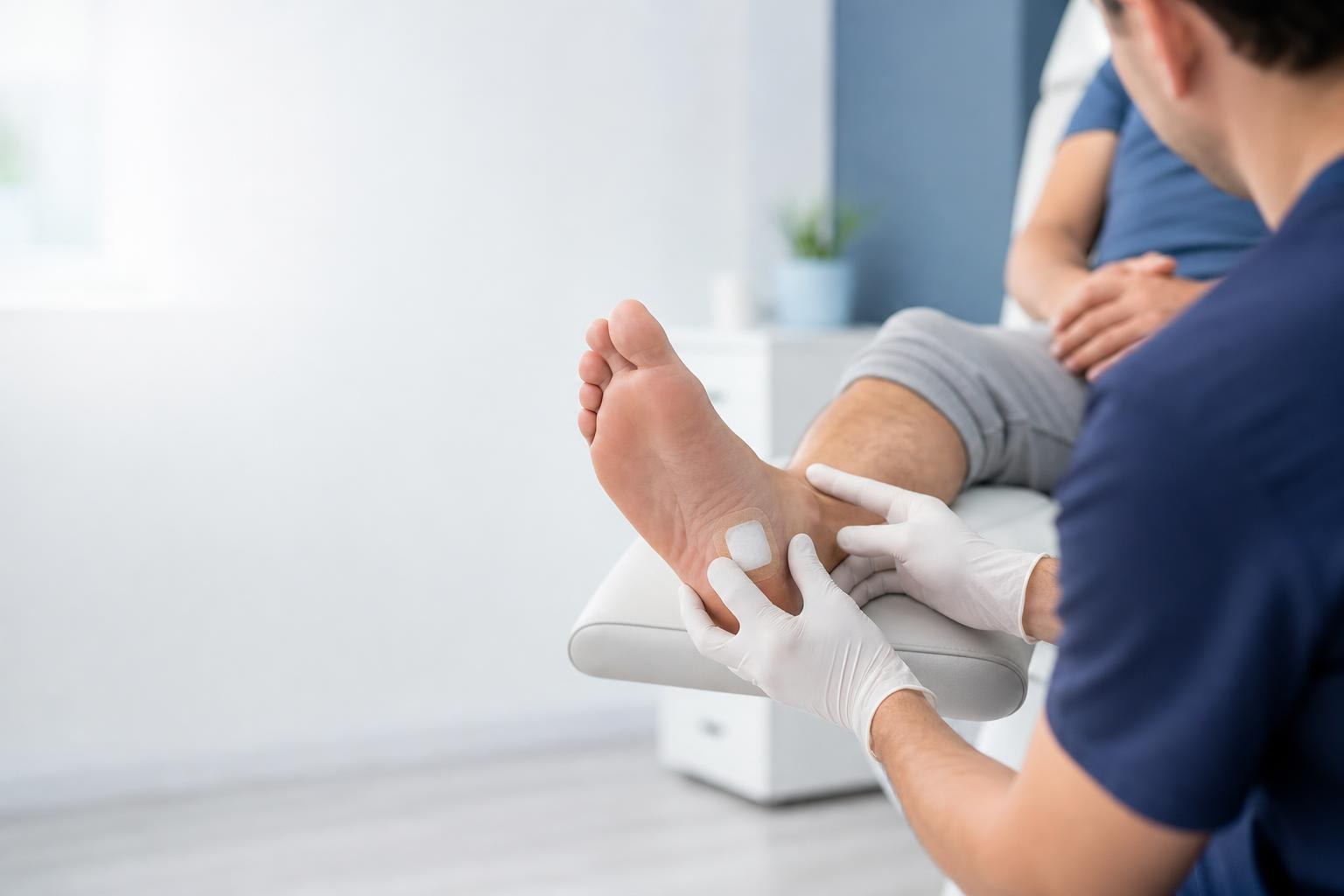
The podiatrist may examine the wound’s location, size, depth, edges, tissue quality, drainage, and surrounding skin. The area may be checked for signs of infection or damage extending beneath the visible opening. Measurements can provide a baseline for comparing the wound at later visits.
Pressure and footwear
Location often offers an important clue. A sore beneath the forefoot, on the heel, or along a prominent toe may be repeatedly irritated by body weight or footwear. Bunions, hammertoes, limited joint motion, and changes in walking mechanics can concentrate pressure in a small area.
This matters because even good local wound care may not be enough if every step continues to stress the tissue.
Circulation and sensation
The examination may include checking pulses, skin temperature, color, capillary refill, and sensation. If there are concerns about inadequate blood flow or a more complicated underlying condition, additional testing or referral to another medical specialist may be appropriate.
Your health history
Diabetes, prior wounds, vascular disease, swelling, smoking, medications, previous foot surgery, and recent injuries can all influence the care plan. The podiatrist will also want to know how the wound started, how long it has been present, and what you have already used on it.
How podiatric wound care may support healing
Treatment is individualized. A shallow friction blister and a deeper pressure-related ulcer do not call for the same approach. Depending on the findings, a plan may include:
- Cleaning the wound and selecting a dressing suited to its condition
- Removing unhealthy tissue or excess callus when medically appropriate
- Reducing pressure with padding, footwear changes, a specialized device, or activity modification
- Addressing moisture, swelling, or skin problems around the wound
- Evaluating possible infection and determining whether further testing or medication is needed
- Coordinating vascular, primary care, or other specialty care when indicated
- Scheduling follow-up visits to monitor objective changes
Professional foot wound care is often a process rather than a one-time treatment. Follow-up allows the podiatrist to compare measurements, examine tissue changes, and adjust protection or pressure relief as the wound evolves.
What should you do before the appointment?
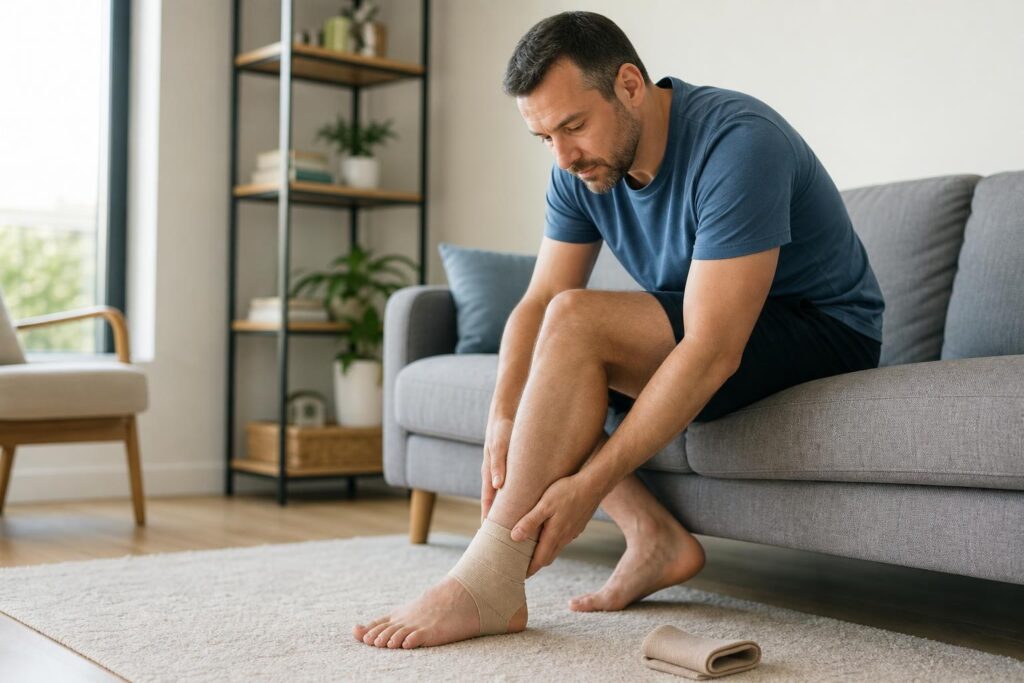
Unless a clinician has given you different instructions, gently protect the wound with a clean dressing. Avoid hydrogen peroxide, alcohol, bleach solutions, corn removers, or other harsh products, which may irritate tissue. Do not dig into the wound, trim its edges, or attempt to remove embedded material.
Bring a current medication list and information about relevant medical conditions. If another clinician prescribed an ointment or antibiotic, note the name and when you started it. Photos taken over several days may also help show how quickly the area has changed, although they do not replace an in-person examination.
Try to bring the shoes you wear most often. Wear patterns, seams, fit, and pressure points can help explain why a wound developed or keeps returning.
Can you continue walking on the foot?
That depends on the wound. Walking may place direct pressure on the injured tissue, but completely avoiding movement is not automatically the right answer for every patient. The safest recommendation depends on the wound’s location, stability, circulation, and the person’s fall risk and general health.
Until you receive guidance, limit activity that clearly increases pain, bleeding, or drainage. Do not walk barefoot, including at home. If you have been given an offloading shoe, boot, or other device, use it as directed and ask for help if it creates rubbing elsewhere.
Do not use pain alone to judge healing
Less pain can be encouraging, but it does not confirm that a wound is closing normally. Some foot wounds cause little discomfort from the beginning, particularly when sensation is reduced. Conversely, a healing area may remain tender even while other signs improve.
Look at the whole pattern: Is the opening becoming smaller? Is drainage decreasing? Is the surrounding skin calmer? Can the area stay protected without repeatedly breaking down? When the answers are unclear—or the wound seems stalled—an examination can provide more useful information than continuing to watch it at home.
A slow-healing wound deserves a closer look
A foot wound may remain open because of pressure, infection, circulation problems, reduced sensation, or a combination of factors. Covering the area is important, but successful care may also require addressing what is happening underneath and why the injury developed.
Dr. Daniel Brandwein is a board-certified podiatrist who has provided podiatric care since 1991. If you have a slow-healing foot wound or are unsure whether an area needs treatment, you can schedule an evaluation at the Pompano Beach office. Same-day appointments may be available, walk-ins are welcome, and most insurance is accepted. Call (954) 984-7500 or visit 159 S Pompano Parkway, Pompano Beach, FL 33069.
This article is for general educational purposes and does not replace individualized medical advice, diagnosis, or treatment.
Ready to Get Your Foot or Ankle Concern Checked?
If foot pain, a wound, nail problem, injury, or another concern is affecting your comfort or mobility, Dr. Daniel Brandwein can evaluate what is going on and discuss appropriate next steps.
Dr. Daniel Brandwein DPM, PA, FACFAS
159 S Pompano Parkway, Pompano Beach, FL 33069
(954) 984-7500
This article is for general educational information and is not a substitute for an individualized medical evaluation or treatment plan.
Get your foot or ankle concern properly evaluated.
Dr. Daniel Brandwein provides podiatry care in Pompano Beach for foot and ankle pain, diabetic foot concerns, nail problems, wounds, injuries, and other common podiatric conditions.