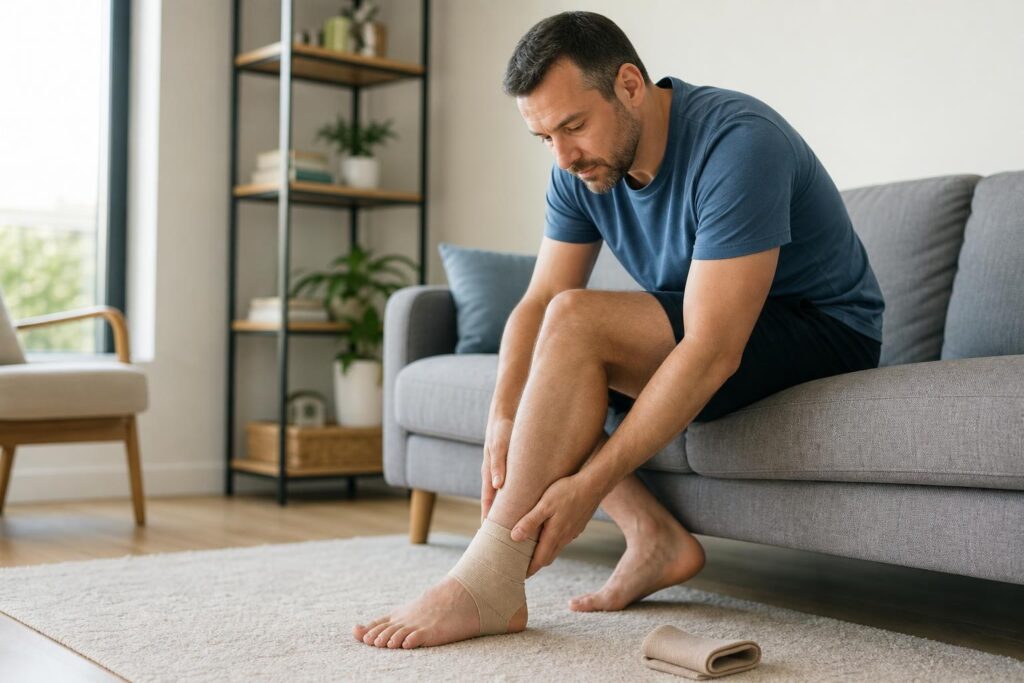

Use this article to better understand your symptoms and options. An in-person podiatry evaluation is the best way to determine what is causing a specific foot or ankle problem.
You finish a run feeling accomplished—then notice a sore heel, a tender spot along the top of your foot, or an ache that becomes more obvious once you sit down. The immediate question is usually practical: Can I keep training, or am I making this worse?
There is no single rule that applies to every runner or active adult. Some discomfort reflects temporary overload and improves with a short adjustment in activity. Other pain can be an early sign of a tendon problem, joint irritation, stress injury, or another condition that needs attention.
The most useful clues are often where the pain occurs, when it appears, and how it changes from one workout to the next.
Start With the Timing of Your Pain
Pain that begins during a run deserves a different response than mild stiffness that appears the following morning. Pay attention to the point at which symptoms begin and whether they affect how you move.
Pain during activity
Discomfort that consistently begins at a certain distance or intensity may suggest that a structure is reaching its current tolerance. A recent increase in mileage, hill work, speed sessions, court sports, or lower-body strength training can contribute. Continuing after your stride changes may shift additional stress to the ankle, knee, hip, or opposite foot.
Pain immediately after activity
An ache that develops during the cooldown period may be related to irritated muscles, tendons, joints, or connective tissue. It is worth noting whether the discomfort settles within a few hours or becomes progressively worse as the day continues.
Pain the next morning
Morning symptoms can be especially informative. Heel or arch pain during the first few steps may occur when the plantar fascia or nearby tissues are irritated. Achilles discomfort can also feel more noticeable after rest. If pain returns each morning or takes longer to loosen up, the area may not be recovering adequately between workouts.
What the Location of Foot Pain May Suggest
The site of pain does not confirm a diagnosis by itself, but it can help narrow down what should be evaluated. Runners and active adults commonly report symptoms in several areas:
- Heel or arch: Irritation of the plantar fascia is one possibility, although heel pain can also involve the heel pad, nerves, tendons, or bone.
- Back of the heel or lower calf: The Achilles tendon may become irritated after changes in speed, hills, jumping, or footwear.
- Top of the foot: Pressure from tightly laced shoes can cause soreness, but persistent focal pain may also involve a tendon, joint, or stress-related bone injury.
- Ball of the foot: Increased forefoot pressure can irritate the joints, surrounding tissues, or nerves. Thin or worn footwear may make symptoms more noticeable.
- Outer edge of the foot: Pain here may involve the peroneal tendons, a joint, or one of the outer foot bones, particularly after an awkward landing or ankle roll.
- Inside or outside of the ankle: Tendons and ligaments around the ankle can become strained through repetitive loading, uneven terrain, or a specific injury.
A small, sharply defined area of bone tenderness generally deserves more caution than broad muscle fatigue. Stress injuries do not always begin with dramatic pain, and some people can still walk or run during the early stages.
Why Pain Can Appear Even When You Did Not Have an Accident
Sports-related foot pain often develops through accumulated load rather than one memorable event. Your body may have tolerated a routine for months, but a change in one or more variables can exceed what the tissues are ready to handle.
Common contributors include a sudden increase in training volume, more time on hard or sloped surfaces, insufficient recovery, a new sport, or a change in shoes. Worn midsoles can lose support even when the outer shoe still looks acceptable. Conversely, switching abruptly to a shoe with a different heel height, stiffness, or shape can alter how force travels through the foot and ankle.
Foot mechanics also matter. Limited ankle motion, reduced strength, joint stiffness, or the way the foot loads during movement may place repeated pressure on a particular area. This does not mean every runner needs custom orthotics. It means the source of recurring pain may not be solved by buying another pair of shoes without understanding the mechanics involved.
What to Do When Foot Pain First Appears
Trying to “test” a painful foot with repeated runs can make it harder to see whether the condition is improving. A more useful first step is to reduce the activity that triggers symptoms and observe how the foot responds.
Relative rest does not always mean avoiding all movement. Depending on the symptoms, you may be able to substitute an activity that does not produce pain. Supportive footwear can be preferable to barefoot walking while the area is sensitive. A wrapped cold pack may help with short-term soreness or swelling if it feels comfortable; avoid placing ice directly on the skin.
Keep a brief record for several days. Note the exact location, pain level, swelling, morning symptoms, and which activities trigger discomfort. Also record recent changes in mileage, terrain, shoes, or exercise intensity. This information can be useful if an evaluation becomes necessary.
Avoid aggressively stretching or massaging an acutely painful spot before you know what is involved. Stretching may help certain conditions, but forcing a painful tendon, joint, or possible bone injury is not a universal solution.
How to Decide Whether You Are Ready to Run Again
The calendar alone should not determine your return. Before resuming impact exercise, everyday activities such as normal walking and climbing stairs should be comfortable. Swelling should be absent or clearly improving, and you should not need to alter your stride to protect the foot.
When symptoms are mild and improving, a gradual return is generally more sensible than immediately repeating your previous distance or pace. Start below your usual workload, choose a predictable surface, and reassess during the workout and later that day. Pain that increases, changes your mechanics, or remains worse the next morning is a sign to step back.
Do not use pain-relieving medication solely to mask symptoms so you can complete a run. Feeling less pain does not necessarily mean the irritated tissue is prepared for the load.
When Foot Pain Should Be Evaluated
Schedule an evaluation when pain repeatedly returns, interferes with ordinary walking, or fails to improve after reducing the aggravating activity. Earlier assessment is also appropriate if there is focal bone tenderness, recurring swelling, numbness, weakness, or a sensation that the ankle is unstable.
Seek prompt medical attention after a significant injury if you cannot bear weight, the foot or ankle looks out of position, swelling or bruising is substantial, or you felt a snap or pop followed by loss of function. New color or temperature changes, severe pain, or a cold or numb foot also require urgent attention.
People with diabetes, reduced sensation, circulation concerns, or a history of foot wounds should be particularly cautious. A blister, pressure spot, or skin break may be easier to overlook and should not be exercised through.
What a Podiatry Evaluation Can Clarify
A foot and ankle evaluation can connect the symptom pattern with the structures being loaded. This may include checking the painful area, joint movement, strength, balance, walking mechanics, footwear, and the events leading up to the problem. Imaging may be recommended when the examination raises concern for a fracture, stress injury, or another condition that cannot be assessed fully from symptoms alone.
Treatment depends on what is found. Options may include temporary activity modification, footwear guidance, bracing or immobilization, targeted exercises, physical therapy, orthotics, or other condition-specific care. The goal is not simply to quiet the pain for the next workout, but to help the injured or irritated area recover while addressing factors that may contribute to recurrence.
Dr. Daniel Brandwein provides sports medicine and trauma care as part of comprehensive foot and ankle care in Pompano Beach. If pain is changing how you run, limiting your activities, or returning whenever you increase training, an evaluation can help determine a safer next step.
To request an appointment, use the practice’s online contact page or call (954) 984-7500. Same-day appointments may be available, walk-ins are welcome, and most insurance is accepted. This article provides general education and is not a substitute for individualized medical advice.
Ready to Get Your Foot or Ankle Concern Checked?
If foot pain, a wound, nail problem, injury, or another concern is affecting your comfort or mobility, Dr. Daniel Brandwein can evaluate what is going on and discuss appropriate next steps.
Dr. Daniel Brandwein DPM, PA, FACFAS
159 S Pompano Parkway, Pompano Beach, FL 33069
(954) 984-7500
This article is for general educational information and is not a substitute for an individualized medical evaluation or treatment plan.
Get your foot or ankle concern properly evaluated.
Dr. Daniel Brandwein provides podiatry care in Pompano Beach for foot and ankle pain, diabetic foot concerns, nail problems, wounds, injuries, and other common podiatric conditions.