Use this article to better understand your symptoms and options. An in-person podiatry evaluation is the best way to determine what is causing a specific foot or ankle problem.
A shoe may feel fine when you first put it on, yet become increasingly uncomfortable as the day goes on. The top of a bent toe rubs against the shoe. The tip of the toe feels sore. A corn keeps returning in exactly the same place. Eventually, you may start buying larger shoes or avoiding certain activities just to escape the pressure.
When hammertoes make footwear uncomfortable, the answer is not always a bigger shoe. The shape, depth, width, and construction of the shoe can matter just as much as its labeled size. It is also important to understand why the toe is bending and whether it remains flexible, because these details can influence the most reasonable next step.
Why a hammertoe becomes painful inside a shoe
A hammertoe develops when one or more of the smaller toes remain bent at a middle joint rather than lying flat. Muscle and tendon imbalance can contribute to this position. Foot structure, arthritis, previous injury, bunions, and years of pressure from poorly matched footwear may also play a role.
The bend itself is not always painful. Problems often begin when the changed toe position creates new pressure points. A standard shoe may press against the raised joint, while the end of the toe may be pushed downward into the insole. Nearby toes can also crowd together.
That repeated friction and pressure may lead to:
- Pain or burning over the raised toe joint
- A corn on top of the toe or at its tip
- Callused skin under the forefoot
- Redness, swelling, or tenderness after wearing shoes
- Blisters or irritated skin between crowded toes
- Difficulty finding shoes that remain comfortable throughout the day
Corns and callouses are the skin’s response to ongoing pressure. Trimming the thickened skin or cushioning it may provide temporary relief, but it does not remove the mechanical force that caused it. If the shoe continues pressing in the same place, the problem often returns.
Bigger is not always better
Many people respond to toe pressure by moving up a full shoe size. Extra length may help in some cases, but an overly long shoe can allow the foot to slide forward. That movement may cause the toes to grip for stability, increase rubbing, and create new pressure under the ball of the foot.
A better goal is a shoe that matches the foot in several dimensions. It should provide adequate length without heel slippage, enough width for the forefoot, and sufficient vertical space over the toes. This vertical space is especially important when a bent joint sits higher than the other toes.
Be cautious with shoes that have a sharply tapered front. Even when they are technically the correct size, a narrow or shallow toe box can squeeze the toes inward and downward. High heels may add to the problem by shifting body weight toward the forefoot and pushing the toes into the front of the shoe.
What to look for in shoes for hammertoes
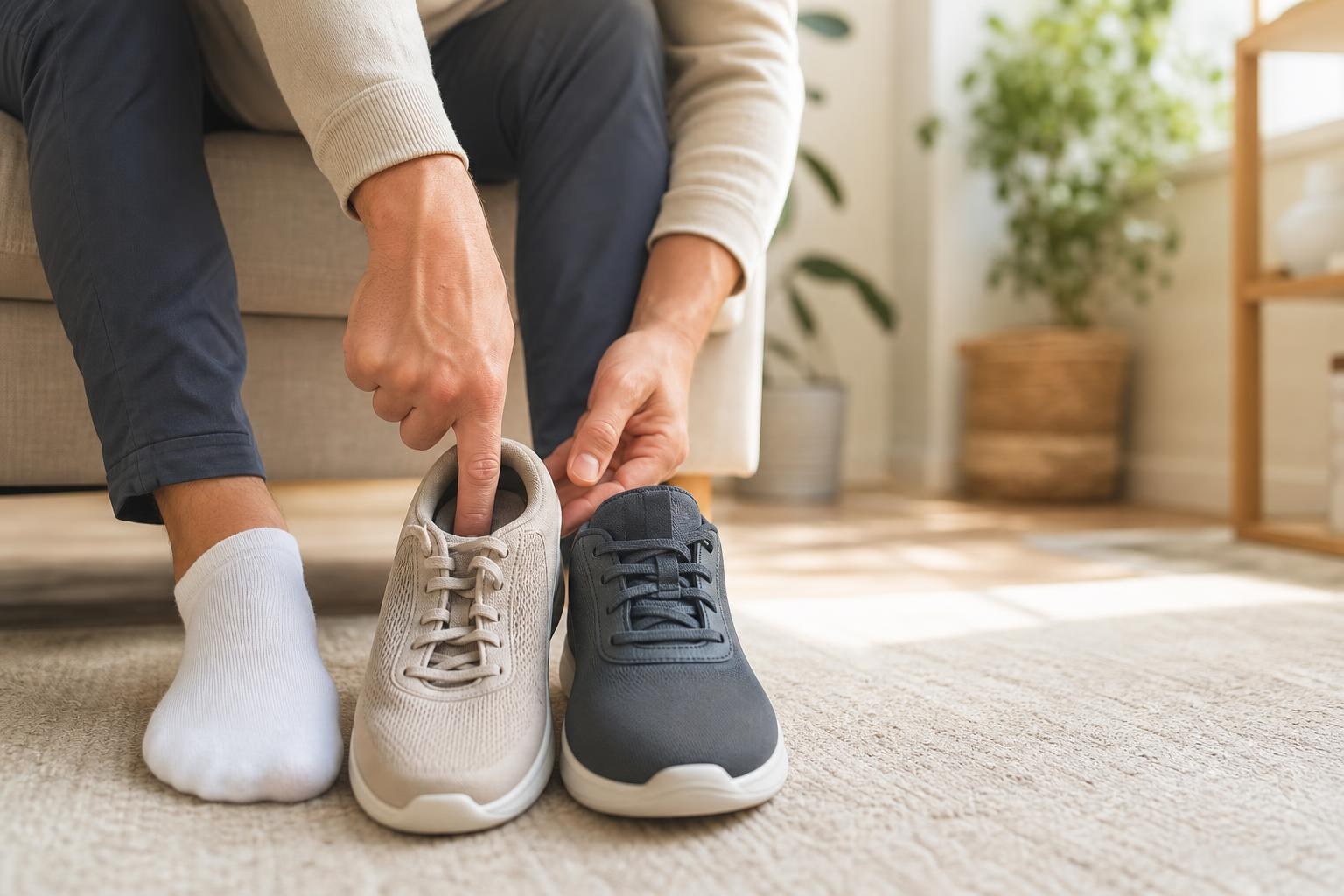
No single shoe works for every foot, but several features can reduce unnecessary contact with a prominent toe. When shopping, focus on how the shoe feels while standing and walking rather than relying only on the size printed inside.
- A wide, deep toe box: The toes should have room without being compressed from the sides or rubbed from above.
- A rounded or foot-shaped front: This generally provides more usable space than a pointed toe.
- Soft or stretchable upper material: Flexible fabric or soft leather may accommodate a prominent joint more comfortably than rigid seams or stiff overlays.
- A low, stable heel: This may reduce the forward slide that crowds toes into the front of the shoe.
- Secure fastening: Laces, straps, or adjustable closures can hold the heel in place so the foot does not repeatedly move forward.
- A supportive sole: A stable shoe can improve comfort during walking, although the ideal amount of flexibility or stiffness depends on the person’s foot mechanics.
Try on both shoes, since one foot may be larger or shaped differently. Shop when your feet are closer to their typical end-of-day size, and wear the type of socks you normally use. Walk around long enough to notice pressure over the toe joints, at the tips of the toes, and beneath the forefoot.
Do not assume that a tight area will reliably “break in.” Soft materials may relax somewhat, but a shoe that immediately creates concentrated pressure over a hammertoe is unlikely to become an ideal fit.
Flexible and rigid hammertoes may behave differently
Some hammertoes remain flexible, meaning the toe can still move toward a straighter position. Others become more fixed as the joints and surrounding tissues stiffen. A flexible toe may respond differently to shoe changes, padding, exercises, or other conservative care than a rigid deformity.
It is not a good idea to force a stiff or painful toe straight. Aggressive stretching or tightly taping the toe can irritate the skin and joint. A podiatry evaluation can help determine how much motion remains, where pressure is occurring, and whether another issue—such as a bunion, arthritis, tendon imbalance, or altered walking mechanics—is contributing.
For some patients, footwear changes are enough to improve day-to-day comfort. For others, a podiatrist may discuss carefully selected padding, toe supports, treatment of painful corns or callouses, orthotics, or other options. Surgery may be considered when symptoms remain limiting despite appropriate conservative measures, but it is not automatically necessary simply because a toe is bent.
Use pads and corn products carefully
Nonmedicated cushions or sleeves may reduce rubbing, but they also take up space inside the shoe. A thick pad placed in a shallow toe box can sometimes increase pressure instead of relieving it. Pads should fit without cutting into the skin, restricting circulation, or pushing the toe against an adjacent toe.
Avoid cutting corns with a blade or using strong medicated corn removers without professional guidance. Acid-based products can damage healthy skin surrounding the corn. This is particularly concerning for anyone with diabetes, neuropathy, poor circulation, fragile skin, or a history of foot wounds.
People living with diabetes should inspect their feet and the tops and tips of their toes regularly. Reduced sensation may make it difficult to feel rubbing before a blister or sore develops. Dr. Brandwein’s diabetic foot care services include evaluation of pressure areas and other concerns that may place the skin at risk.
When shoe discomfort deserves an evaluation
Occasional mild rubbing that resolves after changing shoes is different from recurring pain, progressive deformity, or skin breakdown. Consider scheduling a podiatry visit if the toe continues to hurt despite wearing roomier footwear, if corns repeatedly return, or if the toe is becoming harder to move.
An examination can assess the toe’s position and flexibility, identify the exact pressure points, and evaluate the rest of the foot. This matters because hammertoe discomfort may be connected to forefoot overload, a bunion, arch mechanics, joint changes, or the way the foot functions while walking. Treatment through comprehensive foot and ankle care can then be tailored to the findings rather than based on the appearance of the toe alone.
Seek prompt medical attention for an open sore, drainage, spreading redness, increasing warmth, significant swelling, or rapidly worsening pain. A toe that becomes unusually pale, blue, dark, or cold also needs urgent assessment. After a recent injury, sudden deformity or an inability to bear weight may indicate a problem beyond a longstanding hammertoe.
This information is educational and cannot replace an individualized examination. If hammertoes are making shoes, walking, or daily activities uncomfortable, Dr. Daniel Brandwein can evaluate the source of the pressure and discuss appropriate options. To request an appointment at the Pompano Beach office, visit the contact page or call (954) 984-7500. The practice is located at 159 S Pompano Parkway, Pompano Beach, FL 33069.
Ready to Get Your Foot or Ankle Concern Checked?
If foot pain, a wound, nail problem, injury, or another concern is affecting your comfort or mobility, Dr. Daniel Brandwein can evaluate what is going on and discuss appropriate next steps.
Dr. Daniel Brandwein DPM, PA, FACFAS
159 S Pompano Parkway, Pompano Beach, FL 33069
(954) 984-7500
This article is for general educational information and is not a substitute for an individualized medical evaluation or treatment plan.
Get your foot or ankle concern properly evaluated.
Dr. Daniel Brandwein provides podiatry care in Pompano Beach for foot and ankle pain, diabetic foot concerns, nail problems, wounds, injuries, and other common podiatric conditions.