
Use this article to better understand your symptoms and options. An in-person podiatry evaluation is the best way to determine what is causing a specific foot or ankle problem.
When a bent toe rubs against your shoe, almost any cushion can look like a promising solution. You may find gel caps, foam sleeves, crest pads, toe separators, and corn cushions—all marketed as ways to make hammertoes more comfortable.
Some of these products can help. Others add bulk in exactly the wrong place, increasing pressure inside an already crowded shoe. The difference often comes down to where the toe hurts, how flexible it is, and whether the shoe has enough room for the pad.
Here is how to make a more informed choice—and how to recognize when padding alone is unlikely to solve the problem.
What a hammertoe pad can and cannot do
A hammertoe develops when one or more of the smaller toes remain bent at a joint rather than resting flat. That position can expose the top of the joint to shoe friction, push the tip of the toe into the ground, or change how pressure is distributed across the ball of the foot.
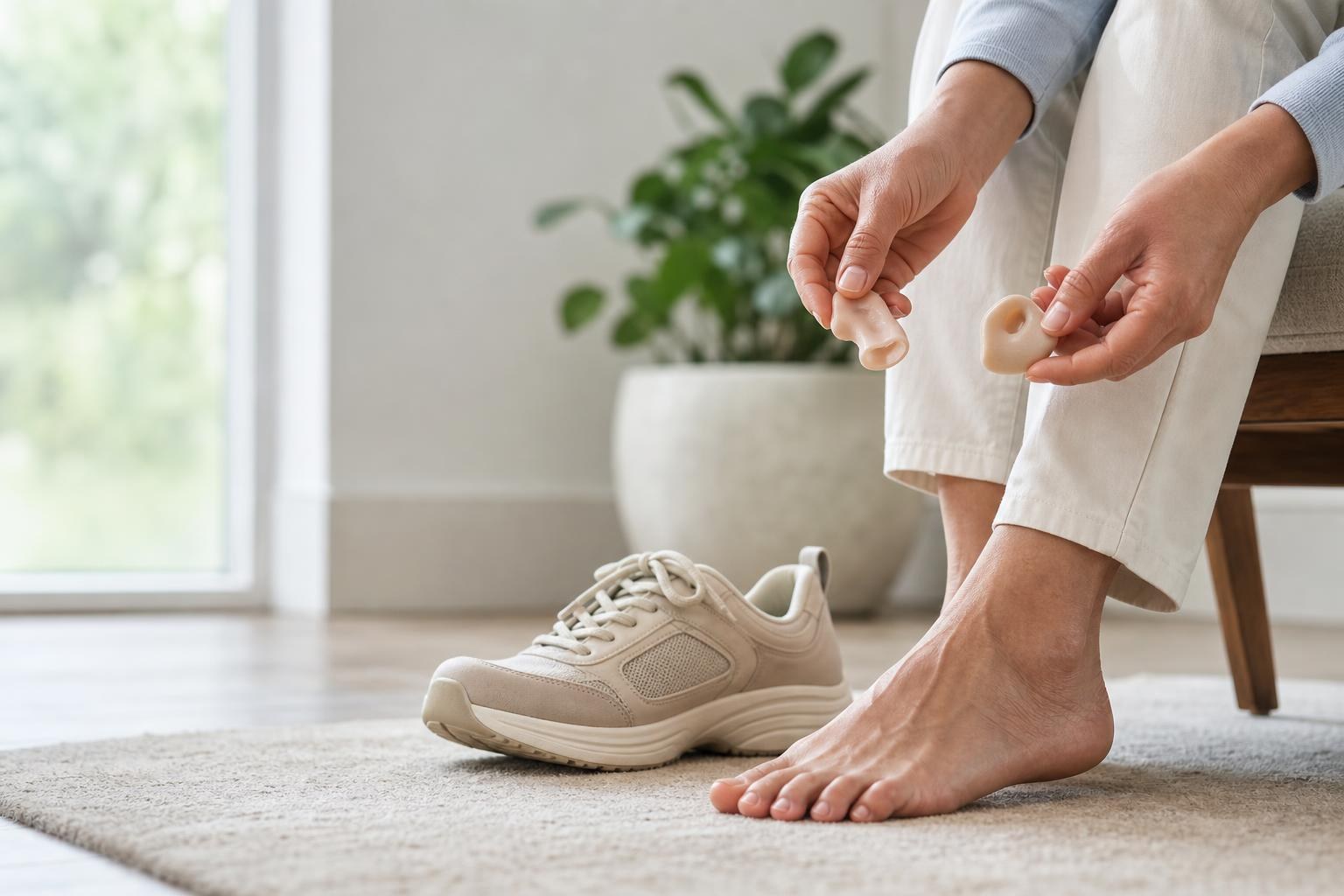
A pad may create a barrier between the skin and the shoe, cushion a tender area, or support a flexible toe in a more comfortable position. This can be useful for reducing day-to-day irritation.
However, an over-the-counter pad does not correct the underlying muscle and tendon imbalance or permanently straighten a hammertoe. If the toe is rigid, significantly crowded, or associated with ongoing pain, a podiatric evaluation can help determine what is actually driving the pressure.
Match the pad to the location of the pressure
There is no single best hammertoe pad. Before buying one, identify the precise area that becomes sore. Is the shoe rubbing the top of the bent joint? Is the tip of the toe tender? Are two toes pressing against each other? Does the discomfort sit under the ball of the foot instead?
For rubbing on top of the toe
A thin gel sleeve, fabric-lined tube, or nonmedicated foam cushion may reduce friction over a prominent joint. Thinness matters. A thick pad can take up vertical space and press the toe more firmly against the shoe’s upper.
If the pad feels comfortable while you are seated but causes throbbing or increased redness after walking, it may be too bulky or tight.
For pressure at the tip of the toe
A crest pad sits beneath the toes and may help support a flexible hammertoe so the tip does not press as forcefully into the ground. These pads are not suitable for every foot. A poorly positioned crest pad may shift pressure elsewhere or bunch under the toes.
Tip pain can also be associated with a thickened nail, a corn, or a toe that has become relatively rigid. If the area keeps returning despite padding, it is worth having the toe and shoe fit assessed.
For pressure between the toes
A low-profile toe separator may reduce direct contact between neighboring toes. It should sit comfortably without forcing the toes apart or making the forefoot feel wider than the shoe can accommodate.
People sometimes place a separator between the toes and then return to a narrow shoe. This may simply transfer pressure from one side of the toe to the other. The device and the shoe need to work together.
For pain under the ball of the foot
A bent toe can alter how the forefoot bears weight, sometimes contributing to discomfort beneath a metatarsal joint. A metatarsal pad may help redistribute pressure, but placement is important. Positioned too far forward, it can feel like a lump directly under the painful area and worsen symptoms.
Because ball-of-foot pain has several possible causes, persistent discomfort is better evaluated than treated through repeated trial and error. Dr. Brandwein provides comprehensive foot and ankle care for hammertoes, corns, calluses, and related pressure problems.
How to try a hammertoe pad safely
A pad should make the foot feel better without creating a new red spot, blister, or area of numbness. A few practical steps can make home use safer:
- Start with the thinnest product that addresses the problem.
- Test it for a short period at home before wearing it for a full day.
- Check the skin after removing it, especially over joints and between the toes.
- Stop using it if you notice increased pain, persistent redness, blistering, skin breakdown, or color changes.
- Clean reusable products as directed and replace them when they stretch, tear, or lose their cushioning.
The shoe should have a deep, rounded toe box with enough width for the toes and the pad. If adding a cushion makes the shoe feel tight, a roomier shoe may be more helpful than thicker padding. Avoid assuming that a larger shoe size is always the answer; excess length can allow the foot to slide forward, creating more toe pressure.
When padding can make a hammertoe feel worse
Padding often backfires when it is used to compensate for a shoe that is too shallow or narrow. It can also cause trouble if it wraps tightly around a toe, slips out of position, traps moisture, or covers an area of irritated skin without reducing the underlying pressure.
Be cautious with medicated corn removers containing acids. These products can damage healthy surrounding skin and may be particularly risky for someone with diabetes, reduced sensation, poor circulation, or fragile skin. A corn is a response to repeated pressure; removing the thickened skin without addressing that pressure may lead to recurrence or injury.
People with diabetes or numbness should speak with a medical professional before using toe pads or treating corns at home. Reduced sensation can make it difficult to feel when a product is rubbing or restricting the toe. Information about preventive care is available through the practice’s diabetic foot care services.
Signs that the toe needs more than an over-the-counter cushion
An evaluation does not automatically mean surgery. It provides an opportunity to identify whether the toe remains flexible, examine the skin, assess joint motion, review footwear, and determine how the foot bears weight.
Consider scheduling a podiatry visit if:
- Pain continues despite switching to roomier shoes and appropriate padding.
- A corn or callus repeatedly returns in the same place.
- The toe is becoming harder to straighten or increasingly overlaps another toe.
- You have pain under the ball of the foot, difficulty walking, or changes in balance.
- There is an open sore, drainage, increasing warmth, spreading redness, or significant swelling.
- You have diabetes, neuropathy, circulation concerns, or a history of foot wounds.
An open wound, rapidly worsening redness, drainage, fever, or a toe that becomes unusually pale, blue, or dark warrants prompt medical attention. Do not rely on a cushion to cover a skin injury.
What professional treatment may involve
Depending on the examination, conservative care may include footwear changes, targeted padding, treatment of a painful corn or callus, activity modifications, or an orthotic when foot mechanics are contributing to excess pressure. A podiatrist can also show you where a pad should sit and whether a particular device is appropriate for the toe.
If a hammertoe has become rigid or pain continues to interfere with walking and shoe wear, surgical options may be discussed. Surgery is not necessary for every hammertoe, and the appropriate approach depends on the deformity, symptoms, overall health, and treatment goals.
Comfort should not require constant guesswork
A well-chosen hammertoe pad can be a useful comfort tool, particularly when the toe is still flexible and the shoe provides enough room. It should reduce pressure—not create a tighter environment or hide worsening skin irritation.
If you are cycling through pads without relief, Dr. Daniel Brandwein can evaluate the toe and help identify practical next steps. The practice has served the Pompano Beach community since 1991 and is located at 159 S Pompano Parkway. To request an appointment, contact the office or call (954) 984-7500. Same-day appointments may be available.
Ready to Get Your Foot or Ankle Concern Checked?
If foot pain, a wound, nail problem, injury, or another concern is affecting your comfort or mobility, Dr. Daniel Brandwein can evaluate what is going on and discuss appropriate next steps.
Dr. Daniel Brandwein DPM, PA, FACFAS
159 S Pompano Parkway, Pompano Beach, FL 33069
(954) 984-7500
This article is for general educational information and is not a substitute for an individualized medical evaluation or treatment plan.
Get your foot or ankle concern properly evaluated.
Dr. Daniel Brandwein provides podiatry care in Pompano Beach for foot and ankle pain, diabetic foot concerns, nail problems, wounds, injuries, and other common podiatric conditions.