
Use this article to better understand your symptoms and options. An in-person podiatry evaluation is the best way to determine what is causing a specific foot or ankle problem.
A pebble in a shoe usually becomes uncomfortable quickly. A blister normally stings. Hot pavement makes most people step away. But when diabetes affects sensation in the feet, these protective warnings may become faint—or disappear entirely.
That is what makes diabetic foot numbness concerning. The absence of pain does not necessarily mean the foot is unharmed. A cut, pressure point, burn, or irritated toenail can worsen quietly when you cannot feel it clearly.
Understanding this risk is not a reason to become fearful of every small mark. It is a reason to know your feet, inspect them consistently, and seek care when something does not look right.
Why diabetes can change how the feet feel
Over time, diabetes may damage peripheral nerves, particularly the longer nerves that extend into the legs and feet. This is commonly called peripheral neuropathy. It can affect each person differently.
Some people notice reduced sensation or complete numbness. Others experience tingling, burning, sensitivity, shooting discomfort, or the feeling that they are wearing socks when they are barefoot. Symptoms may begin gradually, so a person may not immediately recognize how much sensation has changed.
Diabetes is not the only possible cause of numb feet. Nerve compression, back problems, certain medications, vitamin deficiencies, circulation disorders, and other medical conditions may also contribute. A podiatry evaluation can help assess the feet and determine whether additional medical follow-up is appropriate.
Numbness removes an important warning system
Pain is unpleasant, but it serves a purpose. It tells you to remove a tight shoe, shift your weight, treat a cut, or stop walking on an injured area. Reduced protective sensation can interfere with those warnings.
For example, a shoe seam may repeatedly rub one toe without causing obvious discomfort. A callus may conceal increasing pressure beneath the skin. A person may step on a sharp object and continue walking because the injury is not painful.
Continued pressure can turn a small problem into a skin breakdown or diabetic foot ulcer. Once the skin is open, bacteria have a way to enter. Healing may also be more difficult when poor circulation, swelling, elevated blood glucose, or repeated weight-bearing is involved.
Neuropathy and circulation problems are not the same condition, although they may occur together. Numbness primarily involves the nerves; reduced circulation affects blood flow. Both deserve attention because they can complicate healing in different ways.
Foot problems that may go unnoticed
When sensation is limited, everyday situations may carry more risk than expected. Issues to watch for include:
- Blisters caused by tight, loose, or poorly fitting shoes
- Cuts, cracks, punctures, or objects lodged in the foot
- Red areas that suggest rubbing or prolonged pressure
- Burns from hot water, heating pads, pavement, or sand
- Thick calluses with irritation or bleeding underneath
- Ingrown toenails or nail edges pressing into nearby skin
- Skin changes between the toes, including cracks or excess moisture
- Swelling, drainage, odor, warmth, or discoloration
A lack of pain should never be used as the only measure of severity. With neuropathy, visual changes can be more informative than how the area feels.
How to perform a useful daily foot check
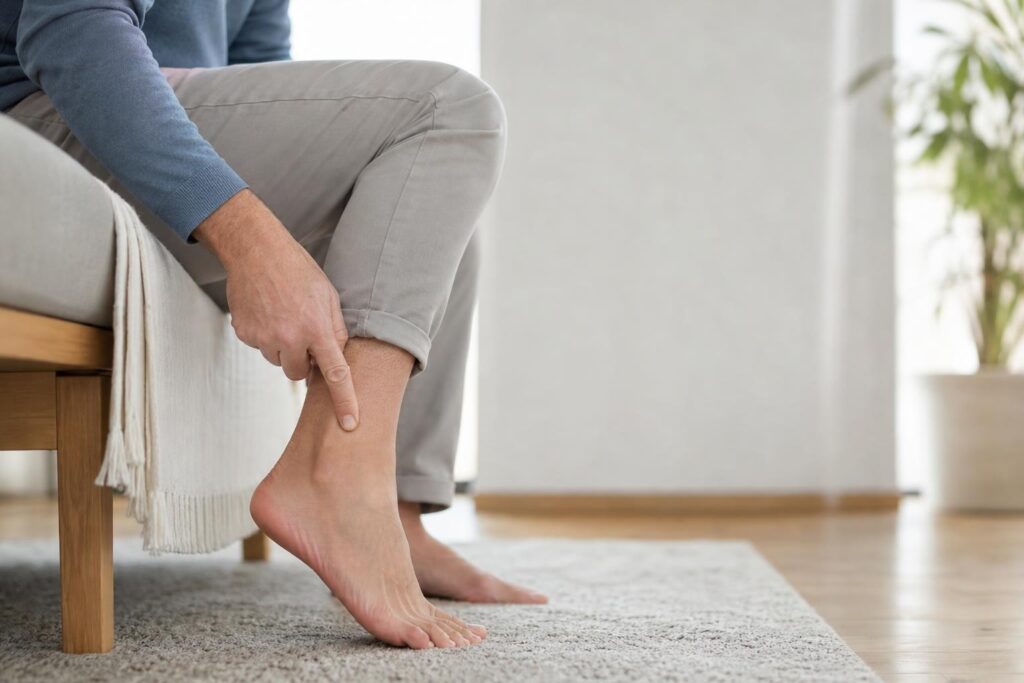
Choose a consistent time, such as after taking off your shoes in the evening. Sit somewhere with good lighting and inspect the tops, sides, soles, heels, and spaces between the toes. If reaching the bottom of your feet is difficult, use a mirror or ask a trusted caregiver for help.
Compare one foot with the other. Look for a new difference in color, shape, temperature, or swelling. Check for cuts, blisters, cracks, drainage, bruising, and areas where a shoe may have rubbed. Do not forget the toenails and the skin along their edges.
Before putting on shoes, run your hand inside each one. Check for pebbles, folded insoles, rough seams, or other objects. Wear clean socks and shoes that provide enough space without sliding excessively.
Documenting a questionable area with a dated photograph may help you determine whether it is changing. However, a photo should not delay an examination when there is an open wound, drainage, spreading redness, or another concerning sign.
Common safety mistakes when feet are numb
Some forms of home care that seem harmless can injure a foot with reduced sensation. Avoid walking barefoot, even indoors, because small objects or rough surfaces may cause damage without being felt.
Do not use heating pads, hot water bottles, or direct heat on numb feet. Test bath water with your hand, elbow, or a reliable thermometer rather than your foot. Burns may occur before the temperature feels uncomfortable.
Avoid cutting corns or calluses yourself and do not apply medicated corn-removal products unless a medical professional has specifically advised you to do so. These products can damage surrounding skin. Toenails also require care: cutting too short or digging into the corners may create an opening in the skin.
If nail thickness, limited flexibility, poor vision, or numbness makes routine care difficult, professional diabetic foot care may help reduce preventable injuries.
When a change needs prompt attention
Contact a medical professional promptly if you discover an open sore, blister, puncture, bleeding callus, drainage, or a toenail breaking into the skin. A wound should not be ignored simply because it is small or painless.
Other reasons to seek timely evaluation include:
- Redness, warmth, or swelling that is new or increasing
- A dark, pale, blue, or black area of skin
- Pus, odor, or fluid coming from a break in the skin
- A foot that suddenly looks different in shape
- New numbness, weakness, or difficulty walking
- A cut or blister that is not clearly improving
Spreading redness, fever, chills, rapidly increasing swelling, black discoloration, or feeling seriously unwell may require urgent medical attention or emergency care. When in doubt, it is safer to ask rather than wait for pain to develop.
Dr. Brandwein provides foot wound care for diabetic ulcers and other slow-healing wounds. Early evaluation can identify pressure, infection concerns, circulation findings, or other factors that may be interfering with healing.
What a diabetic foot evaluation may include
A podiatric examination is not limited to looking for open wounds. The evaluation may include checking skin and toenail health, foot structure, areas of callus, pulses, swelling, temperature, and footwear fit.
Sensation may be assessed with light touch, vibration, or a thin monofilament that applies gentle pressure to specific areas. These tests help identify whether protective sensation has changed, even if you have not noticed obvious symptoms.
The podiatrist may also look at how you stand and walk. Bunions, hammertoes, limited joint movement, and changes in gait can concentrate pressure in particular areas. Depending on the findings, recommendations may include footwear changes, pressure relief, nail or callus care, orthotics, wound treatment, or coordination with another healthcare professional.
Can diabetic neuropathy be reversed?
There is no single answer because the cause, extent, and duration of nerve changes vary. Some symptoms may improve when an underlying contributor can be addressed, while established nerve damage may persist. Treatment may focus on managing symptoms, supporting overall diabetes care, and preventing injuries that numbness could otherwise conceal.
Even when sensation does not return, practical prevention still matters. Daily inspection, appropriate footwear, timely treatment of skin problems, and periodic professional examinations can reduce avoidable risks.
Protecting a foot you cannot fully feel
Diabetic foot numbness changes the way a problem announces itself. Instead of waiting for pain, pay attention to what you can see: redness, rubbing, swelling, a skin opening, or a change in the shape of the foot. Small observations often provide the earliest opportunity to act.
Dr. Daniel Brandwein is a board-certified podiatrist who has provided podiatric care in Pompano Beach since 1991. If you have numbness, a concerning skin change, or questions about protecting your feet, you can schedule an evaluation at 159 S Pompano Parkway or call (954) 984-7500. Same-day appointments may be available.
Ready to Get Your Foot or Ankle Concern Checked?
If foot pain, a wound, nail problem, injury, or another concern is affecting your comfort or mobility, Dr. Daniel Brandwein can evaluate what is going on and discuss appropriate next steps.
Dr. Daniel Brandwein DPM, PA, FACFAS
159 S Pompano Parkway, Pompano Beach, FL 33069
(954) 984-7500
This article is for general educational information and is not a substitute for an individualized medical evaluation or treatment plan.
Get your foot or ankle concern properly evaluated.
Dr. Daniel Brandwein provides podiatry care in Pompano Beach for foot and ankle pain, diabetic foot concerns, nail problems, wounds, injuries, and other common podiatric conditions.