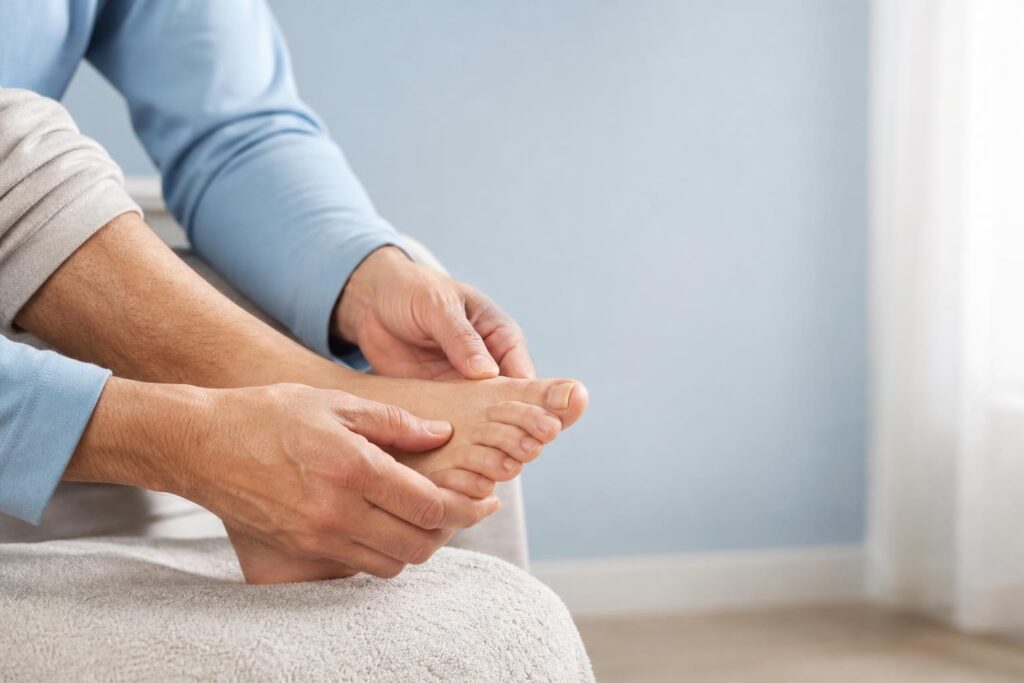

Use this article to better understand your symptoms and options. An in-person podiatry evaluation is the best way to determine what is causing a specific foot or ankle problem.
It often starts with a small adjustment: skipping an evening walk, avoiding the far end of the grocery store, or choosing not to attend an event that requires standing. When every step is uncomfortable, walking less can feel like the sensible choice.
But reduced activity can gradually affect leg strength, balance, endurance, and confidence. The goal is not to push through significant foot pain. It is to understand what is limiting movement, make walking safer and more comfortable, and address treatable problems before they become larger obstacles.
Foot pain is not something an older adult must simply accept. An evaluation can help identify where the discomfort is coming from and what changes may support continued mobility.
Why foot pain can affect more than the feet
A painful toe, heel, arch, or ankle may change the way someone walks. They may shorten their stride, shift weight to the other side, turn a foot outward, or avoid pressing through a sore area. These compensations may reduce pain temporarily, but they can place extra stress on the opposite foot, knees, hips, or lower back.
There can also be a gradual loss of confidence. Someone who worries that a foot will hurt, an ankle will give way, or a shoe will rub may become more cautious. Uneven ground and stairs may start to feel especially challenging.
This does not mean every ache will lead to a major mobility problem. It does mean that persistent pain or a noticeable change in walking deserves attention—particularly when it begins changing everyday decisions.
Common reasons walking becomes uncomfortable with age
Older adults may experience several foot concerns at the same time. A stiff joint can alter pressure under the foot, for example, while a corn or thickened nail makes certain shoes difficult to wear. A podiatric examination can help separate these overlapping issues.
Pressure from corns, calluses, bunions, or hammertoes
Changes in toe position and foot shape can create concentrated areas of pressure. A bunion may rub against the side of a shoe, while a hammertoe may press against the upper material. Corns and calluses can become tender when they develop over a prominent joint or beneath a weight-bearing area.
Simply buying a wider shoe may help in some cases, but width is only part of fit. Toe-box depth, heel stability, cushioning, fastening, and the location of seams also matter.
Heel, arch, or forefoot pain
Pain under the heel, through the arch, or near the ball of the foot may become more noticeable during prolonged standing or walking. The timing provides useful clues. Discomfort may be strongest with the first steps after rest, only after several minutes of activity, or during the push-off portion of a step.
These patterns can have different explanations, so treatment should not be based on location alone. A foot and ankle evaluation may include checking joint movement, tendon function, areas of tenderness, footwear, and walking mechanics.
Arthritis, past injuries, and ankle instability
Joint stiffness and earlier sprains or fractures can continue to influence movement long after an injury appears to have healed. Some people notice aching on uneven surfaces, reduced ankle motion, or a sense that the ankle is unreliable.
Appropriate support, rehabilitation, activity modification, or other treatment may help, depending on the underlying problem. Dr. Brandwein provides comprehensive foot and ankle care for concerns affecting comfortable movement.
Nail and skin problems
A thick fungal nail, ingrown nail edge, cracked skin, or small area of irritation may make each step painful. These concerns are easy to underestimate because they appear minor, yet repeated pressure inside a shoe can keep aggravating them. Older adults should avoid cutting deeply into nail corners or using sharp instruments on corns and calluses, especially when circulation, sensation, or healing may be impaired.
How to respond without giving up movement
There is an important difference between adjusting activity and abandoning it. Until the cause of pain is clearer, shorter and more manageable periods of movement may be preferable to one long walk that causes symptoms to flare.
Practical steps may include:
- Choosing a level, predictable walking surface rather than uneven pavement or loose ground.
- Wearing secure shoes with adequate toe room and a stable sole instead of loose slip-ons.
- Checking the inside of each shoe for folded liners, rough seams, or small objects before putting it on.
- Beginning with a duration that does not substantially increase pain, then discussing progression with a healthcare professional when needed.
- Stopping to inspect the foot if there is new rubbing, burning, or a feeling that a blister may be forming.
- Using a prescribed brace, orthotic, cane, or walker as directed rather than viewing support as a setback.
Do not use pain as a fitness test. Sharp pain, worsening swelling, limping, or discomfort that continues well after activity suggests that the foot should be evaluated rather than repeatedly challenged.
Pay attention to patterns, not just pain intensity
Before an appointment, it can be useful to note exactly what happens. Where does the discomfort begin? How long can the person walk before it appears? Does it improve with rest? Is one pair of shoes better than another? Is there swelling later in the day?
Also look for changes in stride and behavior. Holding onto furniture, hesitating at curbs, avoiding stairs, or consistently shifting weight to one side can be important even if the person describes the pain as mild.
Bring the shoes worn most often to the appointment. Their fit and wear pattern may provide information that is difficult to capture through a description alone.
Diabetes changes the foot-care conversation
For someone with diabetes, pain is not always a reliable warning signal. Reduced sensation may allow a blister, cut, pressure point, or sore to develop without much discomfort. Circulation and healing concerns can also make seemingly small injuries more consequential.
Feet should be checked daily, including the soles and spaces between the toes. A mirror or help from a caregiver can make this easier. New redness, drainage, skin breakdown, swelling, or color change should not be ignored. Learn more about the practice’s approach to diabetic foot care.
When foot pain should be evaluated promptly
Arrange a podiatry visit when pain repeatedly limits walking, causes a limp, interferes with sleep, or keeps returning despite changes in footwear and activity. Evaluation is also appropriate for a recurring callus, worsening toe deformity, persistent swelling, a nail problem that is difficult to manage safely, or an area of skin that is not healing normally.
Seek prompt medical attention for:
- Sudden inability to bear weight, particularly after a fall or injury.
- An obvious deformity or rapidly increasing swelling.
- A foot that becomes unusually cold, pale, blue, or dark.
- Spreading redness, warmth, drainage, fever, or other signs of infection.
- An open sore, especially in someone with diabetes, poor circulation, or reduced sensation.
- New calf pain and swelling; chest pain or shortness of breath requires emergency care.
A foot evaluation can support safer movement
A podiatry visit is not only about identifying the painful spot. It can include reviewing medical history, examining the skin and nails, assessing circulation and sensation when appropriate, checking strength and joint motion, and considering how shoes and walking mechanics affect pressure.
Treatment depends on the findings and may involve footwear guidance, pressure reduction, nail or skin care, orthotics, exercises, injury management, wound care, or discussion of other options. The purpose is to develop an individualized plan rather than assume that every older adult with foot pain needs the same solution.
This article is educational and does not replace care based on an individual examination. Dr. Daniel Brandwein is a board-certified podiatrist who has provided podiatric care since 1991. If foot discomfort is making it harder for you or a family member to stay active, schedule an evaluation at the Pompano Beach office or call (954) 984-7500 to discuss appointment availability.
Ready to Get Your Foot or Ankle Concern Checked?
If foot pain, a wound, nail problem, injury, or another concern is affecting your comfort or mobility, Dr. Daniel Brandwein can evaluate what is going on and discuss appropriate next steps.
Dr. Daniel Brandwein DPM, PA, FACFAS
159 S Pompano Parkway, Pompano Beach, FL 33069
(954) 984-7500
This article is for general educational information and is not a substitute for an individualized medical evaluation or treatment plan.
Get your foot or ankle concern properly evaluated.
Dr. Daniel Brandwein provides podiatry care in Pompano Beach for foot and ankle pain, diabetic foot concerns, nail problems, wounds, injuries, and other common podiatric conditions.