Use this article to better understand your symptoms and options. An in-person podiatry evaluation is the best way to determine what is causing a specific foot or ankle problem.
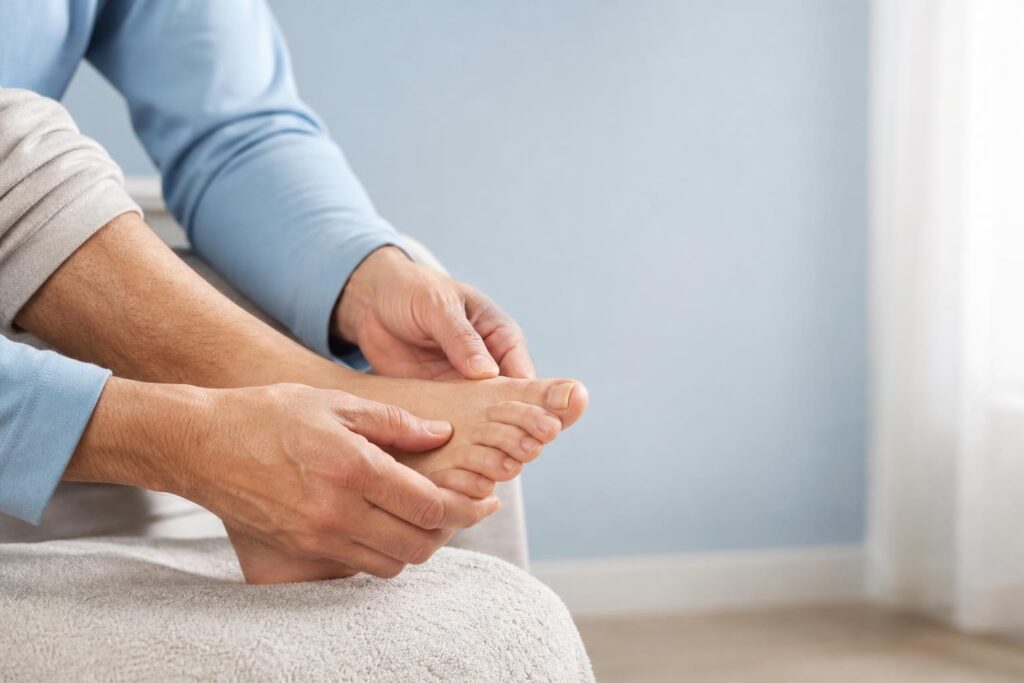
A sore spot between your toes can make every step surprisingly uncomfortable. It may feel like a pebble is trapped in your shoe, even when there is nothing there. You might notice pale, softened skin, a small round area of thickening, or tenderness where two toes rub together.
This type of problem is often called a soft corn. Although it may look minor, simply trimming the skin or adding a pad does not always solve it. The important question is why the pressure keeps occurring—and whether the irritated area is truly a corn rather than another skin condition.
Why corns develop between the toes
A corn is an area of thickened skin that forms in response to repeated pressure or friction. On the tops or outer edges of the toes, corns are usually firm and dry. Between the toes, perspiration and limited airflow keep the skin moist, so the thickened area often becomes pale and rubbery. This is why it is commonly called a soft corn.
The corn itself is the skin’s response to stress. The source of that stress may involve one or more of the following:
- Shoes with a narrow or pointed toe box
- Two prominent toe joints pressing against each other
- A hammertoe, bunion, or other change in toe position
- A small bone prominence beneath the skin
- Toe crowding that increases friction during walking
- Moisture that softens the skin and makes it easier to irritate
The location can provide a useful clue. A corn that repeatedly returns in the same spot may indicate a consistent pressure point created by shoe fit, toe alignment, or both. Removing surface skin without addressing that pressure may provide only temporary relief.
What does a soft corn feel and look like?
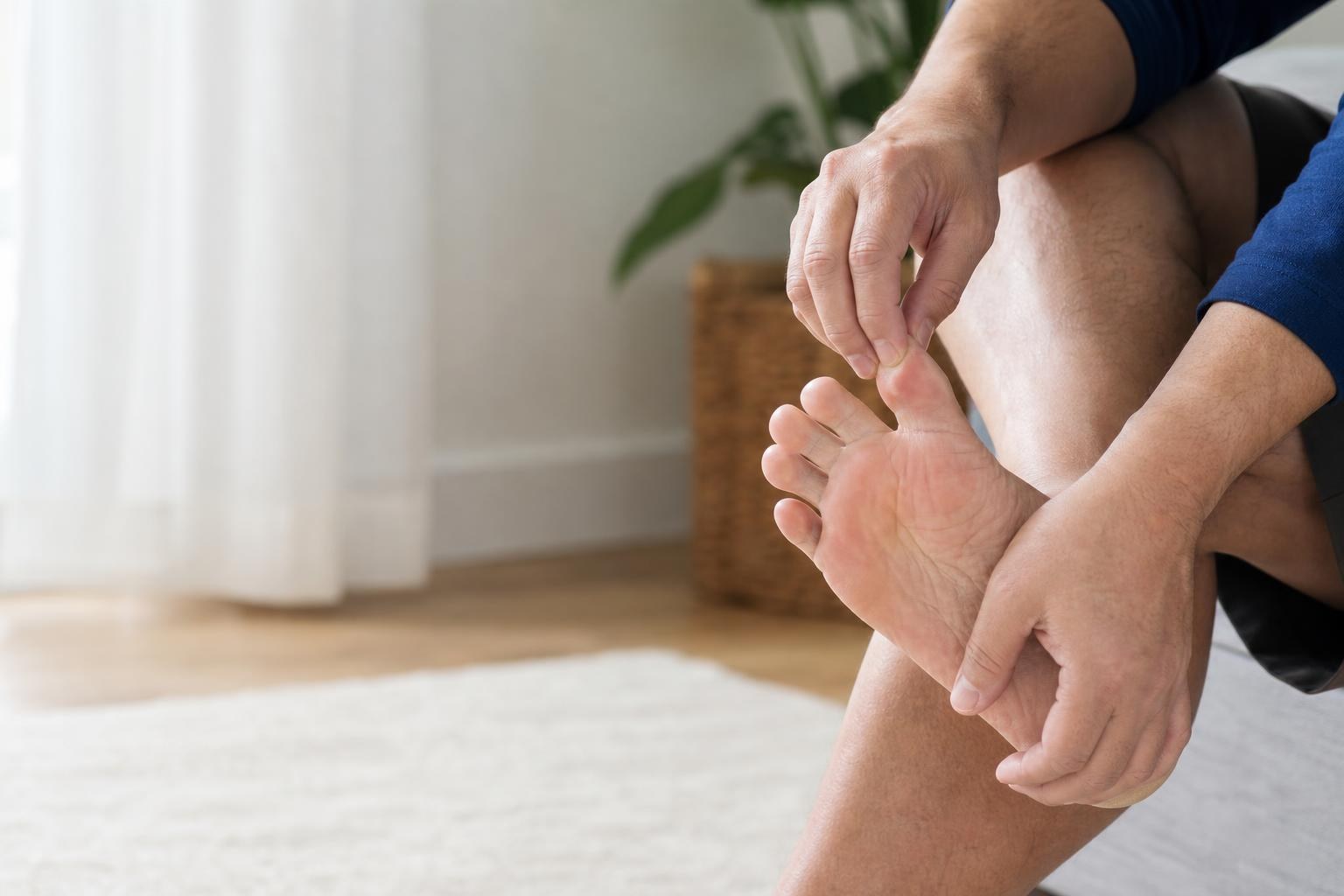
A soft corn often appears between the fourth and fifth toes, although it can occur between any toes. It may look white, gray, or pale because the skin stays damp. Some have a small, denser center surrounded by tender or softened skin.
Discomfort is often most noticeable while wearing closed shoes. Direct pressure from one toe against another can cause a sharp, focused pain. The area may feel better barefoot or in shoes with more room, then become painful again when the toes are compressed.
Not every painful spot between the toes is a corn, however. A wart, fungal skin infection, blister, foreign material, or an area of skin breakdown can sometimes look similar. An evaluation can help determine what the lesion is before treatment begins.
Can changing shoes make the corn go away?
Better-fitting shoes can reduce the pressure that maintains a corn, but results depend on what is creating the contact between the toes. Look for footwear with enough width and depth for the toes to rest naturally without being squeezed together. A shoe that feels comfortable at the heel can still be too narrow in front.
When trying on shoes, check that you can move your toes and that no seam presses directly against the painful area. Feet can swell as the day progresses, so assessing fit later in the day may reveal pressure that is not obvious in the morning.
If toe position or a bony prominence is creating pressure even in roomy shoes, a footwear change may help without completely resolving the problem. A podiatrist can assess both the skin and the structure underneath it as part of comprehensive foot and ankle care.
Safer ways to reduce irritation at home
For a mild area with intact skin, the first goal is to reduce rubbing and keep the space reasonably dry. Roomier shoes, moisture-wicking socks, and careful drying between the toes after bathing may help. A clean, appropriately placed toe separator can sometimes reduce direct contact, but it should not make the shoe tighter or create pressure somewhere else.
Avoid cutting the corn with scissors, nail clippers, or a razor. It is easy to remove healthy skin, cause bleeding, or introduce an infection. Aggressive filing can also injure skin that has already been softened by moisture.
Over-the-counter corn removers commonly contain an acid designed to break down thickened skin. These products can damage the surrounding healthy tissue if they shift between the toes or remain in contact too long. They may be especially risky for anyone with diabetes, reduced circulation, numbness, fragile skin, or a history of foot wounds.
If you have diabetes or reduced sensation, do not assume that a spot is safe because it does not hurt. Neuropathy can limit your ability to feel pressure or skin injury. Dr. Brandwein’s diabetic foot care services include evaluation of pressure areas and other concerns that may be difficult to monitor safely at home.
Why the corn may keep coming back
Recurring corns are often a sign that the mechanical problem has not changed. Each time you walk in a shoe that presses the toes together, the skin receives the same signal to protect itself by thickening.
During an examination, a podiatrist may look at the exact location of the corn, toe flexibility, joint position, footwear, and the way pressure is distributed while you stand or walk. The area may be carefully reduced when appropriate, but professional care is not limited to removing thick skin. The longer-term plan may include footwear guidance, protective padding, a toe spacer, an orthotic, or discussion of other options based on the cause and severity.
Padding is not one-size-fits-all. A thick pad placed in a crowded shoe may increase compression instead of relieving it. The goal is to redirect pressure without creating a new sore spot.
When should a corn between the toes be checked?
Consider scheduling an evaluation when pain affects walking or shoe use, the spot keeps returning, you are uncertain whether it is a corn, or home pressure relief is not helping. Earlier evaluation is particularly important if you have diabetes, poor circulation, reduced sensation, or a previous ulcer.
Seek prompt medical attention if you notice:
- An open area, bleeding, drainage, or an unpleasant odor
- Increasing redness, warmth, swelling, or pain
- Dark, blue, or black discoloration
- Redness spreading beyond the toe
- Fever or feeling unwell along with a foot problem
These changes are not typical features to manage as a simple corn. If redness is spreading quickly, there is significant discoloration, or you have systemic symptoms, seek urgent medical care.
A small pressure point deserves a closer look
A painful corn between the toes is often less about “bad skin” and more about repeated contact in a very small space. Reducing moisture and improving shoe fit may help, but a persistent spot can provide useful information about toe position and pressure during walking.
This article is educational and does not replace an individualized examination. Dr. Daniel Brandwein is a board-certified podiatrist who has provided podiatric care in Pompano Beach since 1991. If a tender area between your toes is recurring, limiting your footwear, or raising concerns about skin breakdown, call (954) 984-7500 or request an appointment for an evaluation. Same-day appointments may be available.
Ready to Get Your Foot or Ankle Concern Checked?
If foot pain, a wound, nail problem, injury, or another concern is affecting your comfort or mobility, Dr. Daniel Brandwein can evaluate what is going on and discuss appropriate next steps.
Dr. Daniel Brandwein DPM, PA, FACFAS
159 S Pompano Parkway, Pompano Beach, FL 33069
(954) 984-7500
This article is for general educational information and is not a substitute for an individualized medical evaluation or treatment plan.
Get your foot or ankle concern properly evaluated.
Dr. Daniel Brandwein provides podiatry care in Pompano Beach for foot and ankle pain, diabetic foot concerns, nail problems, wounds, injuries, and other common podiatric conditions.