Use this article to better understand your symptoms and options. An in-person podiatry evaluation is the best way to determine what is causing a specific foot or ankle problem.
You put on a pair of shoes that used to feel fine, but now one toe rubs against the top. By lunchtime, it is sore. By evening, the skin may look red, and a corn may be developing directly over the bent joint.
That pattern is common with hammertoes. The toe’s position creates a raised area that repeatedly meets the inside of the shoe. Changing footwear can often reduce irritation, but the right solution depends on whether the toe is still flexible, where the pressure is occurring, and whether the skin has already started to break down.
Why a hammertoe hurts more inside a shoe
A hammertoe bends at the middle joint, causing part of the toe to sit higher than it normally would. This raised joint can press against the shoe’s upper material. The tip of the toe may also bear more weight or rub against the insole.
Discomfort does not always come from the joint itself. It may come from the skin and soft tissue repeatedly being squeezed between the bone and the shoe. Over time, the body may build thicker skin in response to that friction. This can lead to a corn on top of the toe or a callused area at the tip.
Pressure may be more noticeable in dress shoes, narrow walking shoes, shallow slip-ons, or footwear with a pointed toe box. A higher heel can make matters worse by shifting the foot forward and crowding the toes into the front of the shoe.
Footwear is not necessarily the only reason a hammertoe develops. Foot structure, muscle and tendon imbalance, arthritis, previous injury, and changes in how the foot functions can all contribute. An evaluation can help determine why a particular toe is changing and where the painful pressure is coming from.
Look at where the shoe is making contact
Before buying another pair of shoes, identify the exact location of the irritation. A hammertoe can create several different pressure points:
- On top of the middle joint: The shoe may not have enough vertical depth.
- At the tip of the toe: The toe may be pressing downward or the shoe may be too short.
- Between neighboring toes: Crowding can create friction, moisture, or a soft corn.
- Under the ball of the foot: Changes in toe position may affect how pressure is distributed during walking.
These differences matter. Simply buying a wider shoe may not help when the main problem is insufficient depth above the toe. Likewise, extra shoe length does not necessarily fix side-to-side crowding and may allow the foot to slide forward.
What to look for in a more comfortable shoe
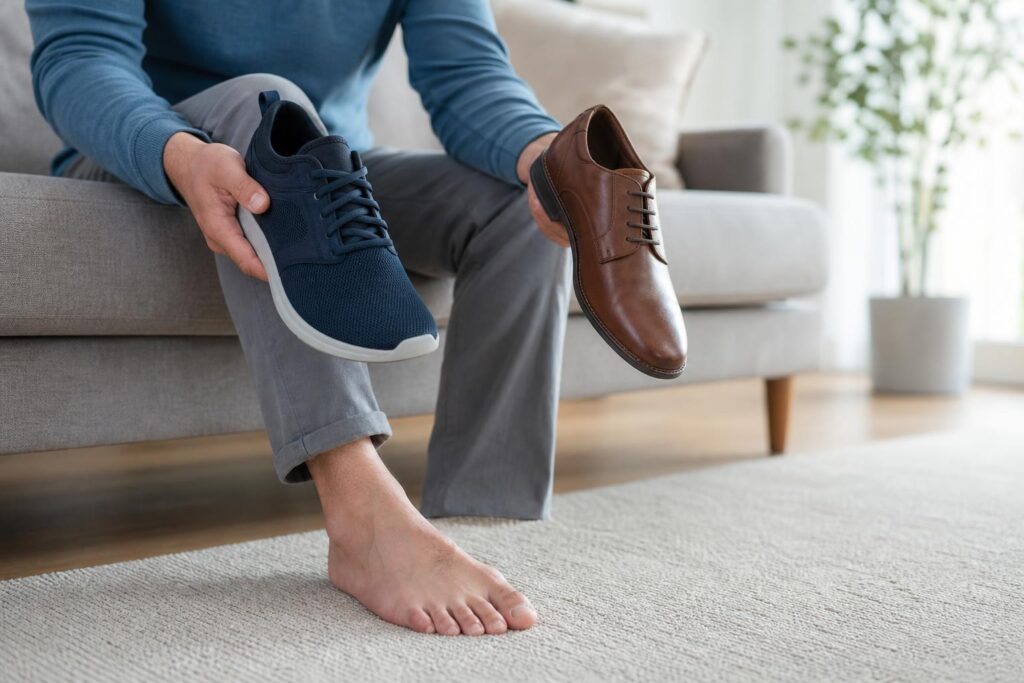
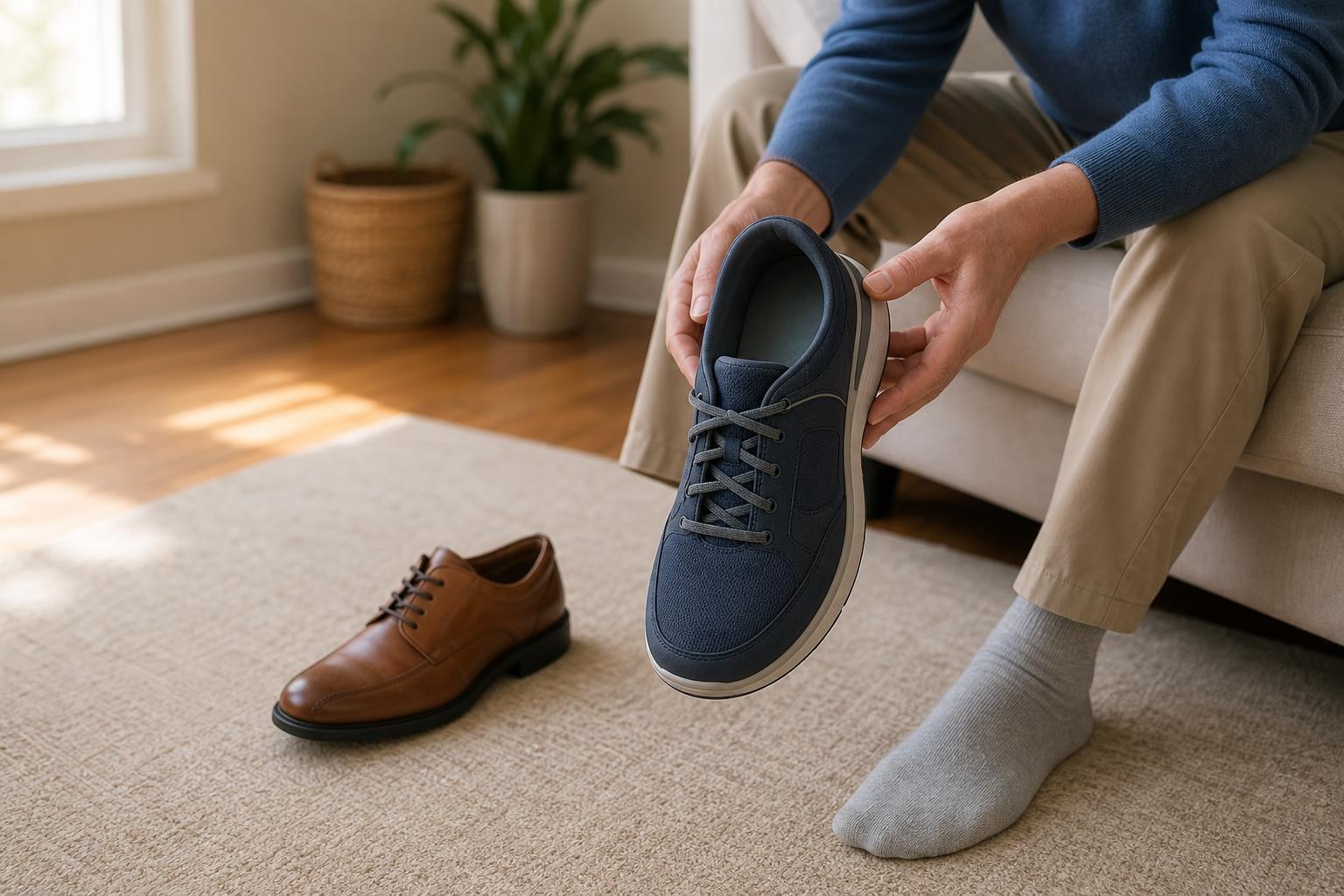
A comfortable shoe should give the toes room without allowing the entire foot to move around. Look for a toe box that follows the natural shape of your forefoot rather than tapering sharply. The upper material should feel soft enough to avoid digging into the raised joint, but the shoe should still provide stable support around the heel.
Useful features may include:
- A wide and deep toe box
- Soft or stretchable material over the toes
- A low heel that does not push the foot forward
- Adjustable laces or straps
- A removable insole when additional depth is needed
- A stable sole that does not bend or twist excessively
Try shoes on while standing, and walk in them before deciding. There should be space in front of the longest toe, but your heel should not lift excessively. Because feet can swell during the day, shopping later in the afternoon may give you a more realistic sense of fit.
Do not assume a shoe will become comfortable after it is “broken in.” A shoe that already presses directly against a sore hammertoe is likely to keep aggravating it.
Can pads, cushions, or toe devices help?
Nonmedicated padding may reduce friction over a prominent joint. A soft toe sleeve, separator, or carefully positioned pad can sometimes make shoes more tolerable. The device should not feel tight, reduce circulation, or create a new pressure point elsewhere.
Devices that attempt to pull a toe straight may be more comfortable when a hammertoe is flexible, but they do not necessarily correct the underlying problem. If the toe has become rigid, forcing it into a straighter position can cause additional discomfort.
Avoid medicated corn removers unless a qualified clinician has advised their use. These products often contain acid that can damage healthy skin, particularly if placement is imperfect. People with diabetes, reduced sensation, poor circulation, or a history of foot wounds should be especially cautious about self-treatment. Cutting a corn at home can also cause an injury or infection.
Will stretching straighten a hammertoe?
Gentle toe movement and stretching may help preserve mobility and reduce stiffness when the toe is still flexible. Exercises such as carefully straightening the toe by hand or using the toes to grip a towel may be suggested in some cases.
However, exercises do not reliably reverse a fixed deformity. If the joint no longer straightens easily, the goal of conservative care is generally to reduce pressure, improve comfort, and protect the skin rather than promise that the toe will return to its previous position.
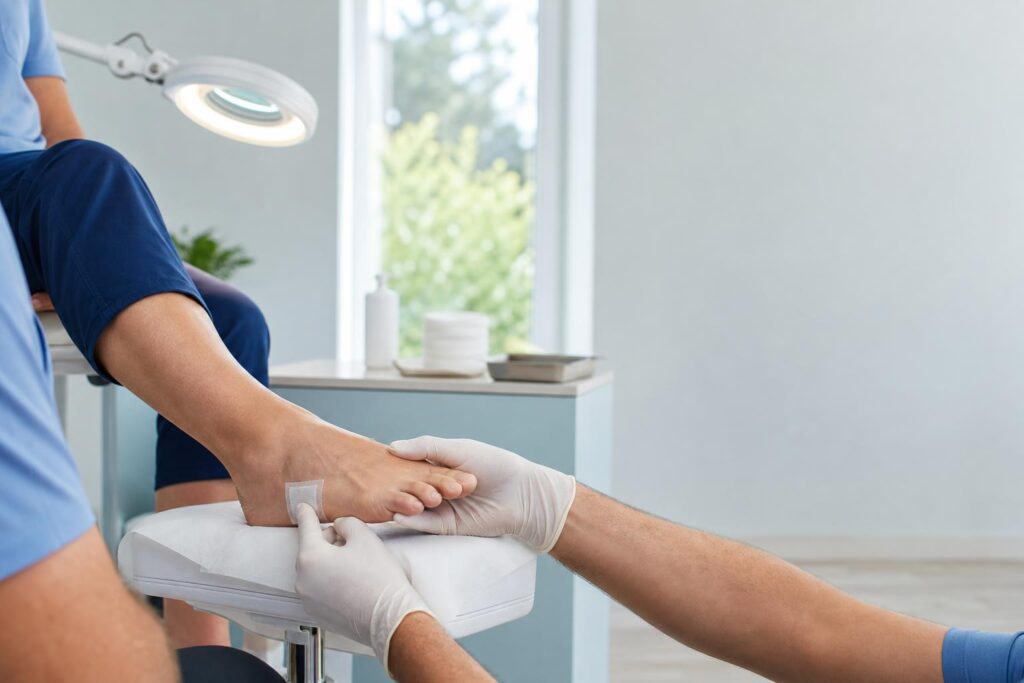
A podiatry exam can help distinguish a flexible hammertoe from a more rigid one. It can also assess whether pain beneath the forefoot, tendon imbalance, a bunion, or another structural issue is contributing. Depending on the findings, care may include footwear guidance, padding, orthotics, treatment of painful corns, or discussion of other options through comprehensive foot and ankle care.
When shoe changes are not enough
It may be time for an evaluation if the same area remains sore despite switching shoes, if corns repeatedly return, or if the toe is becoming harder to move. Pain that changes how you walk also deserves attention. Compensation can shift stress to the ball of the foot, neighboring toes, the opposite foot, or the ankle.
Prompt care is especially important if you notice an open sore, drainage, increasing warmth, spreading redness, significant swelling, or darkened skin. Seek timely medical attention for signs of infection or rapidly worsening symptoms. A toe that suddenly changes position after an injury should also be evaluated.
For someone with diabetes or reduced sensation, a rubbing shoe may cause skin damage without much pain. Check the feet and the inside of the shoes regularly for redness, moisture, rough seams, or small objects. Dr. Brandwein’s diabetic foot care services include evaluation of pressure-related concerns and other changes that may place the skin at risk.
What a podiatrist may evaluate
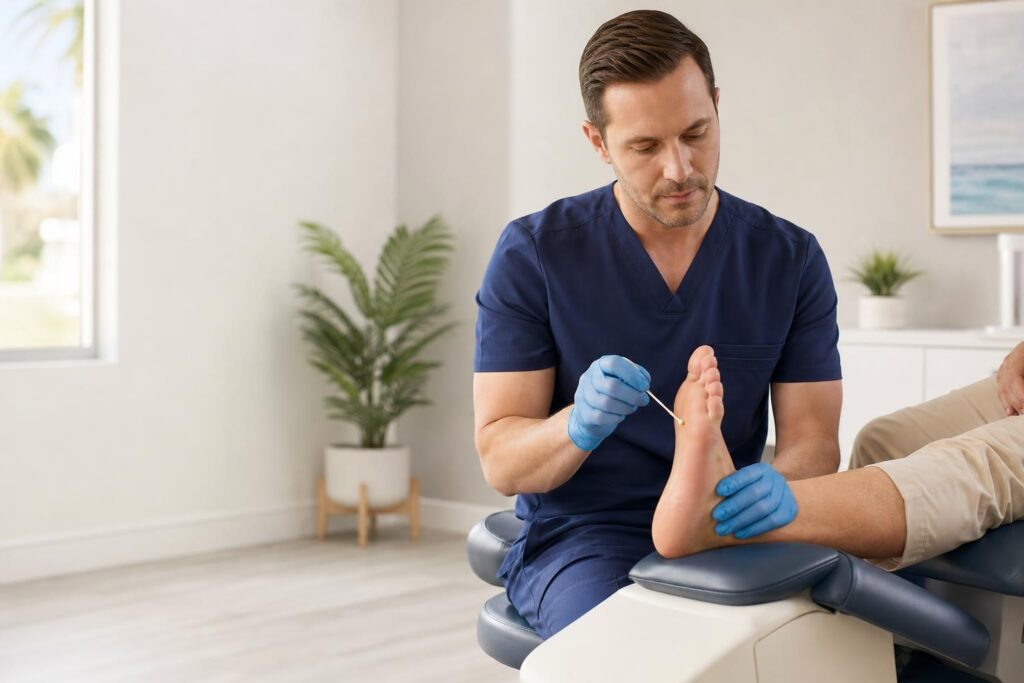
A hammertoe visit is not only about looking at the bent joint. The exam may include checking the toe’s flexibility, identifying corns or calluses, assessing circulation and sensation, and observing how the foot loads during standing and walking. Your current shoes can provide useful clues, including worn lining, pressure marks, and the location of creases.
Treatment depends on the source and severity of the problem. Conservative options are often considered first, particularly when the skin is intact and footwear changes provide meaningful relief. When pain remains limiting, the toe is rigid, or repeated skin problems continue, the podiatrist can explain whether additional treatment—including surgical options—may be appropriate. Surgery is not necessary for every hammertoe, and decisions should be based on symptoms, examination findings, health considerations, and personal goals.
Make comfort the goal—not squeezing the toe into place
A shoe should accommodate your foot rather than force a sore toe into a shape it can no longer comfortably hold. Small changes in toe-box depth, upper material, heel height, and padding can make a meaningful difference. Persistent pain, recurring corns, or skin breakdown, however, should not be managed by endlessly trying new shoes.
This information is educational and does not replace an individualized examination. If a hammertoe is making walking or wearing shoes difficult, Dr. Daniel Brandwein can evaluate the pressure pattern and discuss practical options based on your foot. To request an appointment at the Pompano Beach office, contact the practice or call (954) 984-7500.
Ready to Get Your Foot or Ankle Concern Checked?
If foot pain, a wound, nail problem, injury, or another concern is affecting your comfort or mobility, Dr. Daniel Brandwein can evaluate what is going on and discuss appropriate next steps.
Dr. Daniel Brandwein DPM, PA, FACFAS
159 S Pompano Parkway, Pompano Beach, FL 33069
(954) 984-7500
This article is for general educational information and is not a substitute for an individualized medical evaluation or treatment plan.
Get your foot or ankle concern properly evaluated.
Dr. Daniel Brandwein provides podiatry care in Pompano Beach for foot and ankle pain, diabetic foot concerns, nail problems, wounds, injuries, and other common podiatric conditions.