Use this article to better understand your symptoms and options. An in-person podiatry evaluation is the best way to determine what is causing a specific foot or ankle problem.
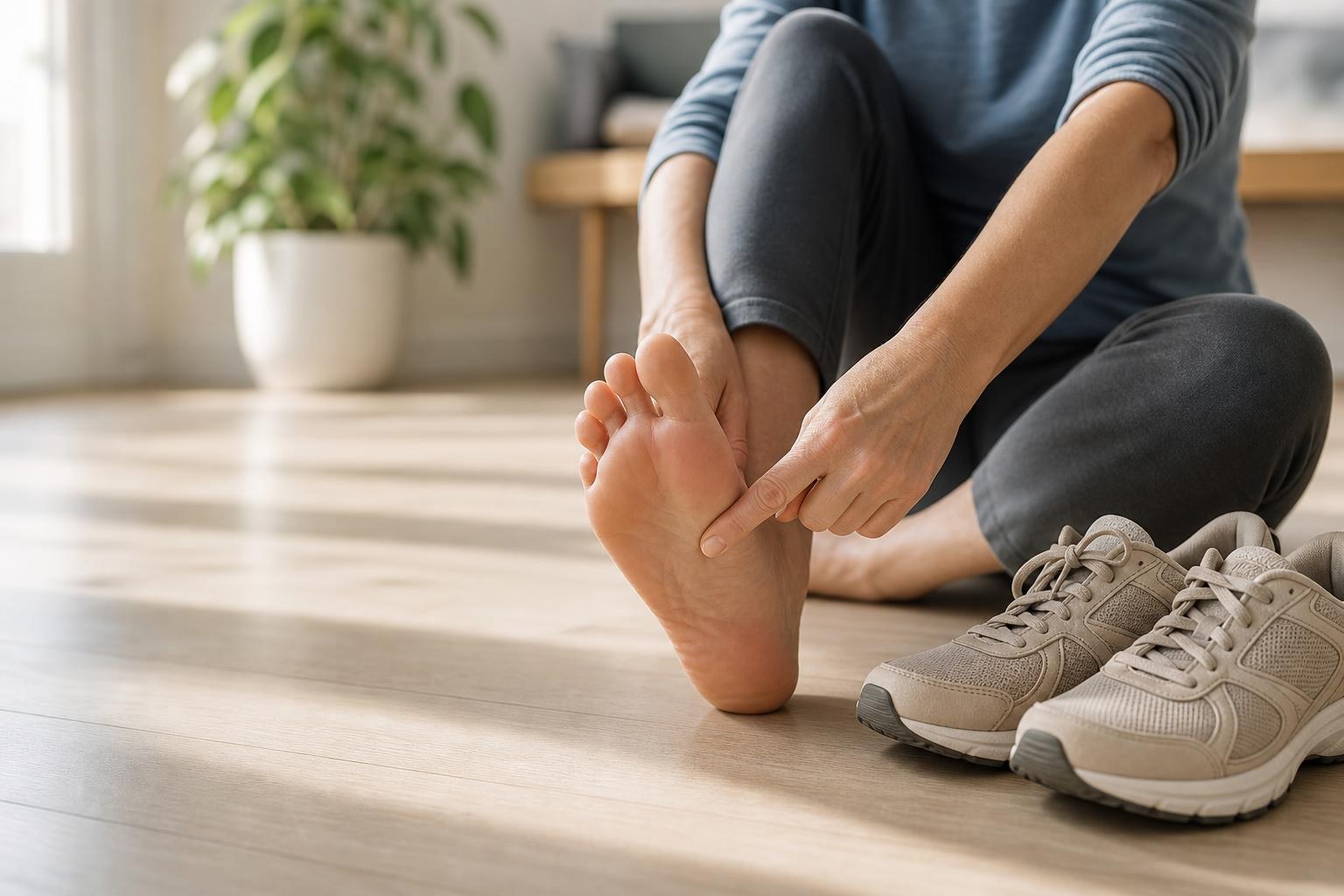
You may expect a hammertoe to rub against the top of your shoe. What can be more confusing is pain somewhere else—especially a sore, burning, or bruised feeling beneath the ball of the foot.
That discomfort is not necessarily unrelated. When a toe no longer rests in its usual position, the mechanics of the forefoot can change. Pressure that was once distributed more evenly may become concentrated beneath one or more metatarsal heads, the prominent areas where the long bones of the foot meet the toes.
The result may be pain during walking, a recurring callus, or the feeling that there is a pebble in your shoe. Understanding that connection can help you make more useful changes than simply padding the bent toe.
How a bent toe can change pressure under the forefoot
A hammertoe typically bends at one of the smaller toe joints. Depending on its flexibility and severity, the toe may lift away from the floor, curl downward, or become increasingly rigid.
Normally, your toes help stabilize the forefoot as your body moves forward over the foot. A toe that is elevated or unable to function comfortably may not share that work in the same way. This can place more stress on the area beneath the base of the toe.
The toe may also be pulled backward at the joint where it connects to the foot. That position can make the associated metatarsal head more prominent on the sole, increasing pressure against the ground and the inside of the shoe.
This does not mean every case of ball-of-foot pain is caused by a hammertoe. Several conditions can produce similar symptoms, and more than one issue may be present. A podiatric examination can help identify where the pressure is coming from and whether the toe position is contributing.
What hammertoe-related forefoot discomfort may feel like
Pressure beneath the forefoot does not feel the same for everyone. Some people notice a localized ache only after being on their feet for several hours. Others feel a sharper pain during push-off, when the heel rises and body weight moves toward the toes.
Possible signs that the toe and the ball-of-foot discomfort may be connected include:
- Pain beneath the base of a bent or elevated toe
- A thick callus under one of the metatarsal heads
- A bruised or “walking on a pebble” sensation
- Symptoms that worsen in thin-soled, narrow, or high-heeled shoes
- Relief when barefoot on a soft surface, or after removing the shoe
- Rubbing on top of the hammertoe at the same time as pain underneath the foot
Burning, tingling, numbness, or pain extending into the toes may point to nerve irritation or another source of forefoot pain. Swelling near the base of a toe, a sensation of instability, or a toe that is gradually drifting sideways can also warrant closer evaluation.
Why shoe changes sometimes help—but do not solve everything
Shoes can strongly influence symptoms because the foot is compressed between the ground and the shoe. A narrow toe box may crowd the toes from the sides, while a shallow upper can press directly against the raised joint. High heels and shoes with a significant heel-to-toe slope shift additional body weight toward the forefoot.
A roomier toe box, adequate depth, and a supportive sole may reduce some of this pressure. Cushioning beneath the forefoot can also make standing and walking more comfortable. However, simply buying a wider shoe may not address pressure under a specific metatarsal head.
Shoe size can change over time, and the shape of the shoe matters as much as the number printed inside it. The widest part of the shoe should correspond with the widest part of the foot. Your toes should have enough depth to rest without hitting the upper, but the heel should still feel secure.
If every shoe continues to hurt in the same location, the problem may involve more than fit. The toe’s alignment, joint flexibility, gait, callus formation, and the condition of nearby soft tissues may all need to be considered.
Practical ways to reduce pressure
For mild symptoms, several conservative measures may improve comfort while you arrange an evaluation or monitor the area. The right approach depends on the shape of the foot and the exact location of the discomfort.
Choose structure as well as space
Look for shoes with a deep, rounded toe box and a stable sole that does not bend excessively through the forefoot. Avoid assuming that very soft or oversized footwear is automatically better. A shoe that allows the foot to slide forward can create additional friction and toe pressure.
Be cautious with pads and cushions
Nonmedicated cushioning may protect a prominent toe from rubbing. Metatarsal pads can sometimes redistribute pressure, but placement is important: they are generally intended to sit behind the sore metatarsal area rather than directly beneath it. A poorly positioned or bulky pad can make symptoms worse or reduce space inside the shoe.
Avoid medicated corn removers unless a clinician has confirmed they are appropriate for you. These products can injure healthy skin, particularly when circulation or sensation is reduced.
Do not cut a callus yourself
A callus is evidence of repeated pressure, not simply extra skin. Cutting it at home can cause a wound or infection without correcting the mechanical problem beneath it. Professional nail and callus care may be especially important for people with diabetes, neuropathy, circulation concerns, or difficulty reaching their feet.
Reduce the activity that predictably triggers pain
You may not need to stop moving completely. Temporarily shortening long walks, alternating activities, or taking standing breaks can reduce repeated stress. Persistent pain that returns as soon as normal activity resumes should be evaluated rather than repeatedly worked around.
Why the flexibility of the toe matters
A hammertoe that can still be gently straightened may respond differently to footwear changes, padding, exercises, or other conservative treatment than a rigid toe. Once the involved joints become stiff, there may be less room for the toe to accommodate pressure inside a shoe.
Flexibility is only one part of the assessment. A podiatrist may also examine the painful area while you are seated and standing, look at your walking pattern, check the stability of the joints at the base of the toes, and evaluate the condition of your skin. Imaging may be considered when the examination suggests arthritis, a stress injury, joint instability, or another structural concern.
Treatment may include footwear guidance, pressure-relieving padding, callus care, activity changes, or custom orthotics when appropriate. If symptoms remain limiting and the deformity is rigid or progressing, surgical options may be discussed. Surgery is not automatically necessary simply because a toe is bent.
When ball-of-foot pain deserves an appointment
Consider a podiatry evaluation if pain is recurring, affecting your gait, limiting normal shoes, or causing you to avoid everyday activities. An appointment is also appropriate if a callus keeps returning, the toe is becoming less flexible, or you see increasing redness where the shoe rubs.
Seek prompt medical attention for an open sore, drainage, spreading redness, marked warmth, rapidly increasing swelling, or a toe that becomes unusually pale, blue, or dark. Severe pain after an injury or an inability to bear weight also needs timely assessment.
People with diabetes, reduced sensation, or circulation problems should not wait for a pressure spot to become painful. Loss of sensation can make a developing blister or wound easy to miss. Dr. Brandwein’s practice provides dedicated diabetic foot care and evaluation of foot wounds when these risks are present.
A closer look can clarify where the pain begins
Ball-of-foot pain associated with a hammertoe may improve when pressure is identified and addressed early. The goal is not just to cover the sore area, but to understand why that spot is carrying more load and what can reasonably improve comfort.
Dr. Daniel Brandwein is a board-certified podiatrist who has provided care in Pompano Beach since 1991. For an evaluation of hammertoes, recurring calluses, or forefoot pain, learn more about the practice’s comprehensive foot and ankle care. To request an appointment, call (954) 984-7500 or use the practice’s contact page. Same-day appointments may be available.
Ready to Get Your Foot or Ankle Concern Checked?
If foot pain, a wound, nail problem, injury, or another concern is affecting your comfort or mobility, Dr. Daniel Brandwein can evaluate what is going on and discuss appropriate next steps.
Dr. Daniel Brandwein DPM, PA, FACFAS
159 S Pompano Parkway, Pompano Beach, FL 33069
(954) 984-7500
This article is for general educational information and is not a substitute for an individualized medical evaluation or treatment plan.
Get your foot or ankle concern properly evaluated.
Dr. Daniel Brandwein provides podiatry care in Pompano Beach for foot and ankle pain, diabetic foot concerns, nail problems, wounds, injuries, and other common podiatric conditions.