Use this article to better understand your symptoms and options. An in-person podiatry evaluation is the best way to determine what is causing a specific foot or ankle problem.
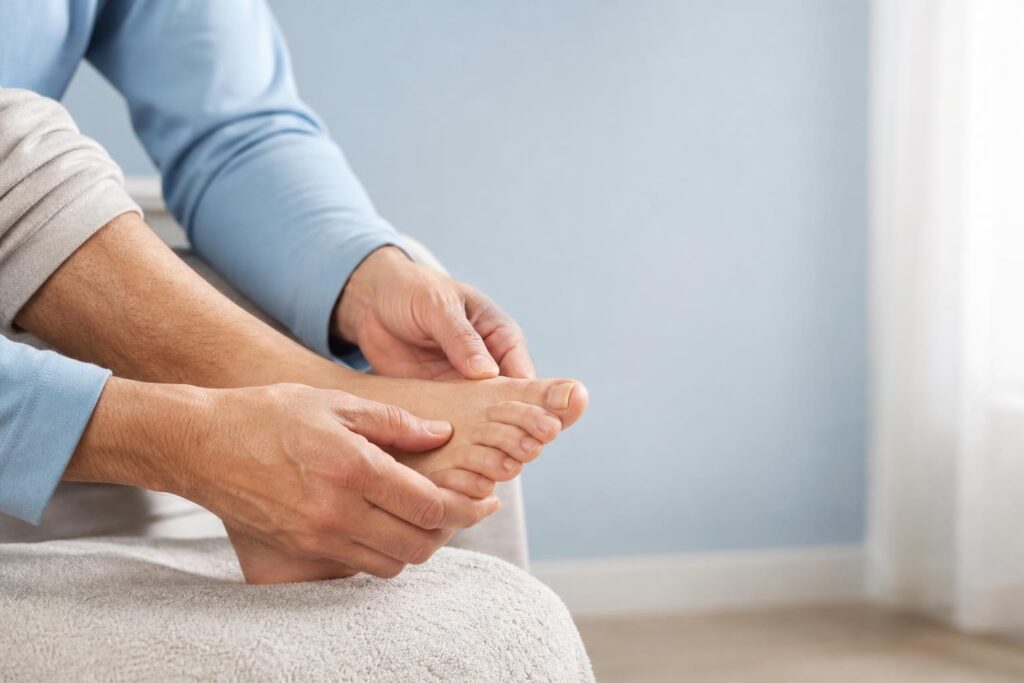
A shoe can feel comfortable at the heel and still cause significant pain at the toes. If you have a hammertoe, you may notice the bent joint rubbing against the top of the shoe, the tip of the toe pressing into the sole, or soreness that becomes worse as the day goes on.
Buying a larger size may seem like the obvious answer, but extra length does not always create room where it is needed. In fact, a shoe that is too long can allow the foot to slide forward, increasing pressure on the toes.
Choosing shoes for hammertoes is less about finding one particular brand and more about understanding shape, depth, materials, and fit. The goal is to give the toes enough room without leaving the rest of the foot unstable inside the shoe.
Why hammertoes and standard shoes often conflict
A hammertoe has an abnormal bend at one or more of the smaller toe joints. This changes where the toe contacts the shoe. The raised joint may rub against the upper material, while the end of the toe may press downward or forward.
Repeated friction can lead to redness, tenderness, corns, calluses, blisters, or skin breakdown. Pressure may also occur under the ball of the foot because the toes are no longer sharing weight in the usual way.
Some hammertoes remain somewhat flexible, while others become more rigid. That distinction can affect which footwear adjustments are likely to help, but a comfortable shoe is still important in either case. Footwear may reduce irritation; it generally does not straighten a toe that has developed a structural bend.
How much room should a hammertoe have?
The toes should not be pressed together, pushed downward, or forced against the end of the shoe. You should be able to move them slightly without the upper material rubbing firmly across the raised joints.
Pay attention to three dimensions rather than looking only at the number on the shoe box:
- Length: There should be space beyond the longest toe, but not so much that the foot slides with each step.
- Width: The forefoot should rest naturally without spilling over the sides of the sole or feeling squeezed across the toe joints.
- Depth: The top of the toe box should clear the bent toe instead of pressing down on it.
Depth is particularly easy to overlook. A shoe may be labeled wide yet remain too shallow over the toes. Likewise, a very soft upper can still be uncomfortable if a seam, decorative overlay, or reinforced panel sits directly over the prominent joint.
A practical fit check before buying shoes
Try shoes with the type of socks you normally wear. Stand and walk in both shoes, since feet are not always identical in size or shape. If your feet tend to swell during the day, testing footwear later in the day may give you a more realistic sense of fit.
While standing, notice whether your toes feel crowded or whether any joint immediately touches the upper. Then walk long enough to detect sliding, pinching, or rubbing. A shoe should not require a painful “break-in” period to become tolerable.
It can also help to remove the insole, when possible, and stand on it. If the outer edge of your forefoot extends beyond the insole, the shoe may be too narrow or have the wrong shape for your foot. This is not a complete fit test, but it can reveal obvious crowding.
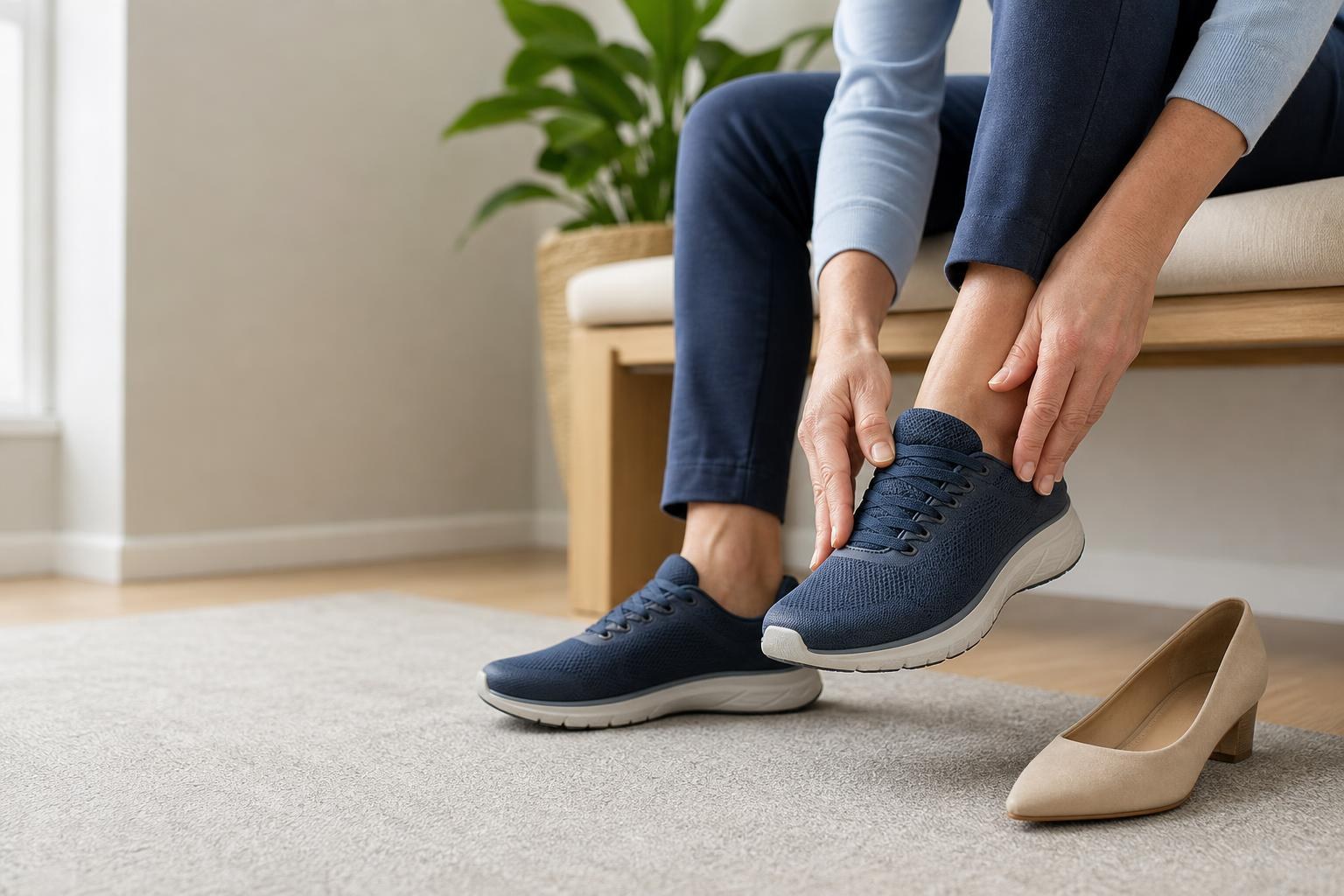
Watch for heel movement as well. If the heel slips substantially, the foot may move forward and drive the toes into the front of the shoe. Secure laces, straps, or another adjustable closure can hold the foot more effectively than relying on a tight toe box.
Shoe features that may improve comfort
No single shoe style works for every hammertoe. However, several features commonly make pressure easier to manage:
- A wide, rounded, or foot-shaped toe box rather than a pointed front
- Extra depth above the toes and forefoot
- Soft or stretchable upper material with minimal internal seams
- An adjustable closure that keeps the heel from sliding forward
- A stable sole that does not twist excessively
- A removable insole when extra depth or a prescribed insert is needed
- A heel height that does not shift excessive weight toward the forefoot
Open-toed shoes may remove pressure from the top of a hammertoe, but they are not automatically the safest choice. Thin, unstable sandals can allow gripping, sliding, and increased forefoot strain. People with diabetes, numbness, poor circulation, or a history of foot wounds may also need more protection than an open shoe provides.
Why simply sizing up may make the problem worse
Moving to a longer shoe without addressing width or depth can create a different set of problems. The foot may slide, the heel may lift, and the toes may repeatedly strike the front as you walk. You may also curl or grip the toes unconsciously to keep a loose shoe in place.
A better solution may be a different toe-box shape, a wider width, greater depth, or a closure that secures the midfoot. Shoe sizing also varies between manufacturers and styles, so the printed size should be treated as a starting point rather than proof of a proper fit.
Do not assume that persistent pain means you simply need to keep trying shoes. The discomfort may also involve a corn, inflamed joint, pressure beneath the forefoot, an irritated nail, or another condition that deserves closer evaluation.
Be careful with pads and over-the-counter corn treatments
Non-medicated cushioning may reduce friction in some situations, but a bulky pad can make a tight shoe even tighter. Toe sleeves and spacers can also shift pressure to a neighboring toe if they do not fit correctly.
Avoid cutting or shaving a corn yourself. Medicated corn removers contain acids that can injure healthy skin, particularly when sensation or circulation is reduced. Anyone with diabetes, neuropathy, poor circulation, or a previous foot ulcer should seek professional guidance before treating a pressure spot at home.
Dr. Brandwein provides diabetic foot care for patients who need help monitoring pressure areas, nail concerns, skin changes, and other risks that may be difficult to detect safely on their own.
When shoe pressure needs a podiatry evaluation
Occasional mild irritation that resolves after changing shoes may not require immediate care. An evaluation becomes more important when pain keeps returning, limits walking, or continues even in roomy footwear.
Arrange an appointment if you notice a recurring corn or callus, a blister that is not healing, increasing stiffness, pain under the ball of the foot, or difficulty finding any shoe that fits comfortably. A podiatrist can assess the toe position, skin, joints, gait, and the way pressure moves across the foot. Treatment recommendations may include footwear changes, selective padding, nail or corn care, an orthotic when appropriate, or discussion of other options based on the specific cause and severity.
Seek prompt medical attention for an open sore, drainage, spreading redness, warmth, rapidly increasing swelling, skin discoloration, fever, or severe pain. Changes involving a person with diabetes or reduced sensation should be evaluated promptly, even if they do not hurt. Information about care for open or slow-healing areas is available on the practice’s wound care page.
Comfort starts with understanding where the pressure is coming from
A roomy toe box can make daily walking more comfortable, but the right fit is specific to your foot. If you continue to feel rubbing, pressure, or pain after trying more accommodating footwear, an exam can help identify whether the problem comes from the toe position, the shoe, or another source of forefoot stress.
Dr. Daniel Brandwein is a board-certified podiatrist who has provided foot and ankle care since 1991. To schedule an evaluation at 159 S Pompano Parkway in Pompano Beach, call (954) 984-7500 or use the practice’s contact page. Same-day appointments may be available.
Ready to Get Your Foot or Ankle Concern Checked?
If foot pain, a wound, nail problem, injury, or another concern is affecting your comfort or mobility, Dr. Daniel Brandwein can evaluate what is going on and discuss appropriate next steps.
Dr. Daniel Brandwein DPM, PA, FACFAS
159 S Pompano Parkway, Pompano Beach, FL 33069
(954) 984-7500
This article is for general educational information and is not a substitute for an individualized medical evaluation or treatment plan.
Get your foot or ankle concern properly evaluated.
Dr. Daniel Brandwein provides podiatry care in Pompano Beach for foot and ankle pain, diabetic foot concerns, nail problems, wounds, injuries, and other common podiatric conditions.