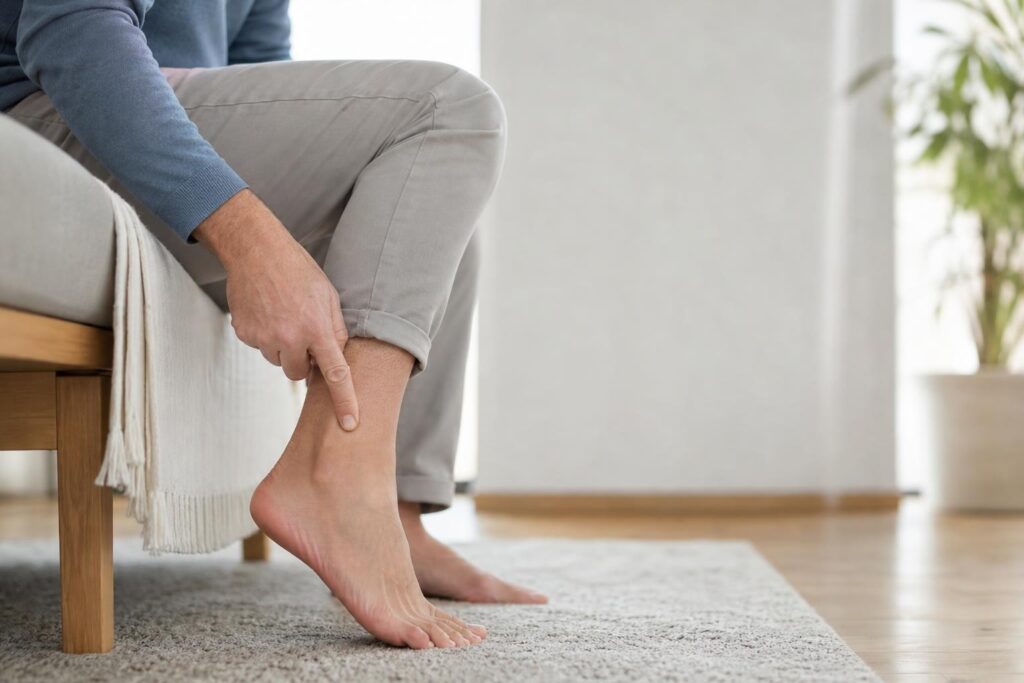
Use this article to better understand your symptoms and options. An in-person podiatry evaluation is the best way to determine what is causing a specific foot or ankle problem.
A tender toenail, a rubbing shoe, or a familiar heel ache can feel minor at home. During a trip, however, the same problem may become much harder to manage—especially when your plans involve airports, long drives, unfamiliar walking surfaces, or more time on your feet than usual.
The best time to think about your feet is not the night before departure. A few practical steps in the weeks leading up to travel can reduce avoidable irritation and give you time to address a developing problem before it interferes with your plans.
Start preparing your feet a few weeks before travel
Travel often changes your normal routine. You may walk farther, stand in lines, carry luggage, or wear shoes that you do not use every day. Even a “relaxing” trip can include long stretches of walking through hotels, cruise terminals, attractions, or family events.
About two to four weeks before leaving, pay attention to any symptoms you have been tolerating. Look for recurring heel or arch pain, a toenail pressing into the skin, a corn that becomes sore in shoes, or redness over a bunion or hammertoe. These problems may worsen when activity increases.
This lead time also allows you to break in appropriate footwear gradually. Buying new walking shoes immediately before a trip can backfire if the fit is not right or the shoe places pressure on a sensitive area.
Match your footwear to the actual demands of the trip
A shoe that feels comfortable for a quick errand may not remain comfortable after several hours. Consider how much walking and standing your itinerary realistically involves, as well as the surfaces you will encounter.
- Choose shoes with enough room for the toes to move without sliding inside the shoe.
- Check that the heel remains secure and does not repeatedly rub as you walk.
- Wear new shoes for progressively longer periods before packing them.
- Bring a second supportive pair so you can change pressure points from one day to the next.
- Pair footwear with clean, well-fitting socks that manage moisture and do not bunch under the foot.
If you use prescribed orthotics, confirm that they fit properly in the shoes you intend to bring. Do not assume an insert will work equally well in every shoe. A shallow or narrow shoe may become too tight once an orthotic is added.
Persistent pain despite shoe changes may indicate that more than footwear is involved. A podiatry evaluation can assess how your foot structure, movement, activity, and shoes may be contributing. Dr. Brandwein provides comprehensive foot and ankle care for concerns ranging from heel and arch pain to bunions, hammertoes, corns, and callouses.
Take care of toenails without creating a new problem
Trim toenails early enough that any tenderness becomes apparent before you travel. Nails are generally best cut straight across rather than deeply rounded at the corners. Cutting them extremely short can leave the surrounding skin vulnerable and may encourage an edge to become irritated as the nail grows.
Do not dig under a painful nail corner or try to cut out a deeply embedded edge. Increasing redness, swelling, drainage, or pain along the side of a nail may need professional attention. Thick or fungal nails can also be difficult to trim safely, particularly for someone with diabetes, reduced sensation, poor circulation, or limited ability to see and reach the feet.
If a nail already hurts in shoes, dealing with it before departure is usually more practical than hoping it settles during the trip. The practice offers evaluation and treatment for ingrown and fungal nail concerns.
Prevent blisters by reducing friction—not by ignoring a hot spot
Blisters often begin with a small area that feels warm, stinging, or irritated. That early “hot spot” is a signal to stop and check the shoe and sock. Continuing to walk may turn mild friction into a painful blister.
Keep feet dry, change damp socks, and remove any grit or wrinkles inside the shoe. A protective bandage or blister pad may reduce additional rubbing if the skin is still intact. Avoid placing bulky padding in a shoe if it makes the fit tighter, because added pressure can create another problem.
If a blister develops, keep it clean and protected. Avoid deliberately popping it unless a clinician has advised you how to manage it. People with diabetes, neuropathy, circulation problems, or a history of foot wounds should not treat a blister as routine. Even a small break in the skin deserves close monitoring and may require prompt evaluation.
Plan for swelling during flights and long drives
Feet and ankles can swell after prolonged sitting. Shoes that fit comfortably in the morning may feel tight after hours in a car or airplane, particularly in warm weather.
When it is safe and practical, change position periodically, move your ankles, and take walking breaks during long travel days. Avoid tightening shoelaces so much that they leave deep marks. If you have been advised to use compression garments, confirm the appropriate type and fit with your healthcare professional rather than selecting them solely for a trip.
Sudden swelling that affects one leg—especially when accompanied by calf pain, warmth, redness, chest pain, or shortness of breath—should not be treated as ordinary travel swelling. Seek prompt medical attention; chest pain or breathing difficulty warrants emergency care.
Travel requires extra planning when you have diabetes or reduced sensation
Neuropathy can make it difficult to feel pressure, heat, rubbing, or a small object inside a shoe. That means pain cannot always be relied upon as an early warning sign.
Inspect the tops, soles, heels, and spaces between the toes each day. Check the inside of shoes before putting them on, and avoid walking barefoot—even in a hotel room, around a pool, or on a beach. Hot pavement, shells, rough surfaces, and small objects can injure the skin without causing immediate discomfort.
Bring enough clean socks and appropriate footwear for the entire trip. Continue the foot-care routine recommended by your medical team. Anyone with diabetes who notices a blister, cut, drainage, color change, or area of persistent redness should seek guidance promptly. More information is available on the practice’s diabetic foot care page.
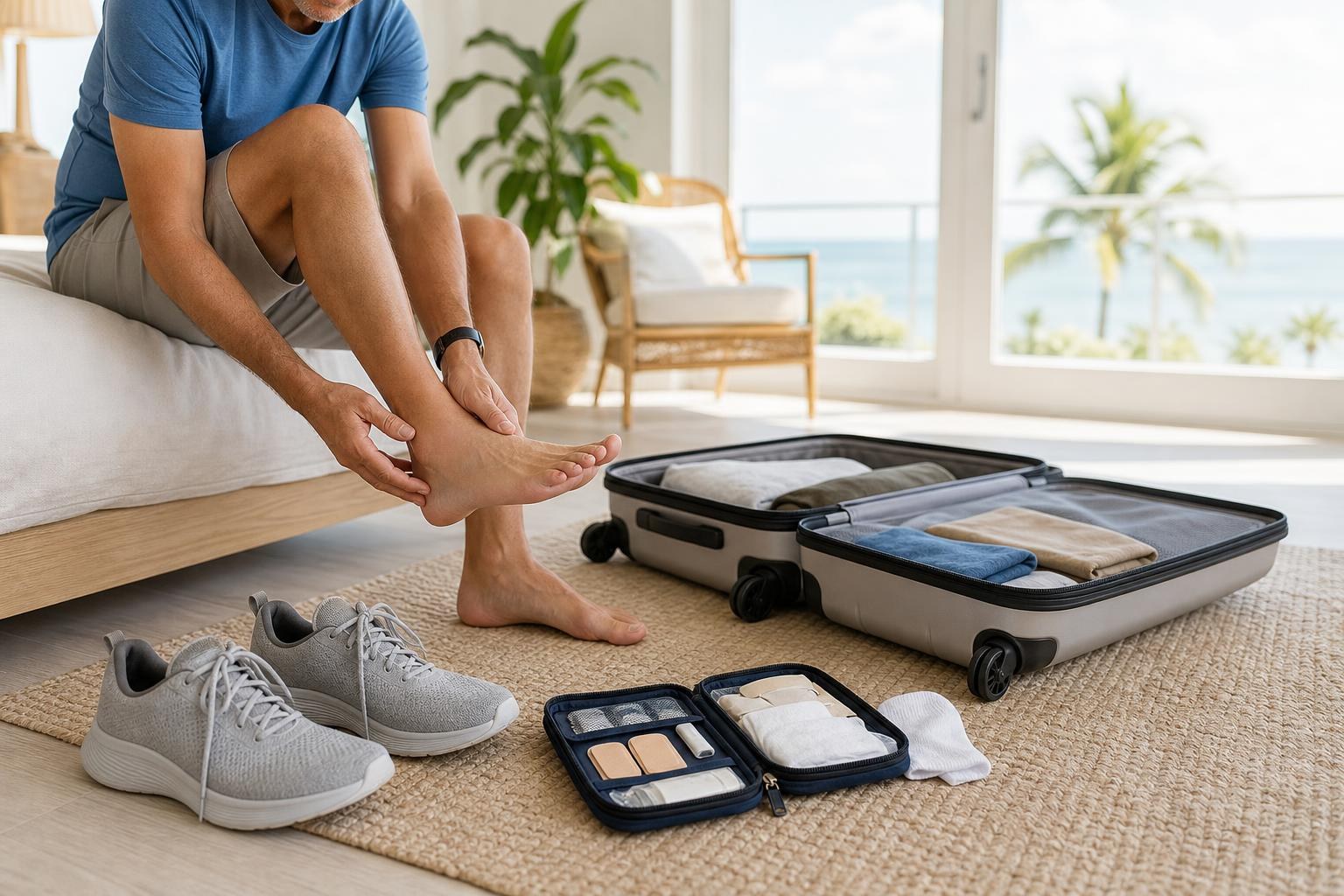
Pack a small foot-care kit
You do not need to bring an entire medicine cabinet. A compact kit can help you respond to minor irritation before it becomes more disruptive.
- Adhesive bandages and nonstick dressings in several sizes
- Blister pads or protective padding you have used safely before
- Clean socks and an extra pair of supportive shoes
- Any prescribed topical products, braces, or orthotics
- A small mirror if it helps you inspect the soles of your feet
- Contact information for your regular healthcare providers and an updated medication list
A travel kit is for basic protection, not for cutting corns, draining blisters, or treating an infected-looking area on your own. Avoid medicated corn removers unless a clinician has confirmed they are appropriate for you, since these products can damage surrounding skin.
Know which problems should be checked before you leave
Schedule an evaluation before travel if you have a wound that is open or slow to improve, a painful ingrown nail, unexplained swelling, worsening pain when walking, or redness that does not settle after pressure is removed. Drainage, spreading redness, increasing warmth, fever, or a foot that changes color requires more prompt attention.
It is also reasonable to arrange a visit when a recurring problem has begun limiting activity. An evaluation can help determine whether changes in footwear, padding, activity, nail care, orthotics, or another treatment approach may be appropriate. The goal is not to make every foot feel perfect before a trip; it is to identify problems that are likely to become harder to manage away from home.
Make foot preparation part of your travel checklist
Your feet carry the workload of nearly every itinerary. Checking them early, choosing tested footwear, and responding to small warning signs can make travel more comfortable and reduce the chance that a manageable issue disrupts your plans.
If foot or ankle symptoms are already affecting how you walk, what shoes you can wear, or how long you can stay active, consider scheduling an evaluation before departure. Dr. Daniel Brandwein is a board-certified podiatrist serving Pompano Beach and has provided podiatric care since 1991. To request an appointment, contact the office or call (954) 984-7500. Same-day appointments may be available.
This article is educational and does not replace individualized medical advice, diagnosis, or treatment.
Ready to Get Your Foot or Ankle Concern Checked?
If foot pain, a wound, nail problem, injury, or another concern is affecting your comfort or mobility, Dr. Daniel Brandwein can evaluate what is going on and discuss appropriate next steps.
Dr. Daniel Brandwein DPM, PA, FACFAS
159 S Pompano Parkway, Pompano Beach, FL 33069
(954) 984-7500
This article is for general educational information and is not a substitute for an individualized medical evaluation or treatment plan.
Get your foot or ankle concern properly evaluated.
Dr. Daniel Brandwein provides podiatry care in Pompano Beach for foot and ankle pain, diabetic foot concerns, nail problems, wounds, injuries, and other common podiatric conditions.