Use this article to better understand your symptoms and options. An in-person podiatry evaluation is the best way to determine what is causing a specific foot or ankle problem.
You may have lived with a bunion for years without giving it much thought. Then, after a long day on your feet or a change in shoes, the area becomes sore, swollen, and difficult to ignore. Even a bedsheet or the side of a familiar shoe may suddenly feel uncomfortable.
A bunion flare-up does not necessarily mean the deformity changed overnight. Often, the tissues over and around the joint have become irritated by pressure, friction, activity, or changes in how the foot is functioning. The important questions are what triggered the pain, whether it settles with reasonable adjustments, and whether another condition could be causing similar symptoms.
Why can a bunion suddenly become painful?
A bunion develops at the joint where the big toe meets the foot. As the big toe shifts toward the neighboring toes, the joint at its base may become more prominent. That prominence can receive extra pressure inside a shoe, but the bump itself is only part of the picture.
The skin, small fluid-filled cushioning structures, joint lining, and surrounding soft tissues can all become irritated. Changes within the joint may also contribute to stiffness or pain. A foot that tolerated its usual workload last week may become symptomatic after increased walking, prolonged standing, a minor bump, or repeated rubbing.
Common flare-up triggers can include:
- Shoes that narrow at the toes or press directly against the bunion
- A longer-than-usual day of walking, standing, exercise, or travel
- Switching to a different shoe shape, heel height, or level of support
- Pressure from a seam, stiff shoe material, or worn-out footwear
- Changes in gait caused by pain elsewhere in the foot, ankle, knee, or hip
- Joint irritation or arthritis affecting the base of the big toe
Because several factors may overlap, the size of the bunion does not always predict the amount of pain. A pronounced bunion can sometimes be relatively comfortable, while a smaller prominence may hurt significantly if it sits directly against the shoe or the joint is inflamed.
What does a typical pressure-related flare-up feel like?
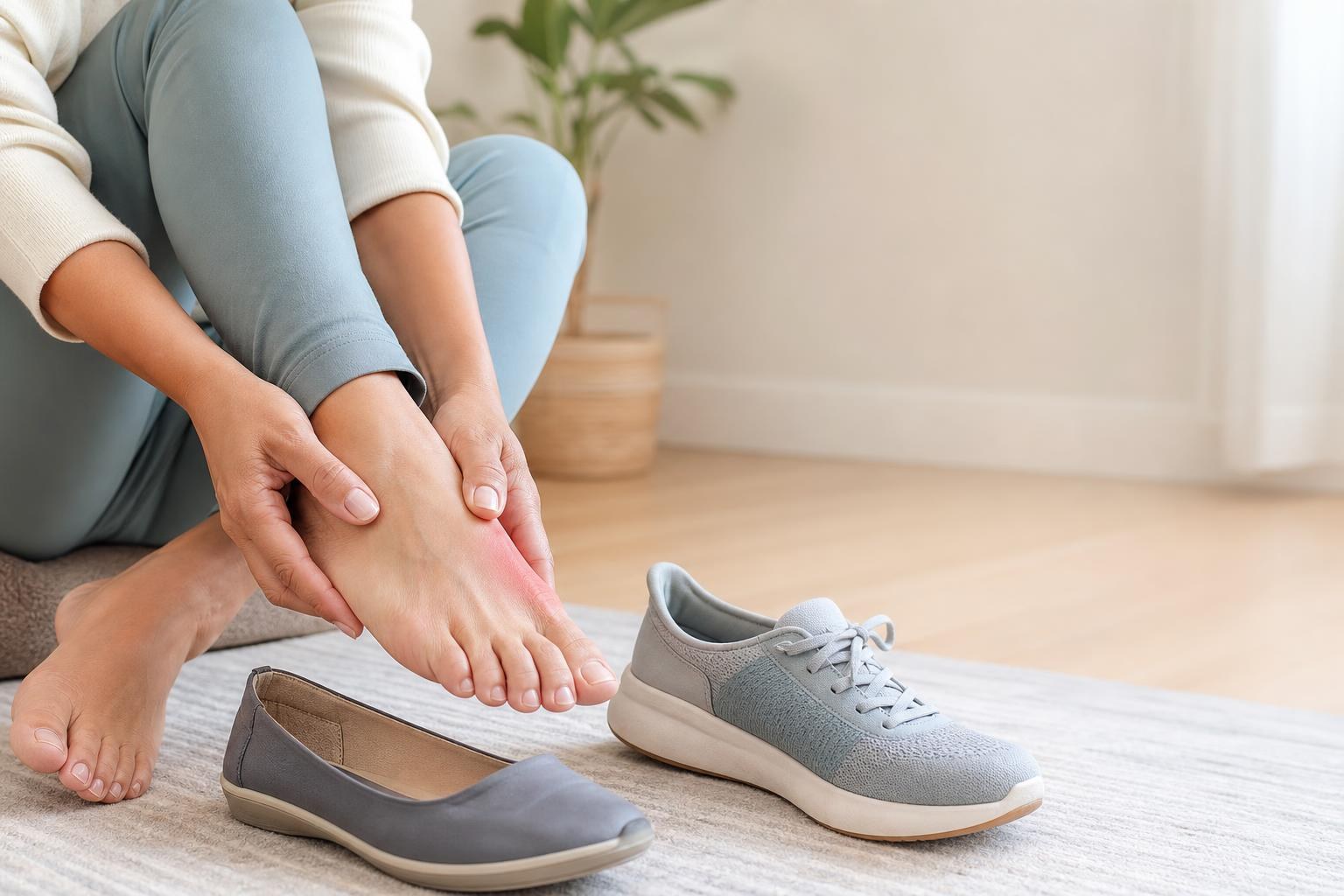
Pressure-related symptoms are often centered over the inner side of the big-toe joint. The area may look red after wearing shoes, feel tender when touched, or ache after activity. Some people notice a burning sensation where the shoe rubs. Others feel deeper discomfort when the big toe bends during push-off.
The timing offers useful clues. Pain that develops mainly in a particular pair of shoes may point toward direct compression. Symptoms that increase with walking, even in roomy footwear, may suggest that joint motion or foot mechanics are contributing. Persistent pain while barefoot or at rest deserves attention as well.
A podiatric examination can help separate surface irritation from pain arising within the joint or from another nearby structure. This distinction matters because treatment should address the source of the symptoms rather than the appearance of the bump alone.
How can you calm a mild bunion flare-up?
For mild symptoms without an injury or concerning warning signs, reducing the immediate source of pressure is a reasonable first step. Choose shoes with enough width and depth for the toes to rest without being squeezed. A wide toe box is more important than simply buying a longer shoe, which may allow the foot to slide and create different pressure points.
You can also temporarily reduce activities that consistently increase the pain. This does not always require complete rest. Shortening a walk, taking seated breaks, or choosing a lower-impact activity may give irritated tissues time to settle while preserving comfortable movement.
A wrapped cold pack may help with temporary soreness or swelling when used for short periods with a cloth protecting the skin. Avoid applying ice directly to the foot. Nonprescription pain medicines are not appropriate for everyone, so people with kidney disease, a history of stomach bleeding, medication interactions, or other health concerns should ask a qualified clinician before using them.
Bunion pads or cushions may reduce rubbing for some people, but placement matters. A bulky pad can make a snug shoe even tighter. Stop using any product that causes new pressure, skin discoloration, numbness, or irritation. People with diabetes, reduced circulation, or decreased sensation should be especially cautious about self-treating pressure areas.
When a “bunion flare-up” may be something else
Not every red, painful big-toe joint is caused by shoe pressure. A sudden episode of intense pain, warmth, swelling, and marked sensitivity may have another explanation, such as gout or a different inflammatory joint problem. An injury can also affect the joint, and redness associated with broken skin, drainage, fever, or spreading warmth may indicate an infection requiring prompt care.
Seek timely medical attention if you cannot bear weight, the toe appears newly out of position after an injury, swelling is severe, or pain is rapidly worsening. Prompt evaluation is also important for spreading redness, an open sore, drainage, fever, or a foot that becomes unusually pale, blue, cold, or numb.
If you have diabetes, neuropathy, or circulation problems, do not wait for a pressure spot or blister to become painful before seeking help. Reduced sensation can hide tissue damage. Information about preventive monitoring is available through the practice’s diabetic foot care services.
What can a podiatrist evaluate?
An evaluation looks beyond whether a bunion is visibly present. The podiatrist may assess where the pain is located, how the big-toe joint moves, whether the skin is receiving excessive pressure, and how the foot behaves while standing and walking. Your footwear, activity pattern, and the speed at which symptoms appeared also provide useful context.
Imaging is not automatically necessary for every bunion flare-up. It may be considered when the examination suggests joint changes, an injury, substantial deformity, or another problem that cannot be clarified through the physical examination alone.
Bring or wear the shoes that tend to trigger symptoms if possible. Their shape and wear pattern may reveal pressure that is not obvious when you are barefoot.
Treatment should match the reason the bunion hurts
Bunion treatment is not one-size-fits-all. Depending on the findings, conservative care may involve footwear guidance, pressure reduction, activity adjustments, padding, or treatment for associated inflammation. If foot mechanics are increasing stress around the big-toe joint, an orthotic may help redistribute load or improve function. Orthotics do not physically erase a structural bunion, but they may reduce contributing pressure for an appropriately selected patient.
If symptoms continue despite reasonable conservative measures, the next step is a reassessment rather than simply adding more cushions or buying progressively larger shoes. Persistent joint pain, worsening limitation, recurring skin irritation, or difficulty performing normal activities may change the treatment discussion. Surgical options may be considered in some cases, but the decision is based on symptoms, examination findings, overall health, and individual goals—not the appearance of the foot alone.
Dr. Daniel Brandwein provides comprehensive foot and ankle care for bunions and related pressure problems. An evaluation can help determine whether your flare-up is primarily caused by footwear, joint irritation, foot mechanics, or another condition that needs attention.
When should you schedule a bunion evaluation?
Consider scheduling an appointment if the pain keeps returning, lasts despite switching to roomier shoes, limits walking or exercise, or causes you to change how you step. Evaluation is also appropriate when the big toe is becoming increasingly stiff, overlapping another toe, or creating recurring corns, calluses, blisters, or skin irritation.
You do not need to wait until the pain is severe. Addressing pressure early may help protect the skin, clarify suitable footwear, and identify whether support or another treatment could make daily movement more comfortable.
Dr. Brandwein is a board-certified podiatrist who has provided podiatric care since 1991. To arrange an evaluation at 159 S Pompano Parkway in Pompano Beach, call (954) 984-7500 or contact the practice online. Same-day appointments may be available.
This article is intended for general education and does not replace an individualized medical evaluation.
Ready to Get Your Foot or Ankle Concern Checked?
If foot pain, a wound, nail problem, injury, or another concern is affecting your comfort or mobility, Dr. Daniel Brandwein can evaluate what is going on and discuss appropriate next steps.
Dr. Daniel Brandwein DPM, PA, FACFAS
159 S Pompano Parkway, Pompano Beach, FL 33069
(954) 984-7500
This article is for general educational information and is not a substitute for an individualized medical evaluation or treatment plan.
Get your foot or ankle concern properly evaluated.
Dr. Daniel Brandwein provides podiatry care in Pompano Beach for foot and ankle pain, diabetic foot concerns, nail problems, wounds, injuries, and other common podiatric conditions.