Use this article to better understand your symptoms and options. An in-person podiatry evaluation is the best way to determine what is causing a specific foot or ankle problem.
You put new orthotics into your shoes expecting relief. Instead, your arches feel pressured, your legs feel tired, or a new sore spot appears. Does that mean the orthotics are wrong—or do your feet simply need time to adjust?
A short adjustment period can be reasonable because an insert changes how pressure moves across the foot. But there is an important difference between “this feels unfamiliar” and “this is making me hurt.” Orthotics should not require you to ignore worsening pain, skin irritation, numbness, or changes in the way you walk.
Understanding what can happen during the first few days—and when to stop wearing the device—can help you avoid turning a fit problem into a larger one.
Why new orthotics can feel strange at first
Your feet, ankles, knees, and hips work together whenever you stand or walk. An orthotic changes the contact between your foot and the shoe, potentially altering pressure distribution and movement. Even a carefully selected device may feel noticeable while your body becomes accustomed to that change.
Some people describe mild arch awareness, temporary foot fatigue, or the sensation of standing on a firm surface. Muscles that were working one way may now be asked to work somewhat differently. These sensations may settle as wear time increases gradually.
What is less reassuring is sharp pain, steadily increasing discomfort, blistering, or pain that continues after the orthotics have been removed. Those symptoms can indicate that the device, shoe, or treatment approach needs to be reassessed.
What may be normal—and what deserves attention
There is no universal break-in experience. The type of orthotic, its materials, your foot structure, your activity level, and the condition being addressed can all affect how it feels.
Mild, temporary symptoms that may occur early include:
- A noticeable but tolerable feeling beneath the arch
- Brief muscle fatigue after a short period of wear
- A sense that your foot is contacting the ground differently
- Minor discomfort that resolves soon after removing the orthotics
Contact a podiatrist or the professional who provided the device if you develop sharp or escalating pain, persistent aching, new numbness or tingling, blisters, calluses, skin redness that does not fade, or pain in a previously comfortable area. You should also seek guidance if the orthotic causes you to limp or noticeably changes your balance.
Orthotics are intended to improve function or reduce troublesome pressure—not create a new injury. If wearing them makes symptoms progressively worse, continuing to “push through” is unlikely to solve an underlying fit issue.
How to break in orthotics without overdoing it
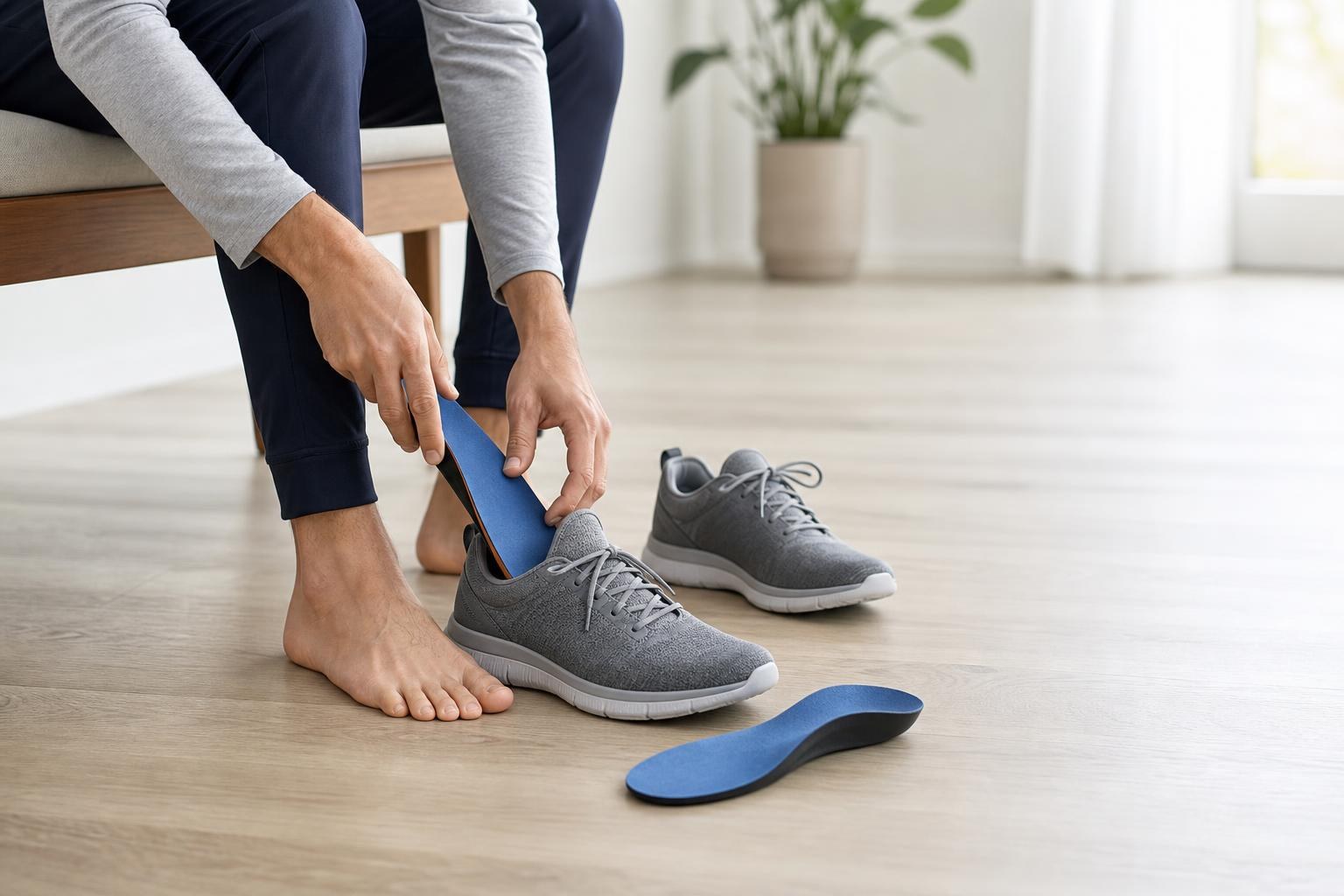
Unless you receive different instructions based on your condition, gradual use is often more comfortable than wearing new orthotics for an entire day immediately. You might begin with a limited period at home or during routine activities, remove them before significant discomfort develops, and slowly increase wear time as tolerated.
Do not begin by testing new orthotics during a long work shift, an all-day outing, or a demanding workout. Those situations add prolonged pressure before you know how your feet will respond. If the orthotics are intended for sports, it can be sensible to become comfortable walking in them before progressing to more intensive activity—provided your podiatrist has not given different directions.
Check your feet after each early wear period. Look for unusual redness, rubbing, swelling, or tender areas. Also notice whether your original symptoms are changing and whether any new symptoms are appearing.
People with diabetes need additional caution
If you have diabetes, neuropathy, poor circulation, a history of ulceration, or reduced sensation in your feet, do not rely on pain alone to identify a problem. Pressure-related skin damage can develop without strong warning sensations. Inspect your skin carefully and follow the wear schedule recommended by your clinician.
Stop using the device and request prompt guidance if you notice a blister, open area, drainage, persistent redness, warmth, discoloration, or swelling. Dr. Brandwein’s practice provides both diabetic foot care and specialized wound care when closer assessment is needed.
The shoe may be part of the problem
An orthotic does not work in isolation. A well-designed insert can still be uncomfortable when placed in a shoe that is too narrow, too shallow, excessively worn, or unstable.
Adding an orthotic on top of a thick factory liner may crowd the foot and increase rubbing across the toes or top of the foot. When appropriate, a removable shoe liner may need to come out before the orthotic goes in. The device should sit flat rather than rock, curl, or slide inside the shoe.
Heel slippage can be another clue that the orthotic and shoe are not working well together. Conversely, tightly lacing a shoe to prevent movement may create pressure elsewhere. A podiatric evaluation can consider the orthotic, shoe, and foot as one system rather than examining the insert alone.
Why an orthotic may need adjustment
Custom does not always mean that no follow-up will be needed. Feet and symptoms are complex, and small changes to the device may improve comfort or function. Depending on the problem, an adjustment might involve the arch contour, cushioning, posting, length, or relief beneath a sensitive area.
Common reasons to reassess an orthotic include:
- The device feels as though it is pressing into one concentrated spot
- Symptoms improve on one side but worsen on the other
- The orthotic slides, squeaks, rocks, or does not sit flat
- Pain returns after the device or shoe becomes worn
- Your activity, footwear, weight-bearing pattern, or medical condition has changed
- The original diagnosis or treatment goal is no longer clear
Bring the orthotics and the shoes you wear most often to an appointment. Wear patterns on both can provide useful information about pressure, fit, and how the device is functioning during daily activity.
When custom support may be worth discussing
Not every sore foot requires custom orthotics. A supportive retail insert may be sufficient for some people, especially when symptoms are mild and the foot tolerates a standard shape. Footwear changes, activity modification, stretching, physical therapy, or other treatment may be more important in certain situations.
Custom support may be considered when standard inserts do not fit the foot well, symptoms repeatedly return, the two feet have meaningfully different needs, or pressure must be managed in a specific location. It may also be useful when a podiatrist needs to address a particular mechanical pattern as one part of a broader treatment plan.
The goal is not simply to make an imprint of the foot. A useful evaluation looks at where the pain occurs, how and when it began, the way the joints move, areas of pressure, footwear, activity demands, and how you walk. An orthotic recommendation should follow that assessment—not replace it.
Persistent pain can have several possible causes, and support that helps one condition may aggravate another. If you are unsure whether your symptoms call for an insert, a footwear change, or another form of foot and ankle care, an examination can help clarify the next step.
Do not use orthotics to mask an acute injury
Orthotics are not a substitute for evaluating a recent injury or unexplained severe pain. Seek prompt medical attention after significant trauma or if you cannot bear weight, the foot looks deformed, swelling or bruising is substantial, or pain is severe. Sudden redness, warmth, marked swelling, an open wound, fever, or signs of infection also warrant timely care. Emergency evaluation may be appropriate for severe symptoms.
For less urgent concerns, schedule an assessment if discomfort continues despite reducing wear time, if the device creates a new pain pattern, or if you cannot find shoes in which it fits comfortably.
Comfort is useful information
New orthotics may feel different before they feel natural, but significant pain should not be treated as proof that they are “working.” Your response offers valuable information about the device, your shoes, and the condition being treated.
Dr. Daniel Brandwein is a board-certified podiatrist who has provided podiatric care in Pompano Beach since 1991. If your current inserts are uncomfortable, your symptoms keep returning, or you want to understand whether custom support is appropriate, call (954) 984-7500 or request an appointment. Bring your orthotics and commonly worn shoes so they can be evaluated together.
Ready to Get Your Foot or Ankle Concern Checked?
If foot pain, a wound, nail problem, injury, or another concern is affecting your comfort or mobility, Dr. Daniel Brandwein can evaluate what is going on and discuss appropriate next steps.
Dr. Daniel Brandwein DPM, PA, FACFAS
159 S Pompano Parkway, Pompano Beach, FL 33069
(954) 984-7500
This article is for general educational information and is not a substitute for an individualized medical evaluation or treatment plan.
Get your foot or ankle concern properly evaluated.
Dr. Daniel Brandwein provides podiatry care in Pompano Beach for foot and ankle pain, diabetic foot concerns, nail problems, wounds, injuries, and other common podiatric conditions.