Use this article to better understand your symptoms and options. An in-person podiatry evaluation is the best way to determine what is causing a specific foot or ankle problem.
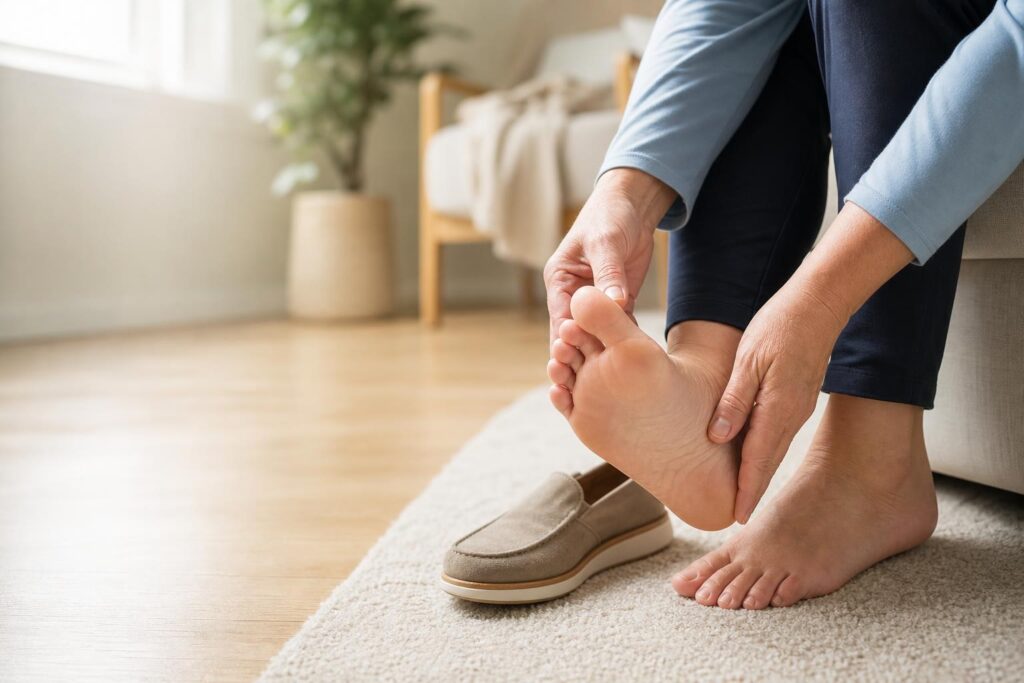
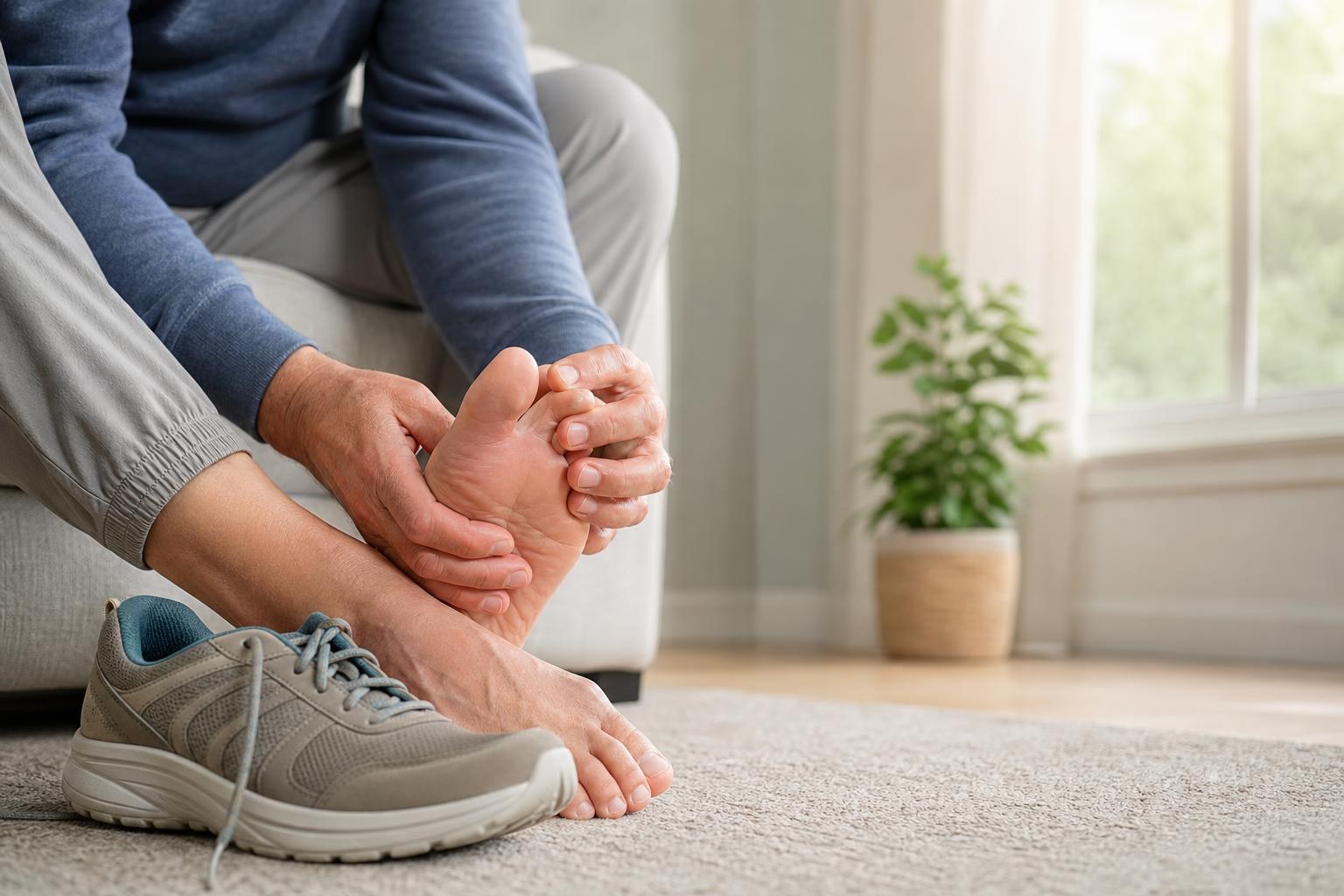
You take off your shoe, press gently on the bent toe, and notice that it does not flatten the way it used to. Or perhaps it straightens while you are sitting but curls again as soon as you stand.
That change can be frustrating, especially when the top of the toe rubs against footwear or the tip feels sore after walking. It can also provide useful information. Hammertoes vary in flexibility, and how easily the toe moves often helps guide decisions about comfort measures and treatment.
A toe that will not straighten is not necessarily an emergency. However, increasing stiffness, recurring corns, skin irritation, or difficulty wearing shoes are good reasons to have it examined rather than continuing to squeeze it into uncomfortable footwear.
Why a hammertoe bends in the first place
A hammertoe develops when the muscles and tendons that control a smaller toe no longer hold its joints in a balanced position. The middle joint rises while the end of the toe points downward. This commonly affects the second toe, although other smaller toes may be involved.
Several factors can contribute. These may include foot structure, tendon imbalance, arthritis, a neighboring bunion, a previous injury, or shoes that repeatedly crowd the toes. Tight footwear does not explain every hammertoe, but it can aggravate an existing bend and create painful pressure against the skin.
Not every curled toe is technically the same condition. Mallet toe and claw toe affect different joints and can resemble a hammertoe. A podiatry evaluation can help determine which joints are involved and whether another foot problem is influencing the toe’s position.
Flexible, semi-rigid, and rigid hammertoes
Toe flexibility exists on a spectrum. Early in the process, a hammertoe may be flexible. The toe can still be moved toward a straighter position with gentle pressure, even if it curls again after release. Some people also notice that the toe looks straighter when the foot is relaxed than when standing or walking.
As the joint and surrounding soft tissues adapt to the bent position, movement may become limited. The toe might straighten only partway or feel tight. This is sometimes described as a semi-rigid hammertoe.
A rigid hammertoe remains bent and cannot be comfortably brought back to a neutral position by hand. Joint changes and shortened or tightened soft tissues may contribute to this stiffness. A rigid toe should not be forced straight, since aggressive pulling can cause pain or injury without correcting the underlying problem.
It can be difficult to judge flexibility accurately at home. During an examination, a podiatrist can assess the toe while you are sitting, standing, and sometimes walking. This helps show whether the deformity changes with weight-bearing and whether pressure is developing elsewhere on the foot.
Why stiffness can make shoes increasingly uncomfortable
A raised toe joint often becomes the highest point inside the front of the shoe. Each step may press that joint against the upper material. The body responds to repeated friction and pressure by thickening the skin, which can lead to a corn. Although the corn may be the part that hurts, the bent position underneath it is often what keeps the pressure returning.
Pressure can also develop at the tip of the toe if it points downward or beneath the ball of the foot if the toe no longer shares weight normally. A person may begin shifting weight, shortening a stride, or choosing shoes based solely on what the toe can tolerate.
When a hammertoe becomes less flexible, simply switching to a slightly wider shoe may not provide enough vertical room. Toe-box depth, seam placement, material, and the position of the neighboring toes can all affect comfort.
What you can do without forcing the toe
Reasonable home measures focus on reducing pressure rather than trying to push a stiff joint into place. Options may include:
- Choosing shoes with a wide, deep toe box and enough length for the longest toe
- Avoiding low or tapered toe boxes that press the toes together
- Looking for soft or stretchable upper materials without a seam over the sore joint
- Using a nonmedicated protective pad if it fits without making the shoe tighter
- Checking the skin after wearing new shoes, especially if sensation is reduced
- Limiting footwear that repeatedly causes redness, rubbing, or pain
Gentle toe exercises may help maintain movement when a toe is still flexible, but they do not reliably reverse every hammertoe. Stop an exercise if it causes pain, cramping, or increased irritation. Splints and cushions may improve comfort for some people, but they must fit correctly and should not restrict circulation.
Avoid cutting a corn yourself or using medicated corn-removal products without professional guidance. These products often contain acids that can injure healthy skin. This is especially concerning for people with diabetes, poor circulation, reduced sensation, or a history of foot wounds. Those patients can learn more about appropriate monitoring through the practice’s diabetic foot care services.
When a hammertoe should be evaluated
An examination makes sense when the toe is becoming harder to move, pain keeps returning, or footwear changes are no longer enough. It is also worth seeking care when a corn repeatedly reforms, the toenail is being pressed or distorted, or discomfort is changing the way you walk.
Seek prompt medical attention for an open sore, drainage, spreading redness, warmth, significant swelling, or rapidly worsening pain. A person with diabetes, neuropathy, circulation problems, or a previous ulcer should not wait for a pressure spot or blister to become painful; reduced sensation can make an important skin problem easy to miss.
Dr. Daniel Brandwein can evaluate the toe’s flexibility, skin condition, joint alignment, shoe pressure, and the mechanics of the rest of the foot. Imaging may be considered when the examination suggests arthritis, prior injury, or joint changes that need a closer look. The practice provides comprehensive foot and ankle care for hammertoes and related concerns.
Treatment depends on more than how the toe looks
Treatment is based on symptoms, flexibility, skin risk, activity needs, health history, and the effect on walking—not appearance alone. A flexible toe may respond to changes in footwear, padding, activity modification, or other conservative measures. Orthotics may be appropriate when foot mechanics are contributing to pressure, although an insert does not physically straighten every hammertoe.
For a painful rigid hammertoe that continues to interfere with shoes or daily activity, surgical options may be discussed. Surgery is not automatically required because a toe is bent. A podiatrist can explain whether the likely benefit justifies the recovery and risks in your particular situation.
It is helpful to bring one or two pairs of shoes that commonly cause symptoms to an appointment. Their shape and wear pattern may reveal pressure that is difficult to reproduce while barefoot.
A changing toe deserves a practical plan
If your hammertoe no longer straightens, the goal is not to force it. The more useful next step is to understand how stiff it has become, where pressure is occurring, and whether the skin is at risk. Addressing those issues can make walking and footwear more manageable while helping prevent repeated irritation.
Dr. Daniel Brandwein, DPM, PA, FACFAS, is a board-certified podiatrist who has provided podiatric care in Pompano Beach since 1991. To arrange an evaluation, contact the practice or call (954) 984-7500. The office is located at 159 S Pompano Parkway, Pompano Beach, FL 33069. Same-day appointments may be available.
This article is for general education and does not replace individualized medical advice, diagnosis, or treatment.
Ready to Get Your Foot or Ankle Concern Checked?
If foot pain, a wound, nail problem, injury, or another concern is affecting your comfort or mobility, Dr. Daniel Brandwein can evaluate what is going on and discuss appropriate next steps.
Dr. Daniel Brandwein DPM, PA, FACFAS
159 S Pompano Parkway, Pompano Beach, FL 33069
(954) 984-7500
This article is for general educational information and is not a substitute for an individualized medical evaluation or treatment plan.
Get your foot or ankle concern properly evaluated.
Dr. Daniel Brandwein provides podiatry care in Pompano Beach for foot and ankle pain, diabetic foot concerns, nail problems, wounds, injuries, and other common podiatric conditions.