
Use this article to better understand your symptoms and options. An in-person podiatry evaluation is the best way to determine what is causing a specific foot or ankle problem.
A parent who once walked confidently may begin holding the furniture. A spouse may avoid the grocery store because longer aisles feel tiring or unsteady. Sometimes the first explanation is simply, “I’m getting older.” But if each step hurts—or the feet no longer provide reliable feedback—walking can become less secure.
Foot problems are not the only reason balance changes, and new unsteadiness deserves careful attention. Still, foot pain, numbness, stiff joints, thick nails, and poor shoe fit can all influence how an older adult stands and moves. These issues may be especially easy to miss when the person has gradually adjusted their routine around them.
Why the feet matter for balance
The feet form the body’s contact with the ground. They adapt to surface changes, absorb pressure, and help move the body forward. Sensory information from the feet also helps the brain recognize where the body is positioned.
When a painful spot makes someone avoid one side of the foot, the rest of the body often compensates. Steps may become shorter. The person may spend less time on the uncomfortable foot, stop pushing off normally, or widen their stance. These adaptations can feel protective, but they may also make walking less efficient.
Limited ankle motion can have a similar effect. The ankles help the body adjust when weight shifts forward, backward, or sideways. Stiffness, weakness, swelling, or a previous injury may make those adjustments more difficult.
Foot problems that can quietly change the way an older adult walks
A mobility problem does not always begin with severe pain. Several relatively common concerns can gradually affect step length, weight distribution, or willingness to remain active.
Painful pressure points
Corns, callouses, bunions, hammertoes, and irritated areas under the forefoot can make certain shoes or surfaces uncomfortable. An older adult may respond by walking on the outside of the foot, shuffling, or avoiding full pressure through the toes.
Reducing a callous at home with a blade or medicated corn remover can injure the skin, particularly when circulation or sensation is reduced. A podiatry evaluation can help identify why pressure is concentrating in that location and whether footwear changes, padding, nail and skin care, or another approach is appropriate.
Thick, curved, or painful toenails
Toenails may seem unrelated to balance until they press into a shoe or make toe-off painful. Thick fungal nails can be difficult to trim safely. An ingrown edge may lead someone to keep weight away from a toe without realizing how much their gait has changed.
Professional care for ingrown and fungal nails may be particularly useful when nails are painful, difficult to reach, or unsafe to manage independently.
Heel, arch, or joint pain
Heel and arch pain can make the first steps after rest uncomfortable, while arthritis or stiffness may make uneven ground and stairs more challenging. An older adult may stop taking a full stride because rolling through the foot hurts.
The location and timing of the pain matter. An examination can help distinguish among possible sources rather than assuming every case is simply part of aging.
Numbness or reduced sensation
When sensation is reduced, a person may not clearly feel the floor, a small object inside a shoe, or an area of excessive pressure. Numbness, burning, tingling, and unusual sensitivity can have several causes and should not be ignored—especially when diabetes is present.
People with diabetes benefit from regular foot monitoring because reduced sensation can allow skin damage to progress without significant pain. Dr. Brandwein provides diabetic foot care, including evaluation of concerns that may affect skin health, comfort, and mobility.
Clues that the feet may be contributing to a mobility change
Caregivers often notice movement changes before hearing a specific complaint. The older adult may be trying not to worry anyone, or may not connect a sore toe with a growing reluctance to walk.
- Taking noticeably shorter or slower steps
- Holding walls, counters, or furniture more often
- Favoring one side or avoiding pressure on a toe or heel
- Shuffling instead of lifting and advancing the feet normally
- Becoming reluctant to walk barefoot, wear certain shoes, or leave home
- Showing redness, swelling, worn skin, or callouses in new locations
- Having shoe soles that wear unevenly from side to side
- Reporting numbness, burning, cramping, or fatigue in the feet or legs
These observations do not identify one diagnosis. They do provide useful information for a clinician evaluating the change. If possible, note when the problem started, whether it is getting worse, what shoes are worn, and whether symptoms improve with rest.
A practical foot and footwear check at home
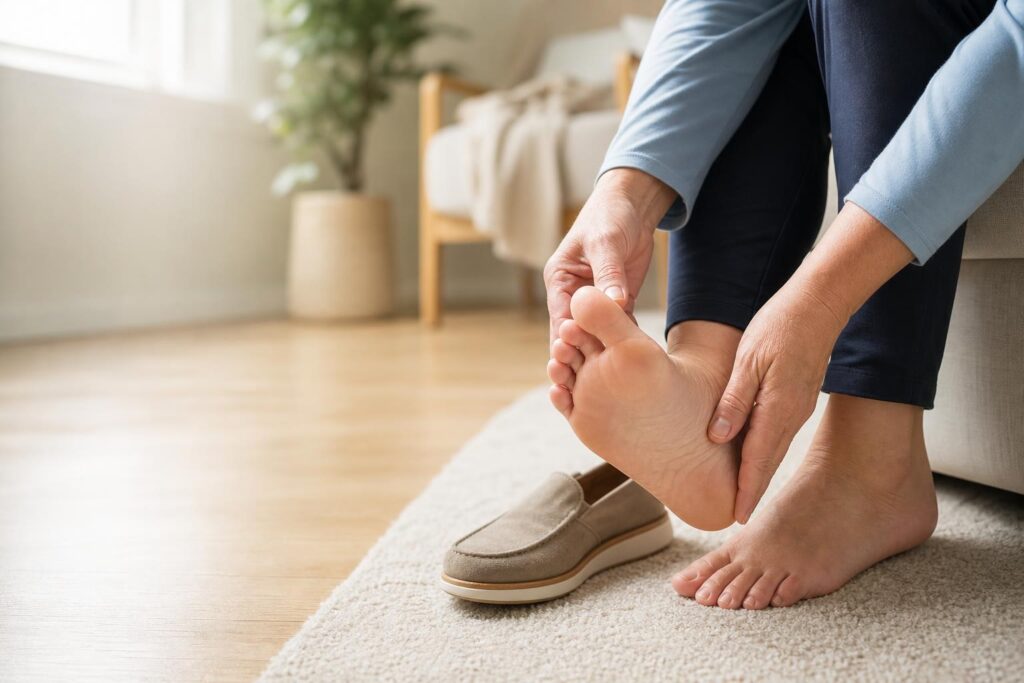
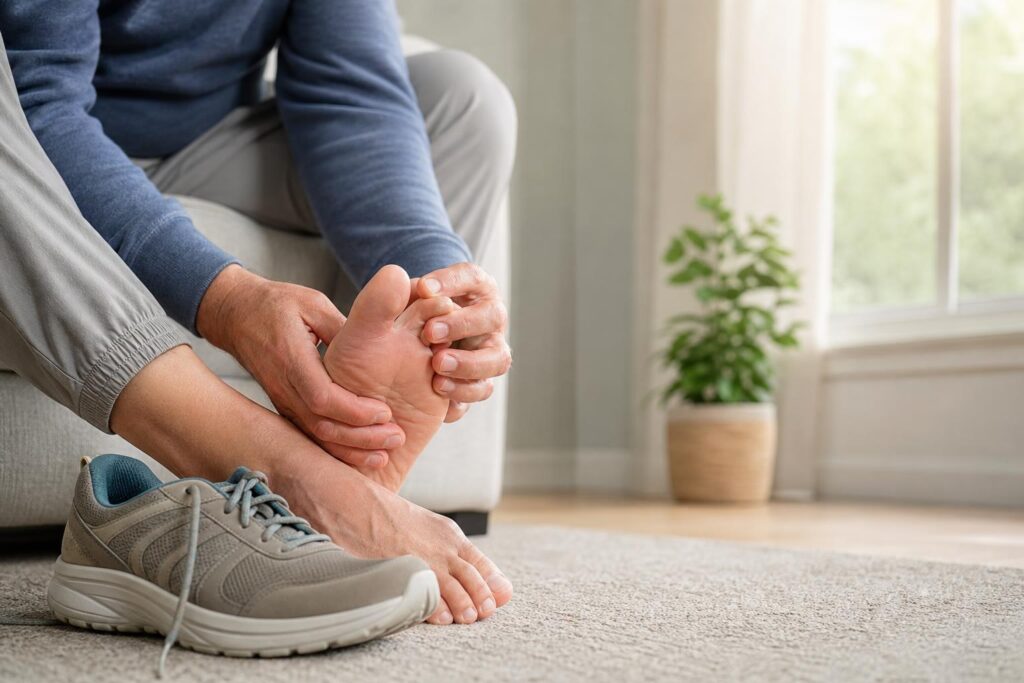
A simple review can uncover concerns that are otherwise hidden by socks and shoes. Choose a well-lit area and look at the tops, sides, soles, heels, and spaces between the toes. A caregiver can help if bending, vision, or hand coordination makes this difficult.
Watch for blisters, cracks, drainage, redness, swelling, bruising, nail changes, and areas that feel unusually warm or cool. Do not rely only on pain; a person with reduced sensation may have skin damage without realizing it.
Next, inspect the shoes. They should hold the heel securely without rubbing and provide adequate room for the toes. Check inside for loose objects, rough seams, folded insoles, or worn lining. A shoe that fit in the past may no longer fit after swelling, toe changes, or changes in foot shape.
Replace slippers or shoes with smooth, worn soles that no longer provide reliable traction. Avoid making major footwear changes based solely on what feels soft, however. Very flexible or poorly secured shoes can introduce different problems. The right choice depends on the person’s foot structure, symptoms, activity, and stability needs.
When a podiatry evaluation may help
An evaluation is reasonable when foot discomfort is changing how someone walks, limiting routine activity, or repeatedly returning despite shoe adjustments. It can also help when nails are unsafe to trim, callouses keep building in the same place, or numbness makes it difficult to judge whether a foot problem is serious.
A podiatrist may examine the skin and nails, joint motion, areas of pressure, foot alignment, footwear, and the way the person stands and walks. Depending on the findings, care may involve safer nail or callous management, footwear guidance, pressure reduction, orthotics, treatment of a painful condition, or coordination with another healthcare professional.
Because balance can be affected by vision, medications, blood pressure, inner-ear problems, neurological conditions, strength, and other health factors, podiatry may be one part of a broader assessment. Sudden or significant unsteadiness should not automatically be attributed to the feet.
Symptoms that should not wait for a routine visit
Seek prompt medical attention for a new wound, spreading redness, drainage, increasing warmth, marked swelling, dark or discolored skin, or a foot that suddenly becomes cold or pale. These concerns are particularly important for someone with diabetes, reduced circulation, or loss of sensation. Information about specialized foot wound care is available through the practice.
Emergency care may be appropriate for sudden weakness or numbness on one side, facial drooping, difficulty speaking, fainting, severe dizziness, chest pain, or an inability to stand after a fall. A suspected fracture, obvious deformity, or inability to bear weight after an injury also needs timely evaluation.
Supporting mobility starts with finding what has changed
Older adults do not have to accept every painful or awkward step as an unavoidable part of aging. A small foot problem can affect confidence and activity well before it becomes an obvious medical concern. Paying attention to gait changes, skin and nail health, sensation, and shoe fit can reveal practical opportunities to improve comfort and safer movement.
Dr. Daniel Brandwein is a board-certified podiatrist who has provided podiatric care since 1991. If foot or ankle concerns are affecting your mobility—or the mobility of someone you care for—you can contact the Pompano Beach office to request an evaluation. The practice is located at 159 S Pompano Parkway, Pompano Beach, FL 33069, and can be reached at (954) 984-7500. Same-day appointments and in-home podiatry may be available depending on location and individual needs.
Ready to Get Your Foot or Ankle Concern Checked?
If foot pain, a wound, nail problem, injury, or another concern is affecting your comfort or mobility, Dr. Daniel Brandwein can evaluate what is going on and discuss appropriate next steps.
Dr. Daniel Brandwein DPM, PA, FACFAS
159 S Pompano Parkway, Pompano Beach, FL 33069
(954) 984-7500
This article is for general educational information and is not a substitute for an individualized medical evaluation or treatment plan.
Get your foot or ankle concern properly evaluated.
Dr. Daniel Brandwein provides podiatry care in Pompano Beach for foot and ankle pain, diabetic foot concerns, nail problems, wounds, injuries, and other common podiatric conditions.